Testimonies of the massacre and systematic violence in Isfahan indicate that this city was the scene of one of the bloodiest suppressions by the Islamic Republic in the contemporary history of Iran on the 8th and 9th of January 2026. We have gathered information from the families and friends of the victims, as well as from nurses and doctors at Milad, Al-Zahra, Kashani, and Sadoughi hospitals in Isfahan, alongside several hundred eyewitnesses.
According to field and hospital reports, each neighborhood in Isfahan has experienced between 50 to 100 fatalities. A source working at the Health Organization of Isfahan Province, who requested anonymity for security reasons, stated that the number of deaths in Isfahan is 12,000, excluding those who remain unidentified.
Eyewitnesses report that government forces, dressed in military uniforms, police attire, and Basij clothing, were present in the streets of Isfahan and received orders for the massacre via walkie-talkies.
According to videos and testimonies we received, the shootings by government forces were entirely targeted and systematic: direct shots to the head, heart, femoral vein, and chest aimed at killing; pellets directed at the eyes to cause blindness; and shots to the testicles of men and the vaginas of women to instill terror and create systematic sexual humiliation. Multiple independent witnesses from various parts of the city reported that when ammunition ran out, members of the Basij would behead protesters with knives. Additionally, one witness from the Reza Garden morgue stated that many headless corpses were seen, most of whom were females.
A 60-year-old witness recounted that while trying to escape from the Revolutionary Guard, she fell to the ground and soldiers kicked her in the face and body with their boots. The victim told the soldiers, “I am like your mother,” but the soldier replied, “You are a whore who wants the regime change, and people like you must be exterminated.”
Several families in Isfahan have confirmed that the government has delayed the release of bodies for several weeks. The state forced them to accept that their child be registered as a martyr for the Basij or pay one billion tomans as “bullet compensation” for each bullet that struck their family member’s body in order to receive the corpse. Families of female victims were also compelled to sign that the cause of death was “natural causes” or “accident” for the women.
According to reports from nurses and doctors in Isfahan’s hospitals, Shotgun executions were carried out by the Revolutionary Guard and Basij forces on wounded protesters hospital beds. When families they received the corpses they discovered that a new bullet had been fired into the body of their loved ones, mostly in the heart or forehead of those who were slightly injured as an execution
Additionally, there are reports of those who attempted to help and transport the wounded in the streets being targeted with military-grade bullets aimed at the head, back, and heart.
An eyewitness nurse has testified that Revolutionary Guard forces were giving syringes to nurses in hospitals to inject into the wounded. If a nurse refused or asked questions, they were threatened with weapons. According to this witness, the injections caused severe pain and worsened the condition of the injured.
Multiple witnesses have reported that bodies were buried in large pits on the slopes of the mountains in Isfahan and next to the Bagh-e-Rezvan Cemetery, while some bodies were transported to other cities far away and buried in old graves to avoid identification. In the Isfahan fruit and vegetable market, bodies were stored briefly in the market’s freezing zone before being transported by trucks. Several eyewitnesses have stated that moans could even be heard from among those corpses in market, indicating that some were still alive. Three eyewitnesses reported the existence of mass graves around the Bagh-e Rezvan, and one of the workers who helped the Revolutionary Guard bury the bodies mentioned that the workers were blindfolded and taken to a mountainous location to dig the pits, where a truck full of bodies was unloaded. According to this witness, the bloodstained clothes of the corpses were buried with them.
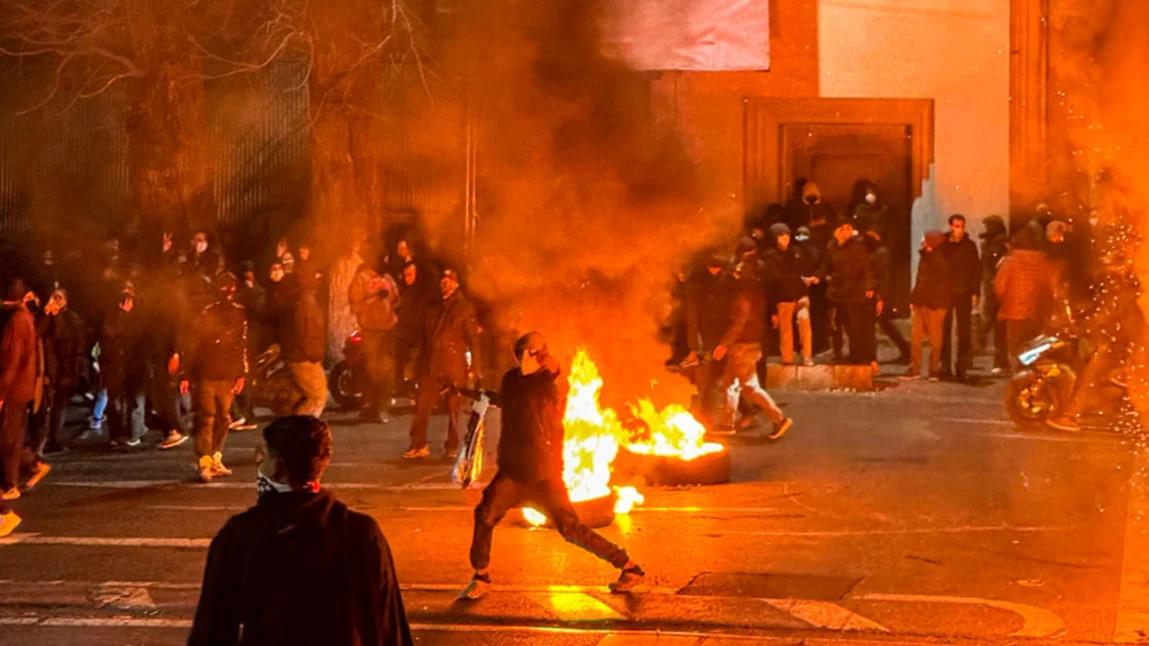
During the crackdown, shootings by the Revolutionary Guard, police, army, and Basij were reported from bridges, mosques, banks, and Revolutionary Guard headquarters. Civilian vehicles were also targeted, even if a child was inside. Reports exist of families being killed inside their cars. Homes were attacked to apprehend individuals seeking refuge and to recover corpses hidden by the people, taken by government agents.
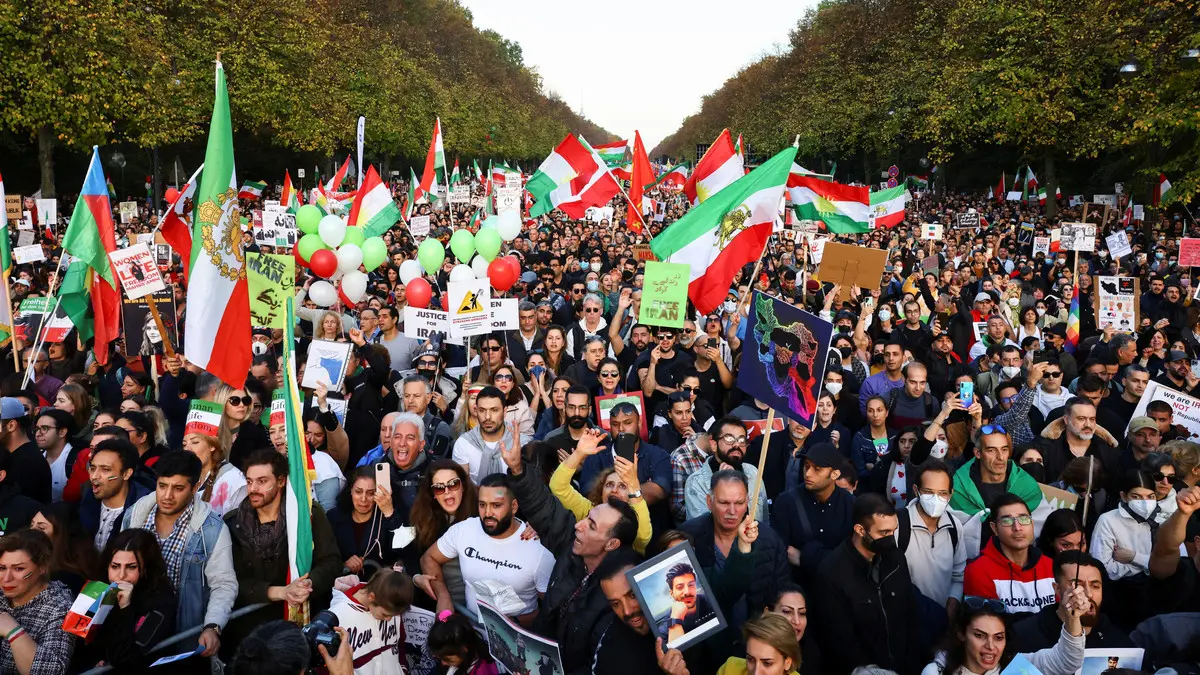
The streets were covered in blood, and witnesses have sent videos of shots fired at the heads and chests of victims. The slogans chanted by the people, such as “Death to Khamenei,” “This year is the year of blood, Khamenei will be overthrown,” “Pahlavi will return,” “Death to the Islamic Republic,” “This is the last message, the target is the regime,” and “Long live the Shah,” reflect a desire for regime change rather than reform. Unarmed civilians were being killed in the face of the government’s military weapons, and many see their only hope in international military intervention and the overthrow of the regime.
No reports have been made regarding the intervention of what the government refers to as “armed terrorist groups” and “armed civilians” in Isfahan.
Weapons used by the Basij, Revolutionary Guard, and police, according to witnesses, included Kalashnikovs, machine guns, DShK heavy machine guns, shotguns, and toxic tear gas.
Eyewitnesses also reported the presence of drones in the sky for filming and the use of lasers to target protesting civilians.
Reports have surfaced regarding the theft of cameras from homes and shops by government agents to identify protesters and arrest them. Mass arrests are happening in Isfahan weeks after the massacre. A teacher from Fooladshahr in Isfahan testified that students are being arrested from their classrooms, and a briefing session is held for the families and the students, informing them that they must not oppose the regime; otherwise, they risk arrest or death. The education department has convened meetings to threaten teachers, insisting they identify dissenting students.
These testimonies indicate organized and systematic repression, massacre, sexual and physical violence, extrajudicial executions of the wounded in hospitals, assaults on doctors who treated protestors, mass arrests of medical staff, secret mass burials, and the falsification of victim information by the state organs of the Islamic Republic in Isfahan. These actions clearly fall within the framework of crimes against humanity and systematic war/ human rights violations, necessitating independent international investigations and military and legal action against the perpetrators and those responsible.