Maria Elena Moyano and Her Fight for Women’s Rights in Peru
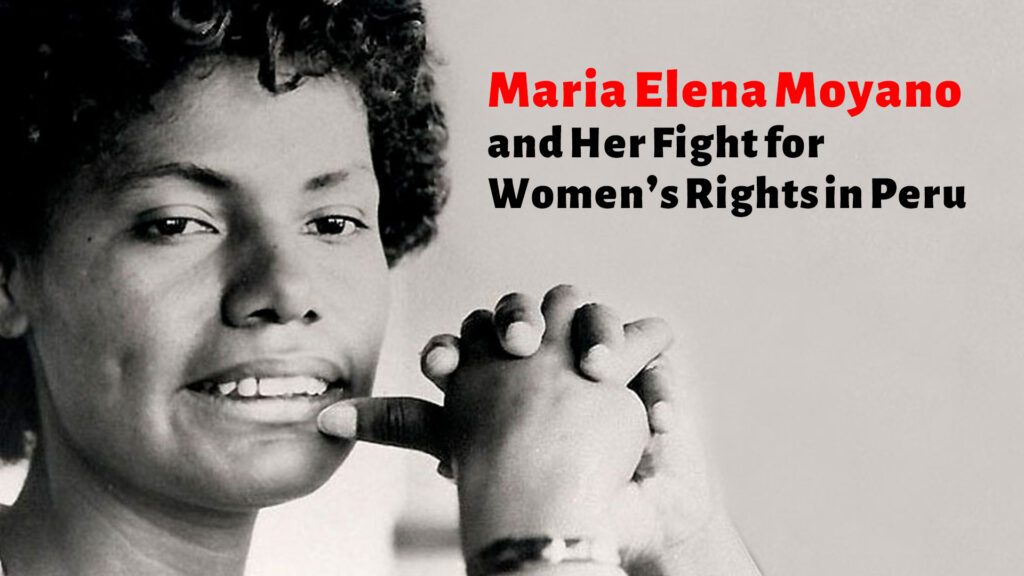
Introduction For decades, Peruvian women have fought to win justice and protect their rights in a highly discriminatory context. The nadir of human rights in Peru took place between the 1980s and 1990s, as a brutal armed conflict between the Shining Path guerrilla group and the government wreaked havoc on ordinary Peruvians’ lives. Women, particularly […]
Session 2: Proceedings of political crimes in Iran
In this session, we take a closer look at the judicial process for political crimes in Iran and how civil society can assist political defendants in this process. In other words, we will examine the areas where civil society and human rights advocates can influence the judicial proceedings related to political crimes in Iran.
Session 3: 3 important points about a successful campaign
In this session, we covered three important points for a successful campaign: “understanding the background,” “using awareness tools indirectly,” and “leveraging international support.” These are key considerations for effectively planning and executing a well-structured and successful campaign.
Session 4: What is storytelling?
In this session, we will explore the core concepts and structure of storytelling. We will also discuss the importance of storytelling for ideological prisoners and political or social activists. Finally, we will cover the main elements of storytelling, such as events, characters, setting, and conflicts.
Session 5: Expanding the events of the story
In this session, we will examine the concepts of expanding and developing story events, foreshadowing, and creating suspense. We will also discuss the “pace of storytelling” and the “narrator’s perspective and its impact on the story.” Finally, we will review methods for story development, expression, theme, and how to effectively present these elements to the […]
Session 6: Storytelling methods
In this session, we will explore storytelling methods and techniques used in narrative writing. These techniques include connecting with the reader, story structure, using dialogue, imagery, and creating meaning within the story. Finally, we will examine how to convey meaning and present your story to others. This part will cover various methods you can use […]
Session 7: Preparing the narrative and sharing it
In this session, we will explore storytelling methods and techniques used in narrative writing. These techniques include connecting with the reader, story structure, using dialogue, imagery, and creating meaning within the story. Finally, we will examine how to convey meaning and present your story to others. This part will cover various methods you can use […]
Session 8: Examples of successful storytelling campaigns
In this session – the final session of the course – we will explore several successful global campaigns that have creatively used storytelling skills to promote the cause of “freedom of speech.” Finally, as a reminder, we will review the content of all the sessions throughout this course!
Session 1: What is a political crime?
In the first session of this course, before examining the judicial process for political crimes in Iran and identifying areas where civil society can influence such proceedings, it would be beneficial to provide a general definition of political crimes. Thus, we will discuss the definition and nature of “political crime” and present examples of various […]
Storytelling for advocating for others
This course is designed for those of you who wish to effectively amplify the voices of political and ideological prisoners by creating narratives, building campaigns, and producing various types of artistic content or social media content to highlight the widespread human rights abuses in Iran. It aims to reach both domestic audiences and the international […]