

Introduction
As a passenger on a chartered private jet, Rwandan political activist Paul Rusesabagina was supposed to land in Bujumbura Burundi, but he found himself transported to Kigali, Rwanda, where the Rwandan government charged him with several criminal titles, including terrorism. During the Rwandan genocide, Rusesabagina helped save hundreds of lives at the hotel he managed in Kigali. His activities following the incident, however, put him at risk as he faced a trial by the Rwandan government.
While being hailed as a hero for his role during the genocide, he was also seen as a political opponent by the Rwandan government, having faced considerable controversy, criticism, and danger for his activism.[1] Despite concerns about the risks involved in the journey, Rusesabagina left for Bujumbura in preparation for a planned speech.
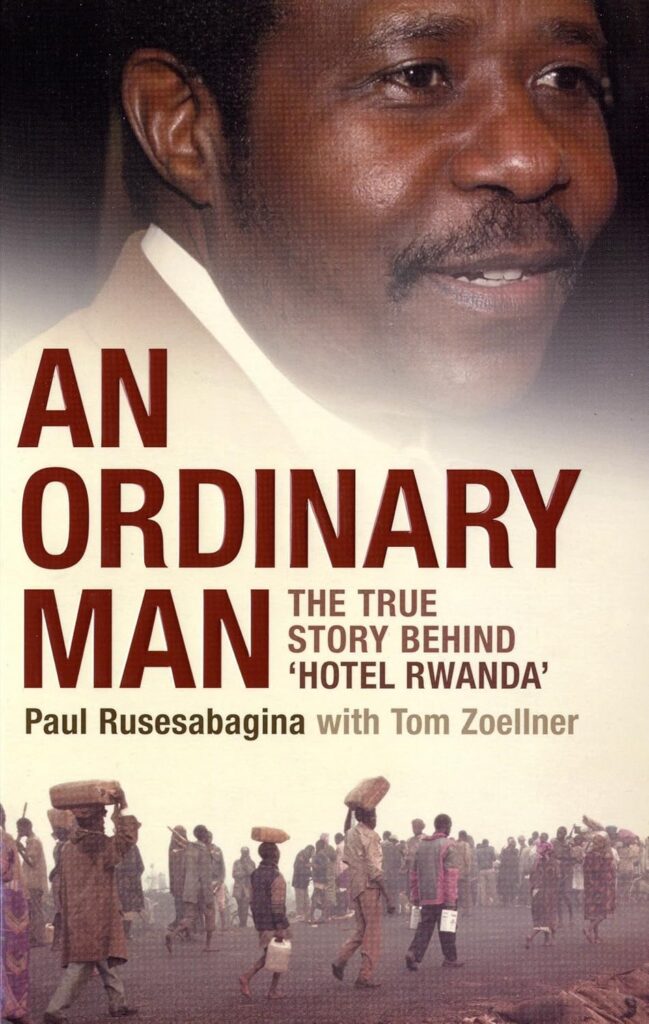
In his book, An Ordinary Man, Mr. Rusesabagina writes, “I still wonder how policy officials… can sit down at the table with their families and have any appetite for food, or go to sleep at night, knowing that they failed to act. Human beings were sacrificed for political convenience. This would be enough, I think, to turn any reasonable man into a prisoner of his own conscience for the rest of his life.”[2] His inability to ignore human rights violations sheds light on Mr. Rusesabagina’s persistent political activism, which continued in spite of the personal risks, political turmoil and accusations made against him.
Rwanda: A complex and challenging background
Located in east-central Africa, Rwanda is home to a majority of the Banyarwanda population, which can be divided into three main ethnic groups: Hutu, Tutsi, and Twa. Agriculture accounts for almost a quarter of the GDP in 2021, coffee and tea being the primary export crops.[3] Historically, Rwanda has held a negative reputation amongst the international community, judged for its economic deficiencies. Despite efforts to bring economic alleviation and stability to the population through inequality reduction and broad-based economic growth, with over 50% of the population living below the international poverty line.[4]
Rwanda has a complex history, characterised by contrasting ruling powers when ethnic groups were violently overtaken by German and Belgian colonial powers.[5] Prior to the colonial period, Hutus, Tutsis, and Twa lived in relative harmony. Tutsis constituted 14% of the population, with occupations such as cattle herders, soldiers, and administrators. Approximately 85% of the population was Hutu, the majority of whom were farmers.[6]
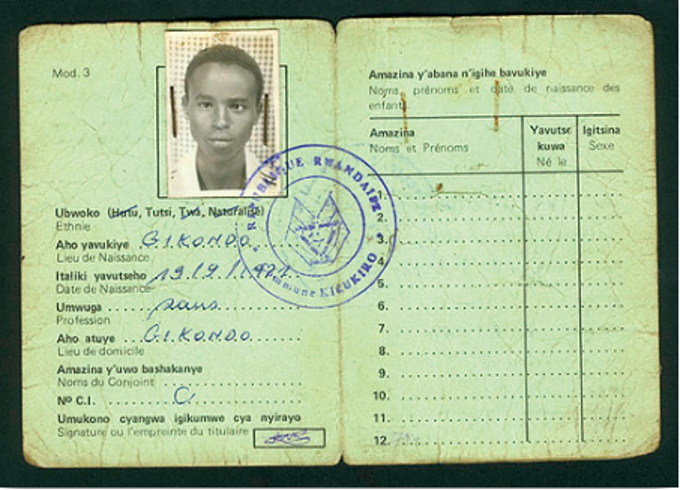
Under colonial rule, Hutu and Tutsi divisions deepened as the Tutsi group were given power and privilege despite constituting a smaller percentage of the population when compared to the other ethnic groups. Identity cards issued by the Belgian government stated an individual’s ethnicity along with physical details, highlighting the significance of this form of identification during this time.[7]
After the Hutus rebelled against the Belgians and the Tutsi elite in 1959, a large number of Tutsis fled to Burundi. As soon as Rwanda gained independence in 1962, the Hutu took control of the government. Due to the discrimination against the Tutsi, a large number of refugees fled Rwanda. In the 1990s, ongoing tension between ethnic groups in Rwanda escalated into armed conflict between the Rwandan Patriotic Front (RPF), a Tutsi-led rebel movement, advancing from Uganda.[8] Escalating tension and violence eventually gave way into genocide. As the next section will detail, Hutu militias murdered thousands of Tutsi people, as well as some moderate Hutu and Twa.
Despite this recent and painful history, Rwanda is one of Africa’s fastest growing economies with a 17.9% reduction in poverty from 2006-2017 alone, with significant improvements in health, education, and infrastructure such as access to electricity, according to the World Bank’s most recent Poverty and Equity Brief.[9] However, human rights organizations continue to raise concerns about the government’s suppression of political opposition and freedom of expression.[10]
Rwanda Genocide
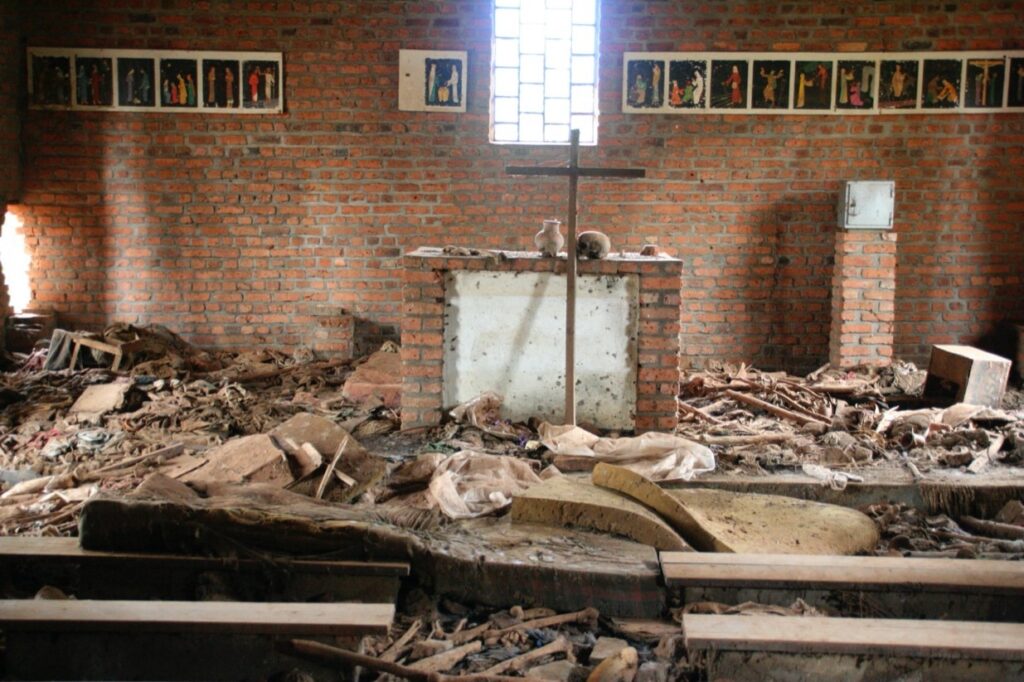
Rwanda has been home to several ethnic groups from different origins and clans over the course of its history. In the 18th century, the Tutsi Nyiginya clan dominated the political landscape. During this time, distance and tensions between the Hutu and Tutsi grew, as Tutsi rulers imposed policies in favor of their clan. A permanent division of the Rwandan population was established after Belgian forces seized control of the country in 1917. Rwandans were divided into Hutu, Tutsi, and Twa ethnic groups, which were also indicated on their identity cards. Genocide perpetrators later used these identity documents to identify their victims.
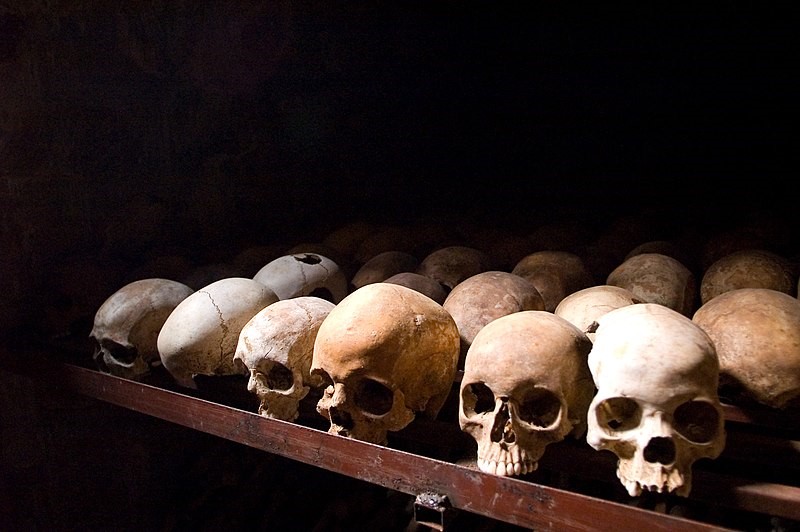
Tutsi retained their privileges, such as access to better jobs and higher education, until the 1990s, which further heightened ethnic tensions.[11] Ethnic tensions increased in the late 1950s as the Hutu political movement grew, and segments of the Tutsi establishment resisted democratization in an effort to protect their privileges. After several incidents of tension, a brutal genocide developed in Rwanda in 1994 that resulted in the death of an estimated 800,000 people.[12]
The assassination of Rwandan President Juvenal Habyarimana is attributed as being the Rwandan Genocide’s catalyst in April 1994 in which extremist Hutu militias, known as the Interahamwe, targeted Tutsis and moderate Hutus.[13] For almost 100 days, they used violent tools (such as machetes and firearms), and even more violent practices: an estimated 250,000 to 500,000 women and girls were subjected to sexual violence during the genocide.[14] As part of their propaganda and media campaign, the Interahamwe also spread hate speech and incited violence against Tutsis.[15]&[16]
While early signs and warnings of the violence were evident, the international community was slow to respond. The United Nations had a peacekeeping force in Rwanda, known as the UN Assistance Mission for Rwanda, unfortunately it was not authorized to use force to stop the violence. The UN’s failure to intervene nor prevent the Rwandan genocide is sometimes attributed not only to ignorance or indifference, but rather to political and strategic calculations (“The Genocide Fax”). After weeks of brutality, the Rwandan Patriotic Front, which had resumed its activities following Habyarimana’s assassination, captured Kigali in mid-July and put an end to the genocide.
The Rwandan Patriotic Front took control of the country under the leadership of Paul Kagame. As a result, many genocidaires fled across the border into Zaire, along with thousands of civilian refugees. The new Tutsi-dominated government was led by Kagame, who, subsequently elected president, abolished ethnic identity as an official designation and removed it from identity cards. Moreover, community-based gacaca courts were established in order to try some of the crimes associated with the genocide,[17] and several authorities were tried and convicted.[18]

Paul Rusesabagina, a hotel manager who resisted
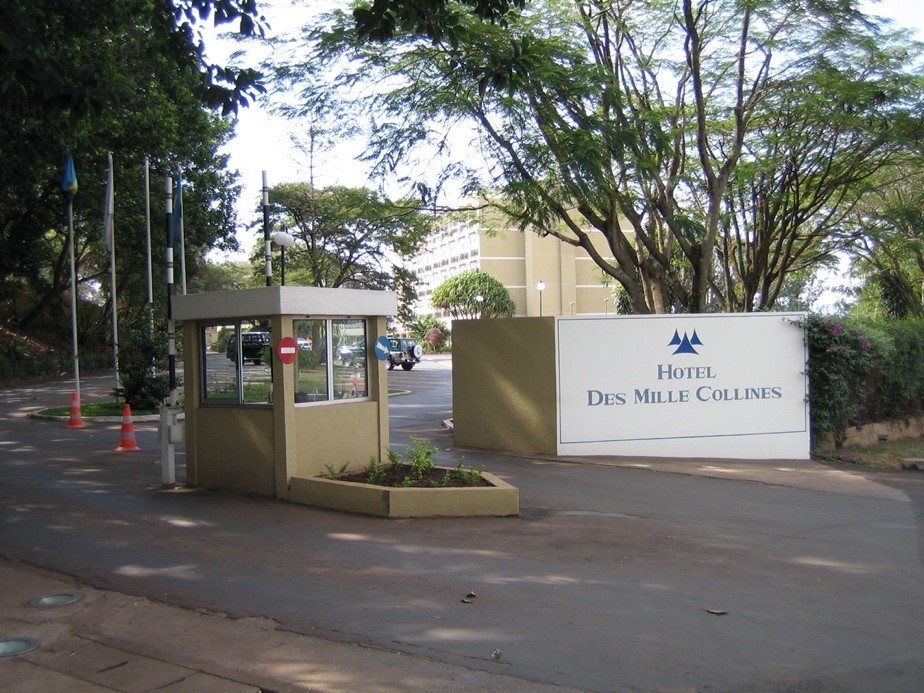
Paul Rusesabagina was the manager of the Belgian-owned Hotel des Mille Collines in Kigali at the time of the Rwandan genocide. Although Rusesabagina was born to a Hutu father and a Tutsi mother, he considered himself to be a moderate. Since his wife was Tutsi, and his brothers-in-law were guerrillas with the Rwandan Patriotic Front, he had a number of ties to the Tutsi community. Being a hotelier, he had developed relationships with influential clients, including Hutu military officers and politicians, some of whom had a deep hatred for Tutsi people.[19]

The hotel provided refuge to some Tutsis and moderate Hutus fleeing the genocide. In the initial phase of the event, the government disconnected all phone lines to the switchboard, effectively isolating Mille Collines from the rest of the world. To bring attention to the situation, Rusesabagina utilized all available means to get in communication, such as sending faxes to the White House, the United Nations, and the hotel’s parent company. Moreover, he used flattery, bribery, and subtle persuasion to prevent the Hutu militias from attacking.
In the face of overwhelming violence and hatred, Rusesabagina remained determined to protect those sheltering at the hotel. Rusesabagina and his family made their way to a camp outside Kigali after spending 76 days in the hotel.[20] It was an extraordinary act of kindness that Rusesabagina took towards helpless people in spite of the risk, knowing Hutu extremists killed those who assisted Tutsis. Later, he expressed his belief that humanity can overcome evil through compassion and empathy as well as his disappointment with the international community’s slow and inadequate response to the problem.[21]

International acclaim
For his deeds during the Rwandan genocide, Rusesabagina received worldwide recognition and appreciation. The US Presidential Medal of Freedom was awarded to him in 2005 for his remarkable courage and compassion in the face of terror.[22] He has also been awarded an honorary degree by the University of Guelph.[23] As a result of his bravery and morality during the Rwandan genocide, Rusesabagina was also awarded the Immortal Chaplains Prize for Humanity in 2000. The same year, he received the National Civil Rights Museum Freedom Award and the Conrad N. Hilton Foundation’s Humanitarian Award (“Lantos Foundation for Human Rights & Justice”).
He also gained international recognition for his role in saving the lives of hundreds of Rwandans during the genocide through the film “Hotel Rwanda“, directed by Terry George in 2004. The movie aided in solidifying Rusesabagina’s global recognition. Although the film has received widespread acclaim, critics have questioned its accuracy, claiming Rusesabagina’s role as portrayed by the film is oversimplified, painting him as a faultless savior.[24] Refugees who passed through Mr. Rususabagina’s hotel during the genocide hold almost contradictory memories of his behavior to those portrayed in the movie. In Hotel Rwanda, Mr. Rusesabagina is portrayed as possessing angelic qualities, letting people stay in the hotel despite their inability to pay and treating them as family. People who witnessed the situation first hand recall Rusesabagina’s exploitation of guests who could not afford to pay for their rooms, and some even remember his handing over of unpaying guests to Hutu forces, effectively bringing them to their death.[25] While it is important to recognize criticism of the film and acknowledge all accounts of Rusesabagina’s actions during the genocide, his actions and attitudes during this extremely trying time of Rwanda’s history has landed him widespread recognition amongst the international community.

Political career and challenges
After the genocide, Rusesabagina began his social activities and pursued a political career. In addition to establishing the Rwandan Movement for Democratic Change (RMDC), a coalition of opposition groups including the National Liberation Front (FLN), he also founded the Hotel Rwanda Rusesabagina Foundation, which supports orphans and widows in the country. Rusesabagina also wrote his memoir “An Ordinary Man”. In 1996, he emigrated from Rwanda to Belgium, and later obtained a green card for the United States.[26] By the mid-2000s, Rusesabagina was spending more time in the United States and therefore establishing relationships with media consultants, politicians, and scholars to conduct a new career as a human rights defender. He advocated for peace and democracy, positioning himself as a post-Hotel Rwanda advocate.[27]
It is possible that Rusesabagina’s activities may have been the primary reason for his targeting by the Kagame administration. His activities after the genocide increased tension between Mr. Rusesabagina and Rwanda’s President Paul Kagame, who saw him as an opponent rather than an activist. Rusesabagina pronounced Kagame a dictator who should be overthrown and consequently the Rwandan government accused him of supporting a rebel army and participating in deadly attacks within the country in 2018. His allies deny these claims, and his wife claims that the rebel group hates him because he protected Tutsis during the genocide. Despite this, the prosecutors assert that Rusesabagina was personally involved in raising funds and acquiring weapons for the group.[28]
Various threats to Mr. Rusesabagina’s safety, including a home invasion into his Brussels residence as well as a car hijacking, led him to fear for his safety at the beginning of the new millennium. He and his wife moved from Belgium to Texas in the United States as a result of these security threats. In August 2020 Rusesabagina was arrested and charged as the founder and leader of the National Liberation Front (FLN), a rebel group responsible for several deadly attacks in Rwanda.[29] During the trial, Rusesabagina denied the charges and claimed he was kidnapped from Dubai and brought to Rwanda against his will. According to the authorities, he was arrested on the basis of an international warrant. There were 13 charges against him, including financing terrorism, complicity in murder, recruiting child soldiers, and organizing a rebel group.[30]

Paul Rusesabagina’s lawyers have denied the charges against him, including financing terrorism, forming a rebel group, and complicity in murder. According to Rusesabagina, the National Liberation Front (FLN) is not a terrorist organization, but rather a group of people tired of living in refugee camps while receiving no attention from the international community. According to Rusesabagina, his role within the FLN was related to diplomacy, not military operations. The Director for East and Southern Africa of Amnesty International, Deprose Muchena, has issued a statement expressing concern about Rusesabagina’s detention and his right to access legal representation. According to Amnesty International, the Rwandan government has committed numerous violations of the rights to a fair trial in previous cases involving critics and opponents.[31] Human rights organizations and his family have criticized the trial, claiming that he was not treated fairly.[32]
After receiving a presidential pardon from President Paul Kagame, Paul Rusesabagina was released from prison in Rwanda on March 25th, 2023. According to the president, the pardon was granted for national unity and reconciliation. Rusesabagina’s family has expressed both relief and apprehension upon his release. While they are relieved that he is no longer incarcerated, they have expressed concerns over his well-being due to the reported health issues he faced during imprisonment.[33]
Rusesabagina has been accused in recent years by a number of critics, including president Kagame, of profiting from the suffering of the victims and rewriting Rwanda’s history for his own benefit.[34] Hollywood’s portrayal of Rusesabagina as a hero in the highly criticized Hotel Rwanda, is thought to have benefited Rusesabagina[35] by portraying him in a much more positive light, playing the role of ever pure “savior” who does no wrong to others. This benefitted him by eventually leading to his high regard amongst the international community based on his portrayal of good nature in the film.[36] Rusesabagina’s reputation has become extremely confusing throughout the years following the film’s release as different communities around the world have different perspectives on Rusesabagina and his actions. He is heralded both as a hero and as a corrupt opportunist, depending on who you ask. While some criticize him and question his actions during the genocide, other believe this negative light has been casted by certain government actors.
The Washington Post’s Stephen Kinzer, in an opinion piece published in 2006, argues that Rusesabagina has been the victim of a smear campaign by the Rwandan government. According to Kinzer, Rusesabagina’s critics are seeking to discredit him in order to undermine his advocacy for political reform in Rwanda. Rwandan human rights activist Katrina Lantos Swett claims that official attempts are being made to smear his good name.[37] It has been noted that the new accusations against Rusesabagina may closely resemble those that appeared in the pro-government press in 2007, shortly after he became a critic of Kagame. It is important to highlight the complicated nature of Rusesabagina’s international reputation as it helps us recognize the weight that narratives carry. We see how one film was able to shape the world with Rusesabagina’s story, while Rwandan collective memory brought us to question the film’s portrayal, and how the Rwandan government was possibly involved in shaping opinions of him all along. Heroes and villains of our stories are never one or the other, there are always complicated histories and different memories that will challenge each other. It is key that while recognizing criticism and different perspectives, we also take home the most important lesson Rusesabagina taught the world by leading us by example: one person’s actions have the power to change people’s minds and lives all around the world. Even if the people Rusesabagina saved during the genocide is a much smaller number than the amount of people who love their lives, the reach he had through telling the world his story extended his impact beyond any national borders. Paul Rusesabagina’s story is inspirational.
Lessons From Rwanda and Rusesabagina
The Rwandan genocide serves as a warning about the dangers of exploiting ethnic and political divisions in order to gain power. Additionally, it emphasizes the importance of early intervention to prevent tragedy as well as the need for international cooperation in addressing complex humanitarian crises. Interethnic violence can persist for a long time, and negative feelings and resentment can be passed from generation to generation, leading to further violence in the future. As Rwandan society rebuilds and moves forward, this is an ongoing challenge. While the genocide came to an end in July 1994, Rwandan human rights activists and leaders like Paul Rusesabagina warn that ethnic tensions in the country remain high and could erupt at any moment.
Paul Rusesabagina’s case brings valuable lessons for political activists in countries facing state-led marginalization and totalitarian practices. While Iran is not experiencing genocide, the control that Iran holds over access to information, narrative formation, and resource restriction creates many of the same qualities experience by Rwandans during the genocide. The disrespect and abuse of minority groups through inequitable treatment and control, as well as state controlled information flow and narrative framing exercised during the Rwandan Genocide is reminiscent of the Islamic Iranian regime that currently limits so much of Iranian’s lives. In Rusesabagina’s case, we see how garnering international attention boosted his resources and reach so that he could spread awareness of the genocide. While Rusesabagina’s brave actions during the genocide were the initial spark of his human rights activism, it was his international recognition that provides an opportunity for preventative work. There is a hope that a great collective memory of the human rights violations carried out by the Rwandan regime will stay alive in peoples’ minds so that if anything of this sort begins to occur once again, the international community will keep in mind the recent tragedies and work hard to prevent more genocide at its earlier stages.
An important lesson from Rusesabagina’s case is that nothing is black or white: even regimes with social achievements can breach human rights values, including the right to have a fair trial.The current government in Rwanda is credited with rebuilding the country after the genocide and establishing high-quality health and education systems, but its commitment to democracy and civil society has been questioned frequently.[38] Rusesabagina has dedicated this part of his life to advocating for democratic practices around the world so that even in a system handling the after effects of human rights violations and abuses, the perpetrators can be held responsible and human rights can be protected sustainably through those democratic reforms.
[1] Masters, B. “He Was the Hero of ‘Hotel Rwanda.’ Now He’s Accused of Terrorism.” The New York Times Magazine, March 2021.
[2] Rusesabagina, Paul. An Ordinary Man An Autobiography (New York, NY: Penguin Books, 2006).
[3] Aaron O’Neil. “Rwanda: Share of Economic Sectors in the Gross Domestic Product from 2011 to 2021.” Statistica, December 2022.
[4] World Bank. “Poverty and Equity Brief: Rwanda.” World Bank Group, October 2020.
[5] Masters, B. “He Was the Hero of ‘Hotel Rwanda.’ Now He’s Accused of Terrorism.”
[6] UN. “Rwanda: A Brief History of the Country.” United Nations Office on Genocide Prevention and the Responsibility to Protect.
[7] Timothy Longman. “Identity Cards, Ethnic Self-Perception, and Genocide in Rwanda.” In Documenting Individual Identity: The Development of State Practices in the Modern World, edited by Jane Caplan and John Torpey, 345. Princeton, NJ: Princeton University Press, 2001.
[8] Masters, B. “He Was the Hero of ‘Hotel Rwanda.’ Now He’s Accused of Terrorism.”
[9] World Bank. “Poverty and Equity Brief: Rwanda.”
[10] “Rwanda.” Encyclopedia Britannica.
[11] UN. “Historical Background of the Rwanda Genocide.” United Nations Office on Genocide Prevention and the Responsibility to Protect.
[12] “Rwanda genocide: 100 days of slaughter.” BBC News, 6 April 2014.
[13] UN. “Historical Background of the Rwanda Genocide.” United Nations Office on Genocide Prevention and the Responsibility to Protect.
[14] Ibid.
[15] BBC NEWS Africa. “How Could the Rwandan Genocide Happen?” YouTube, 27 Mar. 2019.
[16] “Rwanda genocide: 100 days of slaughter.” BBC News.
[17] Masters, B. “He Was the Hero of ‘Hotel Rwanda.’ Now He’s Accused of Terrorism.”
[18] UN. “Historical Background of the Rwanda Genocide.” United Nations Office on Genocide Prevention and the Responsibility to Protect.
[19] Masters, B. “He Was the Hero of ‘Hotel Rwanda.’ Now He’s Accused of Terrorism.”
[20] Michel Martin. “‘An Ordinary Man’ Navigates Rwanda’s Genocide.” NPR, 10 Apr. 2006.
[21] Michel Martin. “’An Ordinary Man’ Navigates Rwanda’s Genocide.” NPR.
[22] Masters, B. “He Was the Hero of ‘Hotel Rwanda.’ Now He’s Accused of Terrorism.”
[23] “The Man Behind Hotel Rwanda.” University of Guelph, 21 June 2007.
[24] Samantha Power. “Smearing a Hero.” The Washington Post, 10 May 2006.
[25] Ashley Burton. “Hotel Rwanda: A Twisted Perception.” Armstrong Undergraduate Journal of History, vol. 7 iss. 2 article 13, Nov. 2017.
[26] Heiner Hoffmann, Maximilian Popp and Alexander Sarovic. “‘Did the “Hotel Rwanda” Hero Become a Terrorist?” Der Spiegel, 23 Sept. 2021.
[27] Masters, B. “He Was the Hero of ‘Hotel Rwanda.’ Now He’s Accused of Terrorism.”
[28] Heiner Hoffmann; Maximilian Popp and Alexander Sarovic. “‘Did the “Hotel Rwanda” Hero Become a Terrorist?”.
[29] BBC News. “Hotel Rwanda hero Rusesabagina in court on terrorism charges.” BBC, 17 Feb. 2021.
[30] Jennifer Hansler; Bethlehem Feleke; Mostafa Salem and Jack Guy. “‘Hotel Rwanda’ hero to be freed after 25-year terrorism sentence commuted.” CNN, 24 Mar. 2023.
[31] AI. “Rwanda: Paul Rusesabagina must be guaranteed a fair trial.” Amnesty International, 25 Sept. 2020.
[32] BBC. “Paul Rusesabagina: Hotel Rwanda hero set free.” BBC News, 25 March 2023.
[33] Jennifer Hansler; Bethlehem Feleke; Mostafa Salem and Jack Guy. “‘Hotel Rwanda’ hero to be freed after 25-year terrorism sentence commuted.” CNN, 24 Mar. 2023.
[34] Asiimwe, Arthur. “FEATURE-‘Hotel Rwanda’ hero in bitter controversy” Reuters, 9 Aug. 2007.
[35] KSAT. “Hollywood Gets Involved as Paul Rusesabagina’s Health Worsens, According to Family.” KSAT News, 14 Apr. 2022.
[36] Ashley Burton. “Hotel Rwanda: A Twisted Perception.”
[37] Asiimwe, Arthur. “FEATURE-‘Hotel Rwanda’ hero in bitter controversy.”
[38] Busari, Sephanie. “Paul Rusesabagina of ‘Hotel Rwanda’ appears in court again seeking bail after arrest on terrorism charges.” CNN, 26 September 2020.