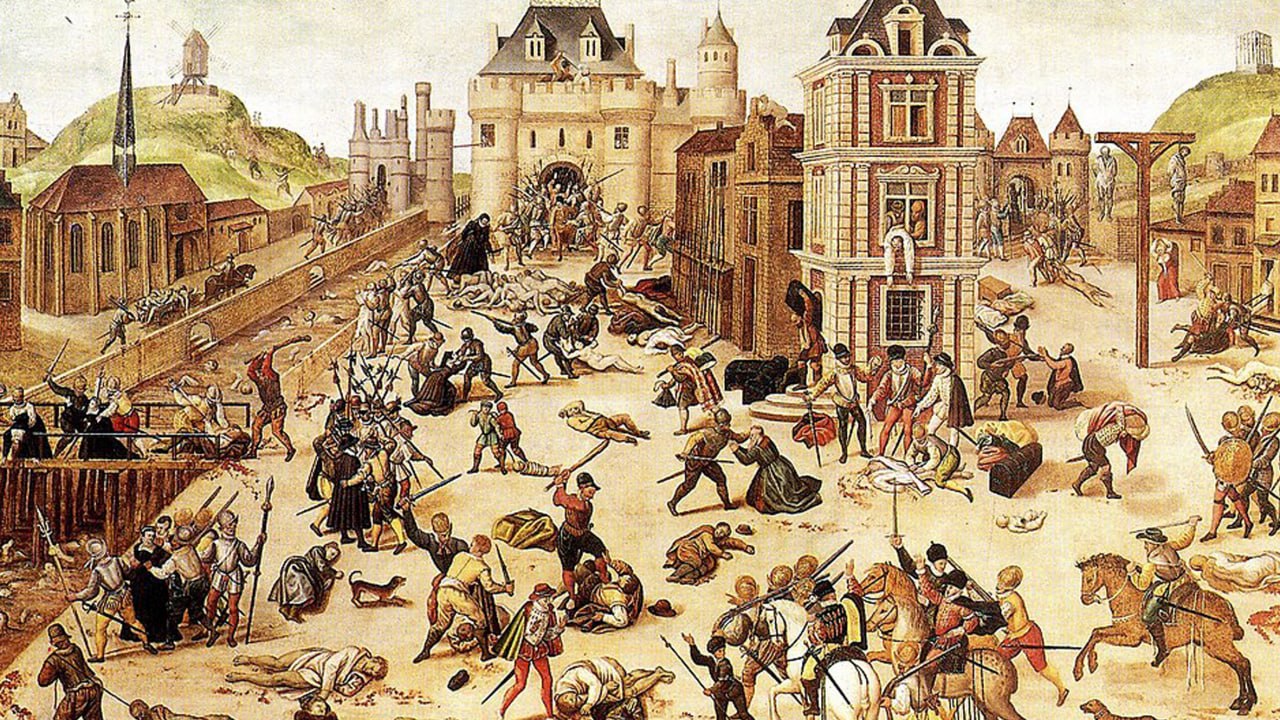
France was not always a free country when it came to religion and belief. During the late 16th century, the country was torn apart by the French Wars of Religion between Catholics and Protestants. In cities like Paris, neighbors who had once lived side by side grew suspicious of one another, their differences inflamed by political rivalry and religious fear. The violence reached a horrific peak during the St. Bartholomew’s Day Massacre, when thousands of Protestants, many of them ordinary civilians, were killed over the course of days. For families caught in the midst of this turmoil, faith was no longer a private matter but a risk that could determine survival. Accounts from the time describe individuals hiding their beliefs, fleeing their homes, or witnessing the murder of friends and relatives simply because they prayed differently.[2] Yet out of this period of bloodshed emerged a fragile but meaningful shift. When Henry IV of France came to power, he carried with him the memory of a divided nation, having himself navigated both Protestant and Catholic identities. In 1598, he issued the Edict of Nantes, granting Protestants limited rights to worship and legal protection. While imperfect and later revoked, it marked one of the first serious attempts by a European state to move away from religious violence toward coexistence. For many survivors, this did not erase the past, but it allowed a new reality to slowly take shape, one in which belief could begin, however cautiously, to exist without fear. The memory of St. Bartholomew’s Day therefore stands not only as a tragedy, but also as a reminder of how societies can evolve beyond sectarian violence. Still, modern France continues to debate questions of religion, identity, and secularism. How is France managing these challenges today?
Freedom of religion and belief is widely recognized as a fundamental human right, embedded in international instruments such as the Universal Declaration of Human Rights. The selected countries demonstrate varying models of implementing Freedom of Religion and Belief FoRB through constitutional protections, legal pluralism, and active civil societies. While their historical and political contexts differ,[3] each has developed mechanisms to manage religious diversity and support alternative belief communities.[4]
Across these countries, the implicit vision is to create societies where individuals can adopt, change, or reject religious beliefs without coercion.
- In the United Kingdom, this vision is reflected in the Human Rights Act 1998, which incorporates the European Convention on Human Rights.[5]
- France emphasizes laïcité, a model of secularism that seeks neutrality of the state in religious matters.[6]
- Canada promotes multiculturalism as a national value, embedding religious freedom in the Charter of Rights and Freedoms.[7]
- India enshrines secularism while recognizing religious diversity in its constitution.[8]
- South Africa’s post-apartheid constitution explicitly promotes equality and religious freedom as part of democratic transformation.[9]
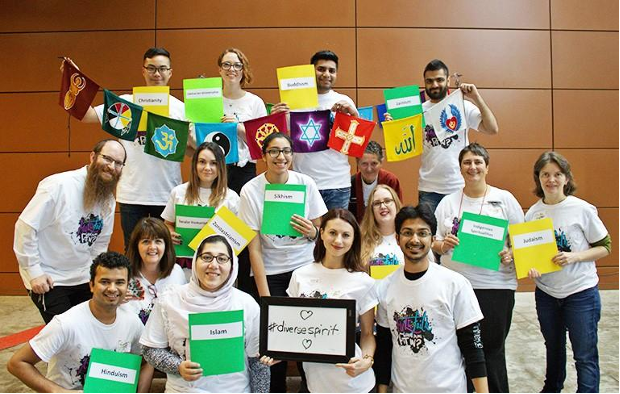
Purposes and Goals
The primary goals of policies pertaining to the freedom of faith and secularism in such countries include:
- Protecting individuals from religious discrimination
- Ensuring equal participation of diverse belief communities
- Preventing religious conflict through legal and institutional safeguards
For example, Canada’s legal framework supports minority religious accommodations, while South Africa’s constitutional court has played a key role in balancing religious freedom with equality rights.[11] In contrast, France prioritizes state neutrality, sometimes limiting public religious expression to maintain secular order.[12]
Leadership in securing and maintaining freedom of religion and belief in these countries operates at several levels, including government institutions, courts, and civil society groups. The interaction between these forms of leadership is important in turning legal principles into real-life outcomes.
In the United Kingdom, leadership shows a balance between tradition and change. Although the Church of England still has an official role in the state, political and legal institutions work to ensure that this does not limit wider religious freedom. Courts have played an important role in applying the Human Rights Act and dealing with cases related to religious discrimination. At the same time, civil society leaders and interfaith groups help shape public discussion and encourage more inclusive practices.[13]
France offers a model where the state strongly emphasizes secularism. Government institutions actively apply laïcité, especially in public schools and administration. However, this top-down approach is supported by civil society, where activists, scholars, and community leaders take part in ongoing debates about the meaning and limits of secularism. This combination reflects a continuous effort to balance state authority with social diversity.[14]
In Canada, leadership is more spread out and cooperative. The judiciary, especially the Supreme Court, plays a key role in interpreting the Charter of Rights and Freedoms and setting standards for religious accommodation. Political leaders support multicultural policies, while civil society organizations create spaces for dialogue and advocacy. This multi-level structure has helped build a system that is both stable and flexible.[15]
India’s leadership landscape is complex and sometimes contested. The judiciary has often acted as an important protector of secularism, especially in cases involving religious rights. However, political leadership can differ widely, which affects how policies are applied in practice. Civil society leaders, including activists and local organizers, play a key role in encouraging coexistence and addressing tensions at the community level. This shows the importance of having multiple sources of leadership in supporting religious freedom.[16]
South Africa offers a distinctive example of transformative leadership. The post-apartheid government, guided by figures such as Nelson Mandela, established a constitutional framework that prioritizes equality and human rights. Judicial institutions, particularly the Constitutional Court, have reinforced these principles through landmark decisions. At the same time, religious leaders and civil society actors continue to contribute to reconciliation and social development, reflecting a holistic approach to leadership.[17]
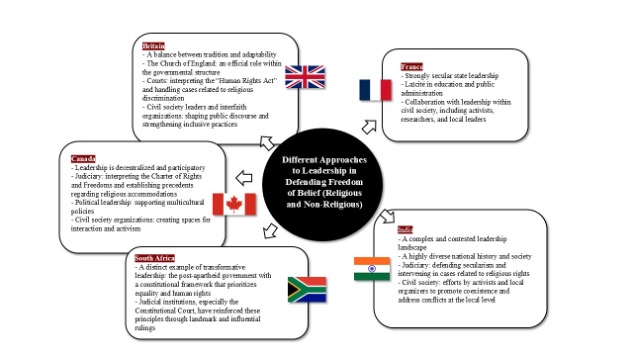
A key insight across these countries is that effective leadership in promoting freedom of religion and belief is not confined to formal authority structures. Instead, it emerges from the interaction of legal authority, political will, and societal engagement. Judicial leadership ensures accountability, political leadership provides direction, and civil society leadership fosters participation and innovation.
For observers and practitioners, this suggests that strengthening freedom of religion and belief requires investment in all three domains. Overreliance on any single form of leadership may lead to imbalances, whereas a diversified approach enhances resilience and adaptability. This multi-dimensional leadership model offers valuable insights for contexts where formal protections may be limited but opportunities for civic engagement remain.
Community and Environment
The social environments of the United Kingdom, France, Canada, India, and South Africa are shaped by different levels of religious diversity, historical experiences, and relationships between the state and society. These factors influence how freedom of religion and belief is understood and practiced. While laws provide formal protections, these freedoms are actually lived out and sometimes challenged in everyday social settings.
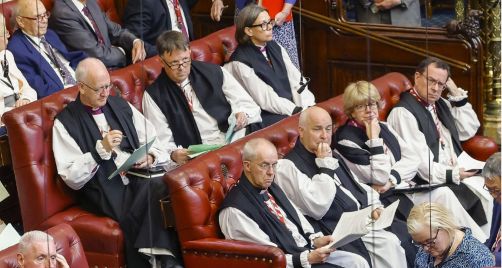
In the United Kingdom, religious diversity has grown a lot because of immigration after World War II, creating a multi-faith society that includes Christian, Muslim, Hindu, Sikh, Jewish, and non-religious communities. This has helped interfaith groups and community organizations grow, and they try to bring people together and improve understanding. Local interfaith councils often work at the city level and help connect religious communities with local authorities. These kinds of efforts are important,[19] but sometimes they are not always strong enough to solve deeper social tensions.[20]
France presents a different type of environment shaped by the principle of laïcité, which supports a clear separation between religion and public life. The idea is to treat everyone equally by limiting religious influence in state institutions. However, this has also caused tensions, especially among Muslim communities, who sometimes feel that rules about religious expression are unfair. This situation shows that even when rules are meant to be fair, people can still feel excluded in real life.[21]&[22]
Canada’s environment is often cited as a model of multicultural coexistence, where diversity is not only tolerated but encouraged. Religious communities actively participate in public life, supported by policies that promote accommodation and inclusion. Community organizations, including interfaith networks and advocacy groups, play a central role in fostering mutual understanding and addressing discrimination. This environment has enabled alternative belief systems, including humanist and secular movements, to operate alongside traditional religious communities.[23]
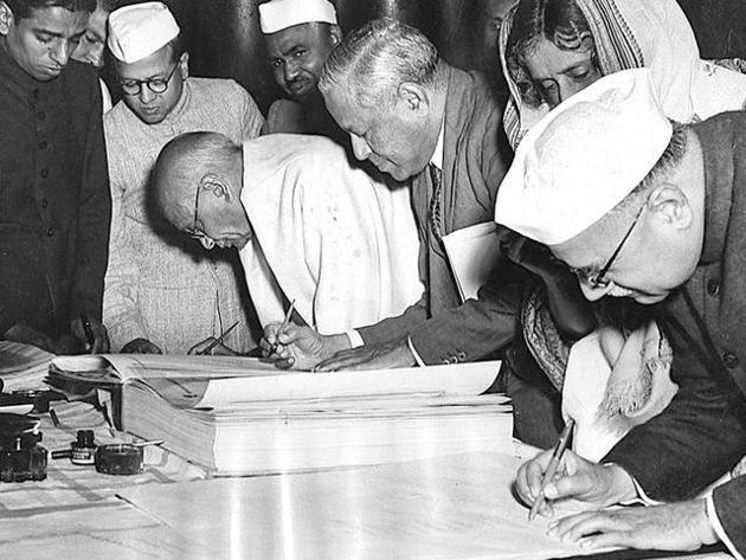
India’s social environment is marked by deep historical pluralism, encompassing a wide array of religions, languages, and cultural traditions. While the constitutional framework supports secularism, the lived reality is complex, with periodic tensions and conflicts. Civil society organizations, grassroots movements, and local leaders often act as mediators, promoting coexistence and addressing communal disputes. The scale and diversity of India present both opportunities and challenges for sustaining religious freedom.[24]&[25]
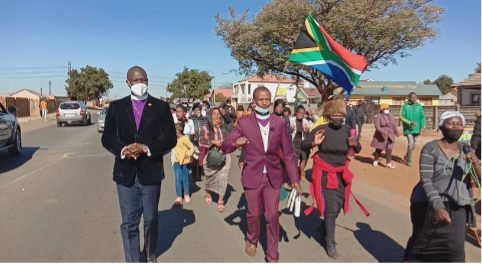
In South Africa, the post-apartheid context has created a strong emphasis on inclusivity and reconciliation. Religious communities played a significant role in the anti-apartheid struggle and continue to contribute to social cohesion. The country’s diverse population includes Christian, Muslim, Hindu, Jewish, and indigenous belief systems, all of which are recognized within a constitutional framework that prioritizes equality. Civil society organizations and faith-based groups remain active in addressing social issues, reinforcing the practical dimensions of religious freedom.[26]
Across these countries, the interaction between legal protections and social environments highlights the importance of community-level engagement. Freedom of religion and belief is not just a legal condition but a lived experience shaped by social attitudes, institutional practices, and ongoing dialogue. For observers and activists, this underscores the necessity of understanding local contexts and building inclusive environments that support diverse belief systems.
Message and Activities
The core message emerging from these five countries is that freedom of religion and belief must be actively maintained through continuous engagement, rather than assumed as a static legal achievement. This message is operationalized through a wide range of activities carried out by governments, civil society organizations, and community networks.
In the United Kingdom, interfaith dialogue has become a central mechanism for promoting coexistence. Organizations such as the Inter Faith Network facilitate cooperation among religious communities, organizing events, educational programs, and policy consultations. These initiatives aim to reduce prejudice, build trust, and encourage collaborative responses to social challenges. Educational institutions also play a role by incorporating religious studies and diversity awareness into curricula, thereby shaping attitudes from an early age.[28]
France, on the other hand, and despite its restrictive approach to public religious expression, has witnessed significant civil society activity aimed at bridging divides. Advocacy groups work to defend minority rights, challenge discriminatory policies, and promote dialogue within the practical definition of laïcité. Public debates, academic forums, and grassroots campaigns contribute to an ongoing redefinition of secularism, highlighting its dynamic nature rather than a fixed doctrine.[29]
The other example is Canada. Canada’s activities are influenced by its commitment to multiculturalism. Government-supported programs encourage intercultural dialogue, while non-governmental organizations provide platforms for cooperation among diverse belief communities. Legal advocacy is also prominent, with courts frequently addressing cases relevant to religious accommodation, such as the wearing of religious symbols or observance of religious practices in public institutions. These activities reinforce the principle that religious freedom must be balanced with other rights in a pluralistic society.[30]&[31]
In India, which one must expect serious approaches toward religious tolerance and freedom, activities related to religious freedom often occur at the grassroots level. Civil society organizations, local leaders, and community groups engage in conflict resolution, peacebuilding, and awareness campaigns. Interfaith initiatives, though sometimes limited in scale, play a crucial role in mitigating tensions and fostering understanding. Additionally, legal activism, through public interest litigation, has been used to challenge violations of religious freedom and uphold constitutional principles.[32]
South Africa’s approach emphasizes reconciliation and social justice. Faith-based organizations and civil society groups actively address issues such as inequality, discrimination, and community development. Interfaith councils and dialogue platforms contribute to national cohesion, while educational and outreach programs promote awareness of constitutional rights. These activities reflect a broader commitment to integrating religious freedom into efforts to build an inclusive society.[33]
We can now have a look at patterns: what will we witness? First, interfaith dialogue is a key tool for promoting coexistence. Second, education and awareness are essential for sustaining tolerant attitudes. Third, legal advocacy ensures that rights are not only recognized but enforced. Finally, grassroots initiatives provide the foundation for meaningful engagement, translating abstract principles into practical action.
These activities demonstrate that freedom of religion and belief is not solely the responsibility of governments. Instead, it requires active participation from communities, organizations, and individuals. The diversity of approaches across countries also suggests that there is no single model; rather, effective strategies must be adapted to specific social and political contexts.
Outreach efforts of such approaches often extend beyond national borders. For example:
- Canada and the UK support international FoRB initiatives through diplomacy and development programs
- NGOs in these countries collaborate globally to promote religious tolerance
- South Africa engages in regional human rights advocacy
Such outreach reinforces global norms and provides models for other societies.
Conclusion: Lessons for Iranian Society
As the argument we had in this paper suggests, the experiences of these five countries suggest that securing freedom of religion and belief requires not only legal frameworks but also sustained civil society engagement.
For Iranian society, several lessons emerge:
- Grassroots organization matters: Change often begins with community-level initiatives rather than top-down reforms.
- Pluralism can be cultivated gradually: Even in contexts with strong dominant ideologies, incremental steps toward inclusion are possible.
- Legal awareness is crucial: Educating citizens about rights strengthens their ability to advocate peacefully.
- Inter-community dialogue reduces tension: Building bridges among different belief groups can foster mutual understanding.
Importantly, these lessons for us are most applicable to activists and communities, not governmental structures. Iranian civil society can draw inspiration from these models to promote coexistence, support marginalized belief groups, and expand spaces for dialogue, while adapting strategies to local realities.
[1]. François Dubois. St. Bartholomew’s Day Massacre – from “Five of the Most Violent Moments of the Reformation.” The Conversation, January 20, 2017.
[2]. Barbara B. Diefendorf. Beneath the Cross: Catholics and Huguenots in Sixteenth-Century Paris. Oxford University Press, 1991.
[3]. Jeroen Temperman. State–Religion Relationships and Human Rights Law. Martinus Nijhoff, 2010.
[4]. Jonathan Fox. Political Secularism, Religion, and the State. Cambridge University Press, 2015.
[5]. UK Parliament. Human Rights Act, 1998.
[6]. Jean Baubérot. Laïcité 1905–2005: Entre Passion et Raison. Seuil, 2017.
[7]. Government of Canada. Canadian Charter of Rights and Freedoms, 1982.
[8]. Granville Austin. The Indian Constitution: Cornerstone of a Nation. Oxford University Press, 1999.
[9]. Republic of South Africa. Constitution of the Republic of South Africa, 1996.
[10]. Christian Durand. “In These Challenging Times, Concordians Find Connection Through the Multi-faith and Spirituality Centre.” Concordia University News, November 3, 2020.
[11]. Mashood A. Baderin. International Human Rights and Islamic Law. Oxford University Press, 2007.
[12]. John R. Bowen. Why the French Don’t Like Headscarves. Princeton University Press, 2007.
[13]. David McLean, and Alistair McMillan. State–Religion Relationships in the UK. Routledge, 2013.
[14]. Jean Baubérot. Laïcité 1905–2005: Entre Passion et Raison. Seuil, 2017.
[15]. Richard Moon. Freedom of Conscience and Religion. University of Toronto Press, 2008.
[16]. Rajeev Bhargava, ed. Secularism and Its Critics. Oxford University Press, 2010.
[17]. Charles Villa-Vicencio. Walk with Us and Listen: Political Reconciliation in Africa. Georgetown University Press, 1996.
[18]. “The Dream of the Indian Republic.” Hindustan Times, February 10, 2021.
[19]. Adam Dinham and Matthew Francis. Religious Literacy in Policy and Practice. Policy Press, 2015.
[20]. Tariq Modood. Multiculturalism. Polity Press, 2013.
[21]. John R. Bowen. Why the French Don’t Like Headscarves. Princeton University Press, 2007.
[22]. Jean Baubérot. Laïcité 1905–2005: Entre Passion et Raison. Seuil, 2017.
[23]. Will Kymlicka. Multiculturalism: Success, Failure, and the Future. Migration Policy Institute, 2012.
[24]. Rajeev Bhargava, ed. Secularism and Its Critics. Oxford University Press, 2010.
[25]. Amartya Sen. The Argumentative Indian. Farrar, Straus and Giroux, 2005.
[26]. Charles Villa-Vicencio. Walk with Us and Listen: Political Reconciliation in Africa. Georgetown University Press, 1996.
[27]. “Brits ‘Uncomfortable with Religious Privilege’, Polling Suggests.” National Secular Society, March 25, 2026.
[28]. Adam Dinham, and Stephen H. Jones. “Religion, Public Policy and the Academy.” Journal of Contemporary Religion, vol. 27, no. 2, 2012.
[29]. John R. Bowen. Why the French Don’t Like Headscarves. Princeton University Press, 2007.
[30]. Richard Moon. Freedom of Conscience and Religion. University of Toronto Press, 2008.
[31]. Will Kymlicka. Multiculturalism: Success, Failure, and the Future. Migration Policy Institute, 2012.
[32]. Rajeev Bhargava, ed. Secularism and Its Critics. Oxford University Press, 2010.
[33]. Jeffrey Haynes. Peace, Politics, and Religion. Routledge, 2020.
[34]. Cyril Zenda. “South African Clerics Trace Bloody Looting Frenzy to ‘A Wounded Society.’” Religion Unplugged, July 21, 2021.
