
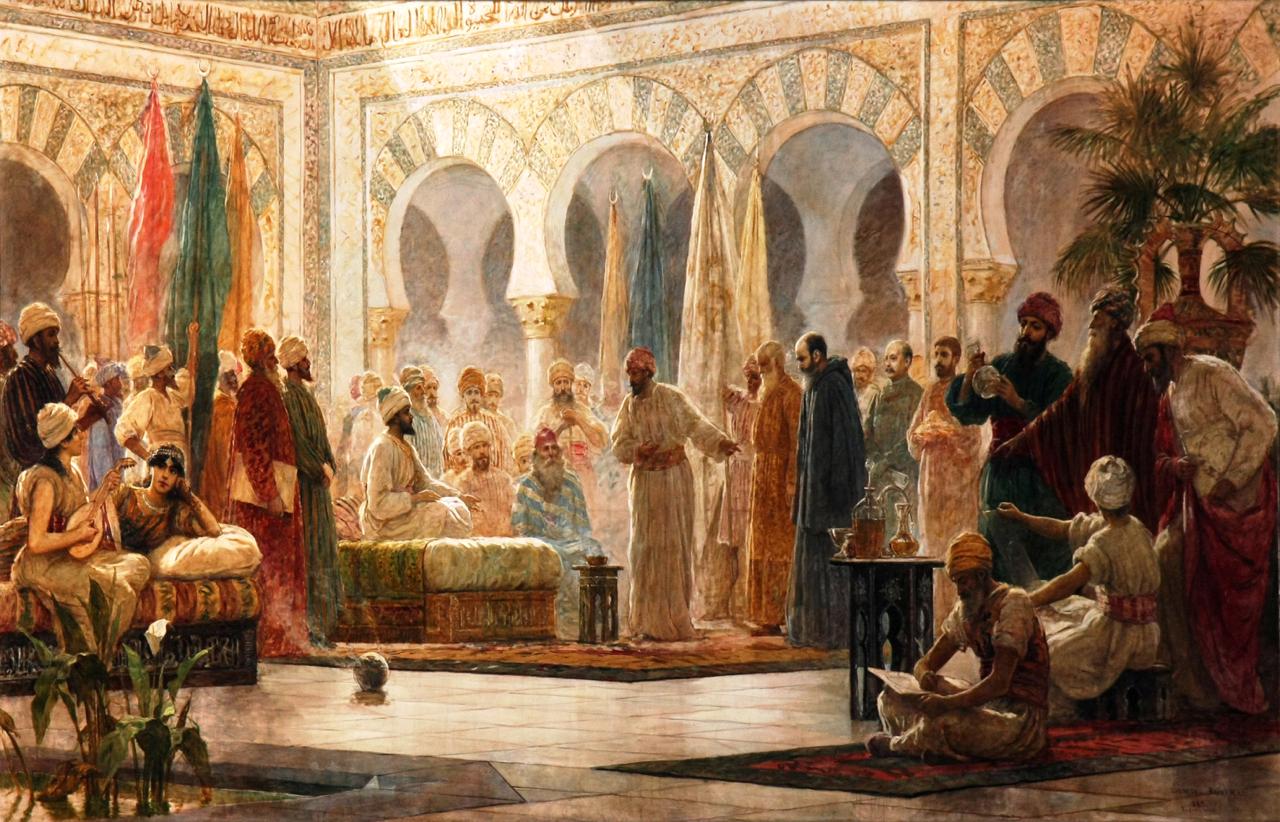
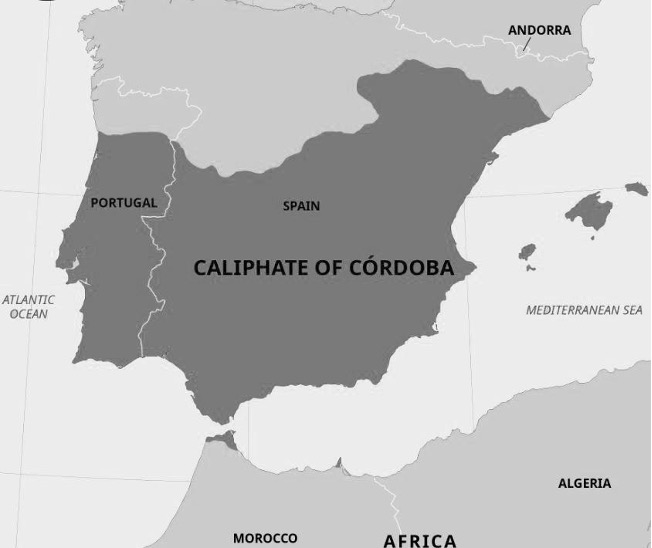
The Caliphate of Cordoba, formed in the 10th century region of al-Andalus (Islamic Spain) is often considered as one of the brightest examples of relative religious tolerance and cultural flourishing. Under the rule of Caliph Abd al-Rahman III followed by his son, al Hakam II, Muslims, Christians, and Jews coexisted in a society that contemporary observers admired for its intellectual brilliance and pluralistic grounding. This ornament of the world, astonishing many at the time with such prosperity, was one where all faiths engaged with classical traditions to a degree unimaginable to the Christian West of the time. Modern historians use the term convivencia, meaning ‘coexistence’ in Spanish, to refer to this interfaith harmony, while cautioning it was not an unblemished utopia. In Cordoba, religious minority communities broadly enjoyed peace and productive interaction, dotted with only infrequent instances of religious strife. It is important to examine how such interfaith coexistence was maintained during the Cordoban Islamic age and how its political, social, and intellectual underpinnings fostered a historically unique climate of tolerance and cultural pluralism. Furthermore, one must closely follow the limitations of this tolerance and the eventual decline of Cordoba’s model before considering its enduring outcomes and legacy. Was Cordoba really an example of religious tolerance, or was there no such tolerance there? Were non-Muslims equal to Muslims, or was their presence merely tolerated for specific reasons?
The Roots of Pluralism and the Umayyad Emirate
In 711 CE, the Iberian Peninsula witnessed the dawn of Islamic rule after the might of Muslim Arab and Berber forces finally overwhelmed the Visigoths. In the aftermath, with the crown vanquished from the region, a diverse society took shape under Umayyad governance. Notably, the Muslim conquerors were just a small minority and needed to govern a populace largely composed of Iberian christians and a significant Jewish minority. In the early stages, pragmatic arrangements were made. Local Christians and Jews were granted protected status as dhimmi, under Islamic law. This meant that they were free to continue practicing their religion as long as they paid a special tax and acknowledged strict Muslim political supremacy. This organization of hierarchy followed precedents in other lands also under Muslim rule and was grounded in Islamic teachings that mandated fair treatment for Jews and Christians as fellow monotheists, despite certain social and legal restrictions. Spain, under the Visigoths, previously maintained religious repression, especially against the Jews. This severe system included forced conversions and property confiscations.
By contrast, many inhabitants welcomed this new order, as Christians and Jews were free to practice their religion, provided they paid the jizya and respected Muslim authority. This was a major improvement from previous Visigoth persecution. Thus, from the outset, pluralism by necessity characterized al-Andalus. The Arab-Islamic ruling class simply could not impose its culture by force on the vast majority, and instead gradually integrated with local society.
Over the 8th and 9th centuries, al-Andalus consolidated around Cordoba. After surviving the collapse of the Umayyad caliphate in the East, a fugitive prince named Abd al-Rahman I established himself in Cordoba in 756. With this, he declared an independent Umayyad Emirate. Slowly, Arabic language and culture spread, a process of Arabization and Islamization that unfolded gradually but unevenly. Many native Iberian Christians fell under the classification of Mozarab, exactly ‘would-be Arabs’. These were culturally Arabized Christians who spoke Arabic and adopted many aspects of Islamic-Iberian culture while maintaining their faith. The Jewish community, about 5% of the population, would also become deeply integrated with urban life, and many Jews came to speak Arabic and participate in commerce and scholarship. By the early decades of the 10th century, al-Andalus contained a plethora of ethnic and religious groups such as Arabs, Berbers, Muladies, Mozarabs, and Sephardic Jews all contributing to the society’s makeup. This diversity was born under a practice of hybridization. The blending of Arab-Islamic, Berber, and Iberian elements set the stage for the relative religious tolerance that followed.
Abd al-Rahman III
By the late 9th century, the Umayyad emirate faced significant internal divisions and external threats. Various local lords and rebels, including Muslim converts of Iberian descent who felt marginalized, challenged the central authority. However, Abd al-Rahman III, ascending the throne in year 921 at the age of 21, decisively restored unity and extended Umayyad power. Through a combination of military campaigns alongside calculated statecraft, Abd al-Rahman III subdued many rebel factions and rival caudillos, the warlords populating al-Andalus. By 929, having secured his domain and eager to elevate his legitimacy, he proclaimed himself Caliph. This was a direct challenge to the Abbasid Caliph in Baghdad and the Fatimid Caliph in North Africa.[1] This adoption of the ‘Caliph’ title transformed al-Andalus into the Caliphate of Cordoba, inaugurating what would become its golden age.
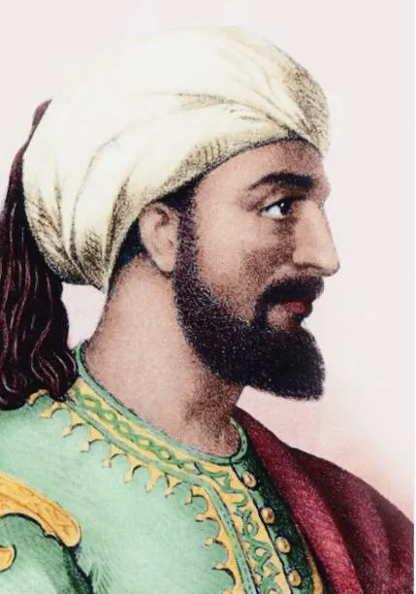
Under Abd al-Rahman III’s strong rule, he was able to largely secure political stability and economic prosperity. Contemporary scholars note that he founded a pristine new palace-city, Madinat al-Zahra, and “promoted the cultural development of his court,” electing to “fascinate and co-opt” former opponents rather than eliminate them.[3] This inclusive approach extended to the region’s diverse communities. The caliph’s own heritage embodied pluralism. He was the grandson of a Basque Christian princess and had a Christian mother as well. These connections helped inform a relatively pragmatic attitude toward non-Muslim subjects. Abd al-Rahman III’s reign was remembered as unusually tolerant. He maintained a fairly lenient treatment of non-Muslims provided they were not slaves or rebels. The stability he imposed allowed agriculture, trade, and industry to flourish, and Cordoba soon grew into one of the most populous cities in Europe. Some estimates placed 3000 mosques and 100,000 shops and homes within its limits.[4] The multiethnic social structure of al-Andalus, consisting of Arabs, Berbers, indigenous Iberians, Europeans, and Jews, was now unified under a powerful central government that drew success from compromise and inclusion. Indeed, it is noted that pluralism was a political necessity for Cordoba, as it was cut off from further conquests and surrounded by Christian kingdoms to the north and rival Muslim states to the south. Al-Andalus gave up external conquest to place its trust in the economic development of its territory. The strategy included winning over the local population without overimposed pressure to assimilate. Overall, the Caliphate of Cordoba had evolved into a hybrid civilization by the opening of the 10th century. Islamic governance and dominant culture, yet still with profound shaping by Christian and Jewish inhabitants set the stage for an era of remarkable coexistence.
Systematic Coexistence
The relative harmony amongst religious communities in Cordoba was supported by institutional and legal frameworks that gave minorities a degree of protection. Islamic law identified Christians and Jews as dhimmis, a protected class who was part of the social contract of a Muslim state. As dhimmis, they were guaranteed safety of their person, property, and freedom of worship. In exchange, they would need to meet certain obligations. Among these was the jizya poll tax. This yearly tax on non-Muslims, alongside the kharaj land tax for owning farmland, was part of the means by which the state profited from their non-Muslim population. Additionally, regulations (often inspired by the early Islamic Pact of Umar) could impose social markers or minor restrictions. For example, dhimmis might be asked to wear distinctive attire or refrain from public religious processions, church bell-ringing, and building new houses of worship taller than mosques. In practice, enforcement of these rules was different for each region, and cosmopolitan Cordoba maintained a rather loose nature when applying these restrictions.
Consistently, however, non-Muslims did lack certain rights only guaranteed to Muslims. Notably, they were theoretically barred from positions of authority over Muslims and from military service. However, the Umayyad rulers of al-Andalus frequently set aside or reinterpreted these ideas in order to suit state interests. With this, many talented Christians and Jews were integrated into public service in ways that would have been unthinkable to many contemporary societies.
Abd al-Rahman III, exemplified this flexible approach. While insisting on his political supremacy, he employed non-Muslims into high offices and treated his loyal Christian and Jewish subjects with a practical fairness. To him, both Jews and Christians deserve equal treatment based not on their faith, but on their loyalty as subjects. Christians were allowed to maintain their religious hierarchy. The Catholic Church in al-Andalus remained operational, with its network of bishops, monasteries, and parish churches largely intact. The court of the Caliphate, however, did require that new bishops receive approval from the Muslim authorities before taking their office. This acted as a form of oversight that underscored political control, although it still tacitly acknowledged the autonomy of the Church in spiritual matters. In general, the governing elite recognized that tolerance of ecclesiastical and communal structures within dhimmi communities would ensure their loyalty. The outcome was a social cooperation in which minorities enjoyed security and communal self-governance. In return, they contributed to the prosperity and stability of the realm.
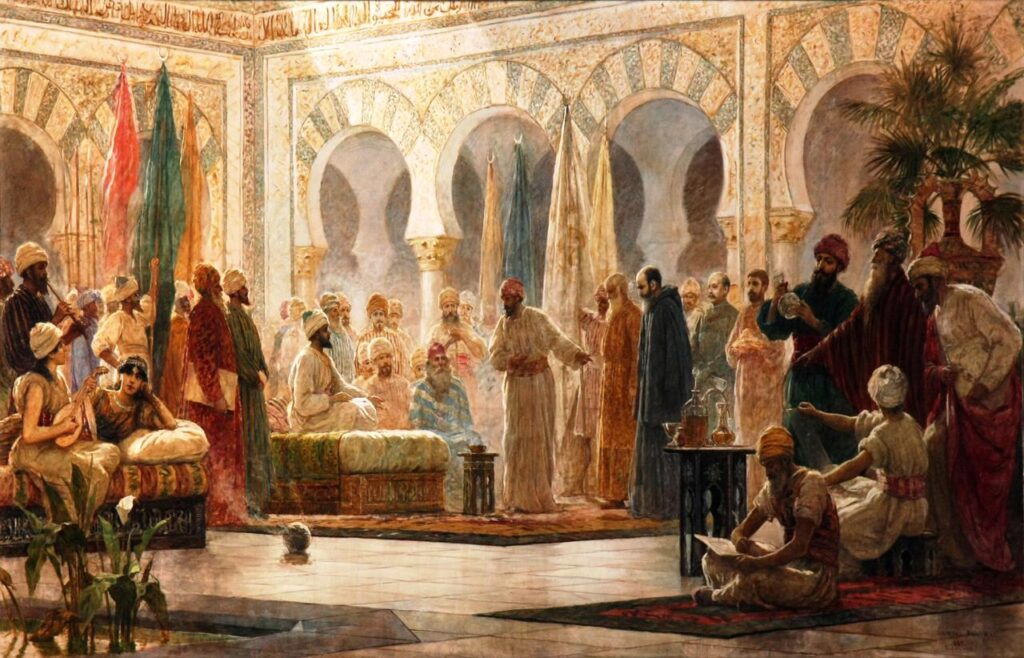
One of the clearest indications of Cordoba’s tolerant climate was the presence of Christian and Jews in the upper classes of society. In the 10th century, some Christians attained important bureaucratic and diplomatic posts. Notably, a Christian official known by the Arabic name Abu Umar ibn Gundisalv (likely born ‘Fernando’ of a noble Mozarab family) rose to become a vizier under Abd al-Rahman III. Another Christian, Revemund, served as secretary to the Caliph, and was entrusted as an ambassador to the German court of Otto I.[6] After years of distinguished service in the Muslim administration, Revemund was even appointed Bishop of Elvira, exemplifying the fluid career of a man who navigated both Christian ecclesiastics as well as Muslim royal service. These examples illustrate again the importance of merit and loyalty and their ability to outweigh religious affiliation in the political sphere. Though Islamic law formally disallowed dhimmis from authority of Muslims, “in practice, this was not the case” in Cordoba’s paramount, as “many Christians and Jews acquired positions in the Cordoban bureaucracy as tax collectors, translators, and secretaries”.[7] The sprawling bureaucracy and diplomatic corps of the Cordoban Caliphate benefitted from the linguistic skills and connections that Christian officials were able to provide when dealing with northern Christian kingdoms. Jewish officials served similar purposes in diplomacy and finance.
In particular, the Jewish community experienced a sort of renaissance during this period, often being referred to as the “Golden Age” of Jewish culture in Spain.[8] Under the tolerant policies of the caliphs, Jews flourished in commerce, scholarship, medicine, and state service. A notable example is Hasdai Ibn Shaprut, a Jewish physician and mathematician from Cordoba who became one of Abd al-Rahman III’s most relied upon advisors. Beginning as the Caliph’s personal doctor, Hasdai’s engaged demeanor, advanced knowledge, and extraordinary ability won Abd al-Rahman’s complete confidence.[9] He was effectively made a minister without the title of such, overseeing customs duties and foreign correspondence, consequently acting as a de facto vizier and foreign minister for the Caliphate. Under Hasdai’s stewardship, Cordoba maintained diplomatic ties as far afield as Constantinople and the Christian kingdoms of the north. The rise of a Jew to such a high position is telling. It attests that religious identity provided no absolute barrier to advancement in society. Indeed, “Jews came to hold very influential positions in the Umayyad bureaucracy,” with figures such as Hasdai ibn Shaprut serving as a testament to the integration of the community into Andalusian public life.[10] Jewish courtiers, officials, and merchants enjoyed the protection of the state. In return, their talents and specialties enriched Cordoban civilization. This golden age fostered prosperity for poets, scholars, and philosophers, additionally contributing to scientific and mathematical fields. This high status of Jews and the presence of Christians in government was a notable departure from the practices of earlier Visigothic rule. Furthermore, most contemporary European Christian kingdoms also heavily persecuted Jewish minorities and did not tolerate Muslim officials.
Socially, Cordoba’s populace mixed to a considerable degree. The capital city and other major towns were ethnically and religiously diverse. Arab, Berber, and Iberian Muslim families lived alongside Mozarabs and Jews in adjacent neighborhoods, allowing for interaction in the marketplaces, workshops, and baths of the city. Many Christians in Cordoba adopted Arab dress and names, and Arabic gradually became the lingua franca for Jews and Christians as well. Despite many Christians adopting Arabic cultural traditions, they also sought to preserve their liturgical Latin and Visigothic traditions in monasteries, maintaining their distinct religious identity even as they became culturally hybrid. This dual identity of Mozarabs, being loyal to their faith, yet acculturated to Islamic society, bridged the communities. Conversion to Islam was also common over generations, further blurring lines. Converts gained social mobility and were welcomed, which gradually increased the Muslim percentage of the population without coercion.
Yet even as conversion slowly reduced the Christian population, Cordoba remained home to tens of thousands of Christians and Jews who did not convert. This indicated that, for a substantial period, living as a non-Muslim under Muslim rule was sufficiently tolerable, and mass conversion was not compelled. The loyalty of these communities was largely maintained. Consequently, there were few revolts by religious minorities in the 10th century. On the contrary, there are records of Mozarab Christians actively defending the Andalusian state. Along the frontier, some Christian militiamen served in border garrisons, even serving in fights against the armies of northern Christian kingdoms during seasonal raids. Although dhimmi communities were normally exempt from military service, it was “not uncommon for Christian’s to serve in the garrisons, participate in seasonal raids, and volunteer in the defense of al-Andalus against their co-religionists in the north.”[11] In a famous 778 incident, the Christian inhabitants of the city of Zaragoza refused to collaborate with the invading Frankish army of Charlemagne, remaining loyal to their Muslim governors and causing Charlemagne’s campaign to fail. This striking example displays how inclusive governance and fair treatment created strong ties of loyalty. The Mozarabs of Zaragoza, like those of Cordoba, had no desire to be ‘liberate’ by foreign Christians. Under the Umayyad rule, they were already secure in their worship and property.
Overall, the political and social foundations of Cordoba’s convivencia rested on a balance of rights and responsibilities. Non-Muslims were second-class citizens in theory, but in practice were integral participants in an Islamic state that valued their contributions. Through prudent governance, including a combination of Islamic legal tolerance, pragmatic power sharing, and cultural inclusivity, the Umayyad caliphs cultivated a society in which Muslims, Christians and Jews could coexist in relative harmony. As long as they recognized the sovereignty of the caliph and kept the peace, minorities were not only tolerated but, at times, elevated. This created a broad sense of investment in the social order across religious lines, laying the groundwork for the remarkable cultural and intellectual synergy that soon blossomed in al-Andalus.
Cordoba: An Intellectual Hub of a Dark Era
By the middle of the 10th century, Cordoba was arguably the most important intellectual center of Western Europe. Under Abd al-Rahman III and al-Hakam II, the city gathered knowledge and scholars at a pace unmatched by any other European region at that time. With peace and prosperity at home, the caliphs invested heavily in education, scholarship, and the arts. Al-Hakam II, especially, was a renowned patron of learning, so much so that he was named the “protector of sciences”.[12] He expanded the royal library of Cordoba into a marvel. Some document that it grew to hundreds of thousands of volumes, dwarfing any library in Christian Europe. Although such numbers may be exaggerated, it is clear the library was vast and comprehensive, covering topics such as theology, literature, law, science, and philosophy. To fill its shelves, al-Hakam II dispatched agents to the major centers of learning in the Islamic East to acquire books. He also invited distinguished scholars from Eastern lands to visit or settle in Cordoba. Amongst these that the Caliph invited were prominent thinkers from the Arabic kingdoms. They were tasked with preaching at the city’s grand mosque, being paid directly by the state for doing so. This effectively transformed the Great Mosque into a hub of higher learning. Al-Hakam also established 27 free schools in Cordoba, greatly increasing literacy rates among the people. Importantly, learning in al-Andalus was not confined to Muslims. The Cosmopolitan atmosphere means that educated Christians and Jews also took part in intellectual life.
They studied alongside Muslims in subjects like medicine, astronomy, and philosophy, using Arabic as a common scholarly language. In Cordoba, unlike in the Christian kingdoms, classical knowledge (Greek and Roman) was actively sought and discussed by people of all three faiths, often together. Rather than segregating into three separate intellectual spheres, they partook in a broad and unitive culture drawing from elements of each of their traditions. With this cultural integration, the advancements made by one community were often shared across religious lines, creating a synchronized intellectual climate.
One of the most significant achievements of the Cordoban golden age was its role as a bridge of knowledge between the Islamic east, classical antiquity, and Latin Christendom. The 10th century Caliphate of Cordoba eagerly participated in the broader Islamic scholarly tradition that had flourished earlier in places like Abbasid Baghdad. In particular, this included translations of many Greek philosophical and scientific works into Arabic. In al-Andalus, this project took on a multi-faith dimension. A famous example occurred during Abd al-Rahman III’s reign when the Byzantine Emperor Constantine VII sent gifts to Cordoba around 949 AD as part of a diplomatic exchange. Among these gifts was a magnificent Greek manuscript of Dioscorides’ De Materia Medica, an ancient compendium of medicinal knowledge highly prized by physicians. However, at that time, few in al-Andalus could read Greek. The task of unlocking this knowledge fell to Hasdai ibn Shaprut, the Caliph’s Jewish physician and minister. At Abd al-Rahman’s behest, Hasdai assembled a team and oversaw the translation of Dioscorides from Greek into Arabic, with crucial help from a monk named Nicholas who was brought from the Byzantine Empire for his linguistic skills. Hasdai utilized the aid of a Greek monk named Nicholas and made Dioscorides into a common property of the Arabs and of medieval Europe.[14] This collaboration between a Muslim ruler providing patronage, a Jewish scholar directing the project, and a Christian monk contributing his knowledge epitomizes the cross-cultural scholarly exchange in 10th century Cordoba. The resulting Arabic version of De Materia Medica became a standard reference in both the Islamic world and, later, in Latin Europe. Subsequently, through cooperative efforts like this, classical Greek science and medicine entered Western Europe via al-Andalus, carrying the imprint of interfaith teamwork.
The relationship was not one-directional. Cordoba also became an exporter of knowledge to Christian lands. During the late 10th century, Christian scholars traveled frequently to al-Andalus to access texts and learning unavailable in Latin Christendom. One notable visitor was Gerbert of Aurillac, a French monk who later became Pope Sylvester II. Gerbert traveled to Catalonia and supposedly Cordoba itself in the 970s, where he was heavily impacted by the literature of al-Hakam II’s library. He studied mathematics and astronomy from Arabic books, acquiring Arabic numerals.[15] Gerbert carried this knowledge with him back north, reintroducing the abacus and concept of zero to European scholars. He is also credited with helping to transmit Arabic numerals to Europe. His story reflects a broader truth. Cordoba’s libraries and schools were truly the envy of Europe, and many Christian intellectuals knew this. Books on philosophy, medicine, and the natural sciences that had been preserved or produced in Arabic often found their way, by trade or diplomacy, to Christian monasteries. In time, especially after the capture of Toledo in 1085 and later Cordoba in 1236 by Christian forces, systematic efforts were made to translate Arabic works back into Latin. But even during the 10th century, the groundwork for this transfer was being laid in multifaith contexts within al-Andalus. The Caliphate’s policy of tolerance meant that scholars of all faiths could interact. For example, Hasdai ibn Shaprut maintained his correspondence and friendships with not only Muslims and Jews, but with Christian kinds and churchmen as well. He famously exchanged letter with the Christian Holy Roman Emperor, facilitating medical and scientific insights.
Beyond formal scholarship, the convivencia fostered day-to-day cultural and intellectual blending of knowledge, a sort of ‘cross-pollination’. In the cosmopolitan salons of Cordoba, one might find a Muslim qadi debating theology with a Mozarab priest, or perhaps and Arabic-writing Jewish poet reciting verses alongside Muslim poets. Languages intersected frequently. Educated Jews and Christians in Cordoba commonly knew Arabic, while some Muslims learned Latin or Hebrew. This linguistic diversity enabled a rich exchange. For instance, literature and philosophy benefitted from intercultural dialogue. The works of Arabic poets and philosophers like Al-Farabi and Aristotle were studied by Jewish thinkers such as Solomon Ibn Gabirol and later Moses Maimonides, both writing in Judeo-Arabic. These Jewish philosophers, in turn, influenced Christian scholastics. Comparisons are frequently drawn between their works and those of St. Thomas Aquinas. In Cordoba’s golden age, the cross-cultural development was already underway. Hasdai ibn Shaprut, for instance, patronized Jewish poets and scholars, helping to launch what would become a brilliant tradition of Hebrew poetry written in al-Andalus. Subsequently, this would become a tradition deeply infused with Arabic poetic styles and vocabulary.
Christian writers in al-Andalus, though fewer in number, also engaged with Islamic culture. Some Mozarabs composed chronicles in Arabic, and translations of portions of the Bible into Arabic were made for local use, blending even the most sacred of traditions. In the realm of art and architecture, we see tangible signs of collaboration. Byzantine Christian artisans were invited to Cordoba to decorate the palaces and the Great Mosque with intricate mosaics and craftsmanship all the way from Constantinople. The result was an architectural style in Cordoba that blended influences. Roman columns and Visigothic arches were incorporated into mosque construction, and the Caliphal palaces displayed mosaic created by Christian Greek artists for the Muslim Caliph.[16]
Music serves as another example. The famous musician Ziryab, who arrived in Cordoba from the East earlier in the 9th century, introduced Persian and Iraqi musical traditions to al-Andalus, where they were embraced by all communities. This transformed Iberian music, and even influenced later European music (the lute). Thus, Muslims, Christians, and Jews were not merely tolerating each other in Cordoba, they were actively learning from each other and creating a new, hybrid culture. It is observed that Andalusia stood as a “unique experience in terms of accomplishments in all spheres of life… most important was the experience of diversity and dialogue. Cultural coexistence took many forms, weaving a pattern of contact and creation”.[17]
The intellectual culture of Cordoba reached heights of creative synergy precisely because of this pluralist environment. Fields such as medicine thrived through input from all perspectives. The Muslim physician Abu al-Qasim al-Zahrawi wrote an influential surgical encyclopedia in Cordoba. This featured doubtless drawing on Greek knowledge utilizing translations and possibly consultation with Jewish and Christian medical colleagues in the hospitals of the city.[18] Astronomy and mathematics, similarly, saw contributions from diverse scholars. The calendar of Cordoba, and elaborate astronomical almanac completed in 961, was the work of a team that included the Christian bishop Recemundus collaborating with Muslim astronomers. In philosophy and theology, religious differences did not prevent dialogue. Debates on the nature of the soul or the recognition of faith and reason engaged Muslim thinkers like Ibn Masarra, and later Ibn Rushd. It extended to Jewish thinkers like Ibn Gabirol, and Christian thinkers were also recipients of these ideas. It is telling that when later generations looked back in this era, they marveled at how Muslims, Christian, and Jews all received respect and saw success at all levels of society, actively contributing to the shaping of intellectual life.
By the end of the 10th century, Cordoba stood as Europe’s home and source for learning. It had become the greatest academic center until the political collapse later in the 11th century, which far outpaced any contemporary scholarly centers in Latin Christendom. The free exchange of ideas with the broader Islamic world (relying on networks linking Andalus to Baghdad, Cairo, and beyond) kept Cordoba at the cutting edge of science and culture. Paper was of common use in Cordoba’s libraries and schools, giving Andalusian scholars a material advantage over their other European neighbors who still used expensive parchment for writing. All of these advances were not confined to one religious group. They were a shared civilizational achievement of the diverse people residing in al-Andalus. Modern scholars such as Maria Rosa Menocal have argued that the cultural achievements of al-Andalus were “created by Muslims, Jews, and Christians” together in a milieu of tolerance. This legacy of intellectual collaboration across faiths remains one of the most enduring aspects of Cordoba’s golden age.[19]
Where al-Andalus Falls Short
Despite its many merits, the convivencia of al-Andalus was certainly no modern liberal equality nor an uninterrupted harmony. It had clear limits and faced internal conflicts. To start, the dhimmi system itself enshrined a hierarchy, with muslims as the ruling elite and non-muslims as subordinate, protected but ultimately second-class. The legal inferiority of Christians and Jews manifested in social codes, despite being loosely enforced, that reminded minorities of their place in society. For example, jurists stipulated that non-Muslims should not display their religion forwardly or aspire to symbols of high status. An Andalusi faqih (Islamic jurist), Ibn Abdun of Seville, proclaimed that Muslims should avoid getting familiar with Christians and jews and that dhimmis must have a distinguishing label to be “recognized to their shame”.[20] These rules, echoing the spirit of the Pact of Umar, forbid Christians and Jews from even dressing like aristocratic Muslims or being greeted with the phrase “Peace be upon you”, with the premise that the “devil has gained master over them”. Although these harsh regulations were likely idealized by more conservative clerics and not fully imposed in Cordoba at its peak, their existence reveals underlying societal prejudice. The Muslim religious establishment, especially outside the enlightened circles of the court, often regarded non-Muslims with suspicion or disdain. Another example comes from Ibn Hazm of Cordoba, a brilliant philosopher and writer, but also a staunch Muslim theologian. He described the Christian community in vitriolic terms as ‘altogether vile’.[21] This comment suggests that, even during or shortly after the tolerant period at the height of the caliphate, some educated Muslims harbored deeply negative stereotypes of Christians. Such attitudes, while perhaps not dominant in governance, could fuel moments of social friction and discrimination at the local level.
There were indeed instances of tension and persecution, even within this so-called golden age. One notable incident foreshadowing the challenges of coexistence was the Martyrs of Cordoba episode in the 850s under Abd al-Rahman II. A small group of very devout Christians publicly denounced Islam in a deliberate intention to be martyred. This led to the Emir calling for their execution for blasphemy and sedition. This episode indicated that not all Christians accepted living under Islamic rule quietly. Some saw the compromise of convivencia as a betrayal of their faith and chose to provoke conflict. The movement, however, was quite isolated and ultimately died out. Still, it highlights that coexistence had its critics on both sides. Similarly, on the Muslim side, there were hardliners who viewed the increasing Arabization of Christians and the prominence of Jews with alarm. They worried about loose religious controls and the “contamination” of Islam by foreign influences. This created a tension between pragmatists and zealots.
The caliphs did a fair job keeping the zealots in check during most of the 10th century, but not so much towards the end, as there were signs of rising fundamentalism. Under al-Mansur, the effective ruler of Cordoba following al-Hakam II, the court’s tone grew more orthodox and less accommodating. Almanzor, to appease conservative clerical factions, reportedly removed certain philosophical texts from the royal libraries. Additionally, his regime, while still employing some Christian mercenaries, leaned on a more militant jihad against the Christian north. Though not an outright reversal of tolerance, this period saw a narrowing of the openness that had characterized al-Hakam II’s court.
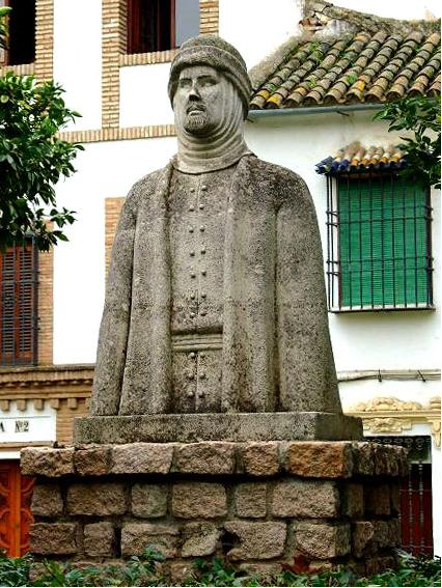
Furthermore, the benefits of tolerance were not evenly distributed. The high culture of Cordoba;s coexistence often thrived in urban, educated circles consisting of the courtiers, mercantile elites, and intellectuals. In more remote or rural areas, religious communities lived more segregated lives, and misunderstandings or prejudices could be more pronounced. Even in Cordoba, the common people may have viewed each other with a measure of wariness. Less is written on everyday frictions, yet they still likely existed. For instance, a Muslim peasant could resent paying taxes that he thought were eased for a wealthy Jewish merchant, or a Christian craftsman might take issue with certain public humiliations (life stepping aside for a Muslim in the street or not being able to ride horses). It reminds us that the system was tolerant, but not egalitarian. It relied on a patronizing protection that could turn oppressive if political winds shifted.
Crucially, the tolerance of al-Andalus was contingent on political stability and strong leadership. When the centralized authority weakened, latent hostilities tended to surface. This became much more evident in the 11th and 12th centuries. By 1009, a succession crisis and civil war tore apart the Caliphate of Cordoba. By 1031, the caliphate has disintegrated into feuding Taifa kingdoms. These smaller kingdoms at first continued aspects of the tolerant culture. Indeed, some Taifas, like Toledo and Seville, were still known for employing Jewish viziers and fostering interreligious interaction. However, they were militarily weaker, and pressure from the expanding Christian kingdoms eventually led the Taifas to call in reinforcements from North Africa (Almoravids of the 11th century). The Almoravid dynasty practiced a much more puritan and intolerant form of Islam. Under their rule, the relatively lax treatment of dhimmis in al-Andalus came to an end. The Almoravids imposed social segregation more strictly and are said to have persecuted Mozarabs who had become too assimilated to Arab culture. The Almohads were more extreme in that they gave the remaining Christians and Jews of al-Andalus an ultimatum to convert to Islam or face exile and persecution. Many sided with exile, and in the 12th century, a large exodus occurred of Andalusian Jews to Christian Spain or Egypt. Mozarab Christians also evacuated largely to the Christian kingdoms. The Almohads even destroyed churches and synagogues within their territory, pretty much erasing the visible presence of the other faiths. This tragic turn illustrates that the golden age of tolerance had, in fact, ended.
The debate on the myth vs. the reality of al-Andalus is an ongoing one. Modern scholars tend to reject the over-romanticized notion of perfect tolerance.[23] However, it is safe to say that this was a medieval society with prejudices and power imbalances, with a pragmatic tolerance rather than a principled one. Non-Muslims could thrive, but within limits, and always at the sufferance of the Muslim rulers.
Acknowledging these limits does not, however, negate the real achievements of Cordoba’s coexistence. It simply places them in context. The contradictions, such as a Jewish vizier in a state that officially disparaged Jews, or a Christian general leading Muslim troops in battle against other Christians, underscore that tolerance in al-Andalus was strategic and selective. It extended to those who contributed to or at least did not threaten the Islamic order. It retracted when groups were seen as disloyal or when fanaticism gained the upper hand. Ultimately, the golden age of Cordoban convivencia shines in history due to its unusual and fragile nature. Its end reminds us that tolerance should not be taken for granted. Rather, it must be continually reinforced by enlightened leadership, social trust, and a commitment to pluralistic values, all of which are open to erosion from economic stress, external threats, or extremist ideologies. The case of Cordoba, therefore, offers not only inspiration but also a cautionary tale about how easily a flourishing pluralism can succumb to division.
The Legacy of the Caliphate
The golden era of the Caliphate of Cordoba did not endure long in the 10th century. Following the death of al-Hakan II in 976, the caliphate’s stability gradually depleted. Al-Hakam’s young son, Hisham II, was dominated by the ambitious warlord Almanzor. His military dictatorship, although initially effective, laid the groundwork for dynastic weakness. In the first decades of the 11th century, Cordoba was wracked by civil war. Various factions of Berber mercenaries, Arab nobility, Slavic generals, and local magnates sought rule. By 1031, the institution of the caliphate was abolished, fragmenting al-Andalus into over twenty Taifa kingdoms. This political breakdown has direct consequences for interfaith relations. While some of the new Taifa kingdoms continued patronage of Jewish and Christian talent,[24] the unity and security that Cordoba had provided were diminished. The Taifas were smaller and weaker, often tributary to Christian kings. Still, for a time (1031 to 1080s), many aspects of the Andalusian cultural flourishing persisted in these successor states. Jewish life, especially, continued to thrive in centers like Granada, Lucena, and Seville for several decades, and Mozarab communities still practiced their religion relatively freely under various Taifa rulers.
However, the real rupture occurred with the invasion of the Almoravids of North Africa in 1806, with the Almohads following not much later in 1147. These fundamentalist regimes viewed the leniency of al-Andalus as decadence to be corrected. By the mid-12th century, the long era of relative religious freedom in Islamic Spain had come to an end. The majority of Jews and Christians in what remained of al-Andalus either fled, converted, or were eradicated under the Almohads. When Christian forces conquered cities like Toledo, Cordoba, and eventually Granada, the religious complexion of Spain changed completely. Catholic monarchs would ultimately expel or force-convert the remaining Jews and Muslims in Castile, Aragon, and Moriscos by 1609. In that sense, the long chapter of convivencia closed with a compounded irony first by Muslims fundamentalists and later under Christian fundamentalists. By the early modern period, Spain emerged as a mostly homogenized Catholic realm with minimal tolerance.
Yet, Cordoba’s golden age maintains its legacy. It echoed throughout the centuries in many ways. Immediately, one legacy was the dispersion of Andalusian scholars and texts to other lands. Jewish refugees from al-Andalus carried the torch of the golden age to other countries like Egypt, Italy, and the Holy Land. The most famous of these was Moses Maimonides, born in Cordoba in 1135. Maimonides absorbed the Judeo-Arabic culture of learning in his youth. After fleeing Almohad persecution with his family, he eventually settled in Cairo. It was here that he wrote his masterpieces such as the Guide of the Perplexed, which blended Greek philosophy, Islamic theology, and Jewish thought, a fully-formed product of the Andalusian groundwork for intellectual cross-pollination.[25] Similarly, some Mozarabs from Toledo who moved north helped translate Arabic books into Latin in the 12th century, directly transferring Andalusian knowledge to Christian Europe. A notable initiative was the Toledo School of Translators where Jewish, Christian, and Muslim translators together rendered major works of science, medicine, and Philosophy from Arabic into Latin and Castilian.[26] They translated the works of Andalusian luminaries like the physician Al-Zahrawi, the philosopher Averros Ibn Rushd, and many others, including Arabic versions of Aristotle, Euclid, Galen, and Ptolemy that had been preserved in Muslim libraries.[27] Through these translations, the intellectual riches of al-Andalus became a cornerstone of the European Renaissance. Of course, historians recognize that al-Andalus “served as both the repository of ancient Greek knowledge and a crucial transmission point in its journey to the Christian-dominated West”, spearheading Europe’s revival of classical learning.[28] Without the centuries of Andalusian translation and scholarship, it is hard to imagine St. Thomas Aquinas engaging with Aristotle or the sudden leap forward in European medicine and astronomy in the 13th century. In this way, Cordoba’s pluralistic intellectual culture had a widespread European legacy.
Another aspect of the legacy was the cultural memory of a convivencia. By the 19th century, as noted by historian Mark R. Cohen, Jewish scholars in Europe idealized Muslim Spain as a “golden age” separate from the persecution they faced in Christian lands. They somewhat romantically depicted medieval Cordoba as an interfaith utopia of gardens, libraries, and enlightened caliphs, largely glossing over the less pleasant aspects. This narrative kept the “Cordoba paradigm” alive as a reference point for interreligious harmony. [29] Nowadays, the term “Cordoba” itself has become a symbol of intercultural dialogue. This legacy is still celebrated today through restored monuments, cultural festivals, and initiatives like New York’s “Cordoba House,” reflecting a broader recognition of Spain’s diverse heritage. The influence endures in Sephardic traditions, including the Ladino language and nostalgic themes of Sefarad, and in the Islamic world, where the Ottoman Empire welcomed Jews expelled from Spain,[30] embracing a similar multi-religious structure. Figures like Averroes and Maimonides, both from Córdoba, symbolize this era’s intellectual and interfaith achievements, still resonating across other cultures and faiths.
Ultimately, the Cordoban model demonstrates the potential of pluralism. Despite its end, it forever transformed not only Iberia, but the trajectory of knowledge moving throughout Europe. It shows that medieval Islamic governance, at its best, was capable of far-sighted inclusivity, creating a “legacy of dialogue and empathy” that both the Muslim world and the West can claim as part of their shared heritage.[31] Its legacy challenges the idea of inexorable civilizational conflict, serving as a great reminder of the shining precedents of peaceful coexistence.
Relevance Today
The golden era of the Caliphate offers a powerful historical precedent for nations today also faced with religious diversity, ideological polarization, and a question towards the place of nonbelievers in public life. The example of al-Andalus demonstrates that a society governed by Islam can also cultivate a civic culture that respects pluralism. In Cordoba, religious minorities were not merely tolerated, but also engaged as partners in scholarship, medicine, and governance. This showed that coexistence is not a betrayal of faith, but rather a manifestation of ethical leadership and civilizational strength. For contemporary states—Iran or elsewhere—where power is often wielded to suppress dissenting beliefs, this legacy invites a reconsideration of what Islamic leadership can look like when guided by principles of mutual dignity.The example of Córdoba also shows that governance must recognize tolerance as a principle, not merely as a governing tactic.
Furthermore, the memory of convivencia in Cordoba, later embraced by Jews, Muslims, and Christians alike, suggests that historical identity can serve as a bridge rather than a boundary. Iran, also, has a legacy of interreligious respect dating back many ages, far and recent. It is important to note the power Iranians can wield by reclaiming and reinterpreting such a legacy. This power has the potential to nurture a more inclusive vision of national identity that honors both believers and nonbelievers, creates dialogue across worldviews, and positions Iran not as a closed theocracy, but as a participant in the broader humanist and Islamic traditions of pluralism and intellectual openness.
[1]. Jean Batou. “Muslim Rule in Spain Was a Crucial Part of Europe’s History.” Jacobin, 16 Dec. 2022.
[2]. Dan Buttry, “ABD-AR-RAHMAN III (891-961) and AL-HAKAM II (915-976),” Global Peace Warriors, December 16, 2016, accessed June 19, 2026.
[3]. Ibid.
[4]. “Abd al-Rahman III” The New Encyclopaedia Britannica. Bayes ed., vol. 1, Encyclopaedia Britannica, Inc, 2010. pp. 17-18.
[5]. BomBom, “The Court of Abd al-Rahman III,” World History Encyclopedia, February 11, 2019, accessed June 19, 2026.
[7]. Ibid.
[8]. Ibid.
[9]. Mindel, Nissan. “Hasdai Ibn Shaprut – (circa 4675-4735; 915-975) – Chabad.Org.” Chabad.Org, Kehot Publication Society.
[11]. Funci. “Al-Andalus: Multiculturalism, Tolerance and Convivencia – FUNCI – Fundación de Cultura Islámica.” FUNCI, 10 May 2021.
[12]. “Al-Andalus: Multiculturalism, Tolerance, and Convivencia.” Funci.
[13]. Encyclopaedia Britannica, s.v. “Caliphate of Córdoba,” accessed June 19, 2026.
[14]. Hasdai Ibn Shaprut. Accessed 10 July 2025.
[16]. “Al-Andalus: Multiculturalism, Tolerance, and Convivencia.” Funci.
[17]. Ramin Jahanbegloo. “Tolerant Islam: The Andalusian Legacy.” Global, 7 Nov. 2017.
[18]. Ibid.
[19]. Menocal, Maria Rosa. The Ornament of the World: How Muslims, Jews, and Christians Created a Culture of Tolerance in Medieval Spain. Back Bay Books, 2012.
[20]. Bernard Lewis. Islam: From the Prophet Muhammad to the Capture of Constantinople. Oxford University Press, 1987.
[21]. “Social and Cultural Exchange in al-Andalus.” Wikipedia.
[22]. Sonia Lekuona, “El espartero que llegó a ser califa,” Continuadores: Arte Vivo andalusí, March 30, 2026, accessed June 19, 2026.
[23] Gerber, Jane S. “‘Ornament of the World’ and the Jews of Spain.” National Endowment for the Humanities, 17 Dec. 2019.
[24]. Monferrer-Sala, Juan Pedro, and Jose Martinez-Delgado. “Christians and Jews in Islamic Granada: Presence, Influence, Power.” A Companion to Islamic Granada, Barbara ed., Brill, pp. 211–230.
[25]. Ramin Jahanbegloo. “Tolerant Islam: The Andalusian Legacy.” Global, 7 Nov. 2017.
[26] Arraez-Aybar, Luis-Alfonzo, et al. “Toledo School of Translators and Their Influence on Anatomical Terminology.” Annals of Anatomy – Anatomischer Anzeiger, Urban & Fischer, 21 Jan. 2015.
[27]. Ramin Jahanbegloo. “Tolerant Islam: The Andalusian Legacy.”
[28]. Ibid.
[29]. Ibid.
[30]. Ibid.
[31]. Ibid.
