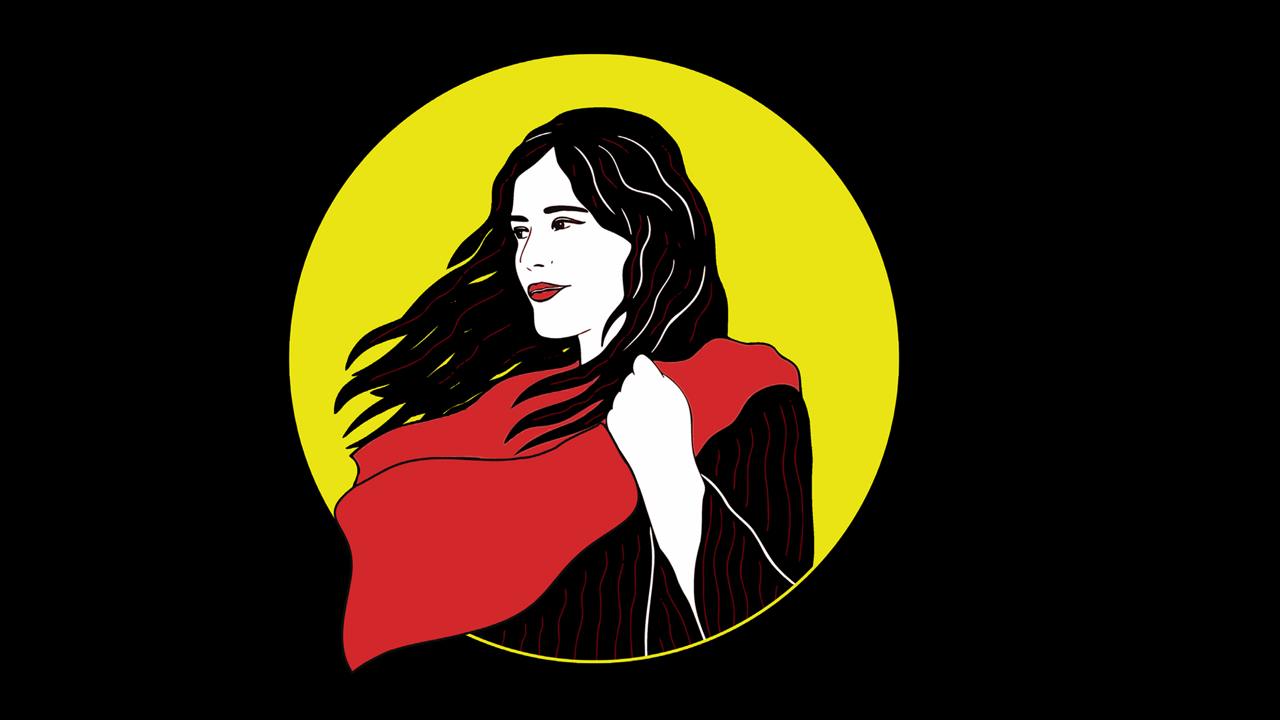
On Tuesday, September 13, 22-year-old Mahsa (Zhina) Amini was arrested by Iran’s Hijab Police (Gasht-e Ershad, or Morality Police) for allegedly failing to properly cover her hair shortly after arriving in Tehran from her hometown of Saqqez. Police informed her brother, who was with her at the time, that she would be taken to the notorious Hijab Police headquarters on Vozara Street and released after an hour-long “educational class.” Hours later, an unconscious Mahsa was transferred to Kasra Hospital”.[1][2]
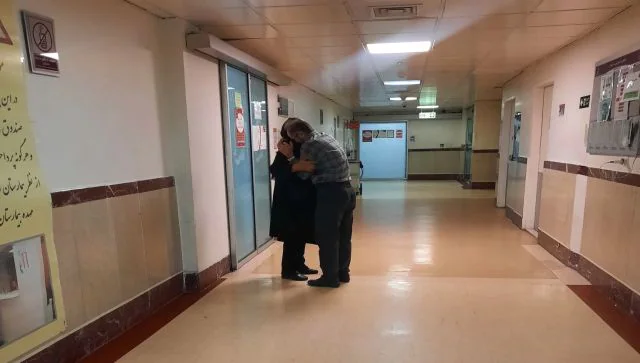
When Niloofar Hamedi, an Iranian journalist with Shargh daily, tweeted a photo of Mahsa’s grief-stricken parents at Kasra Hospital three days later, crowds began gathering outside the hospital. Protests erupted soon after news emerged that Mahsa had died from head injuries sustained in custody. This quickly ignited an unprecedented wave of unrest, marked by the prominent, active participation of young women, spreading to over 280 cities within weeks.
Mahsa’s assault was the latest episode in the Islamic regime’s longstanding history of violent repression against women. Soon after the 1979 Islamic Revolution, the regime began imposing restrictions on women and enforcing an Islamic dress code. In the spring of 1980, Ayatollah Khomeini declared that women should wear the veil, sparking a massive protest on International Women’s Day, March 8, in Tehran.[3] Approximately 15,000 women from diverse backgrounds demonstrated against mandatory hijab, with protests spreading to other cities and lasting five days. This marked the first major protest against the Islamic regime, forcing a temporary retreat on hijab enforcement. On March 11, prominent theologian and politician Ayatollah Mahmoud Taleghani stated in an Ettela’at newspaper interview, “there’s no compulsion about hijab.”[4]
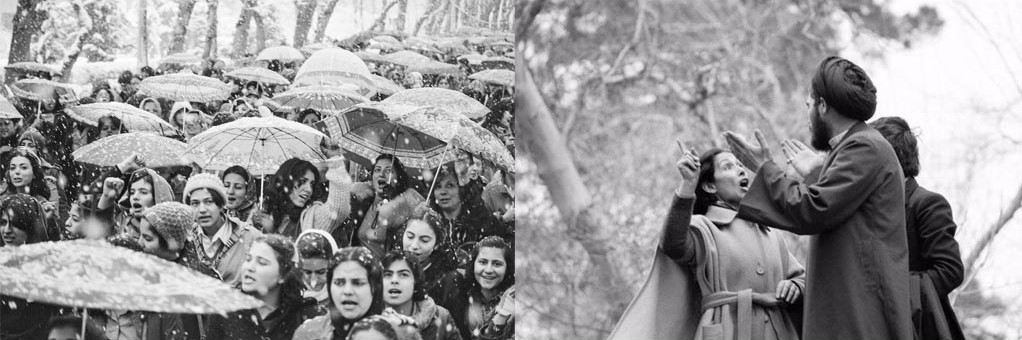
In 1981, mandatory hijab was decreed, barring women without proper Islamic attire from entering workplaces and government offices[5].
Soon, various branches of the Islamic Revolution Committee—such as the committee for the prevention of vice—and other paramilitary forces began patrolling the streets to enforce hijab[6], often with such severe measures that Khomeini himself intervened, advising these groups to avoid assaulting women over improper hijab. In 1983, Iran’s Majlis formalized this mandate by passing the Islamic Penal Code, making non-compliance punishable by imprisonment, fines, and/or 74 lashes[7]. This enforcement stands in stark contrast to Article 5 of the Universal Declaration of Human Rights, which prohibits torture and “cruel, inhuman, or degrading treatment or punishment.”[8]
The Hijab Police was formally established as a distinct law enforcement branch to “ensure moral security in society” during the tenure of Iran’s conservative former president Mahmoud Ahmadinejad in 2005. Initially, the Hijab Police were tasked with “verbally admonishing” people with improper hijab in public spaces, including streets, parks, and even inside vehicles, as well as monitoring commercial centers[9]. Green police vans staffed with officers—especially women dressed in head-to-toe black hijab (chador)—became a familiar sight as they closely observed women pedestrians for signs of “improper hijab” in the streets, plazas, and shopping centers of major cities.
However, their approach drastically changed after a few months, with officers starting to verbally and physically assault and arrest women they deemed were improperly dressed. Vehicles of drivers wearing loose hijab or even carrying passengers would get fined and/or impounded for up to two months. There have been numerous reports as well as complaints and videos on social media documenting the brutality of the hijab police forces against women. These cases range from verbally insulting women and their companions to violent arrests and beatings in detention centers that have resulted in injury, hospitalization, and in some cases death and even shooting at civilians[10].
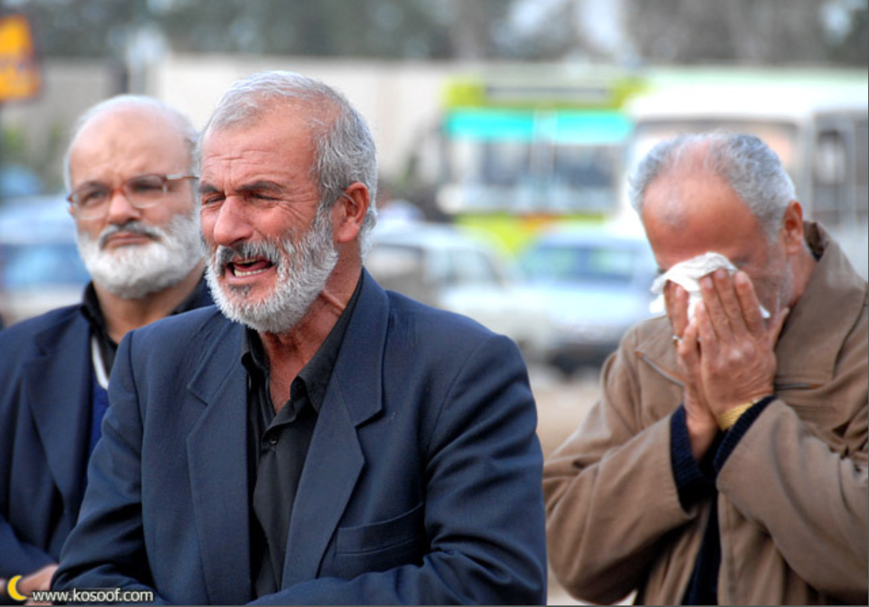
Zahra Bani-Yaghoub, a 26-year-old medical student, is the first documented victim of hijab police brutality. She was arrested while on an outing with her fiancée in a park in the city of Hamedan in 2007 and passed away in custody two days later. Prison officials claimed she had committed suicide by hanging herself using an advertisement banner. Her family, however, rejected the claims as there had been bruises on Zahra’s body and she had shown no indications of contemplating suicide in a phone call with her brother 15 minutes before allegedly killing herself. Her father said in an interview later that he had seen bruises on Zahra’s body, and blood in her ears and nose[11]. Her family filed a lawsuit against prison officials on charges of intentional homicide, but the court closed the case by ruling her death suicide. Zahra’s family was on several occasions threatened or offered money in return for not pursuing the death of their daughter while in custody[12].
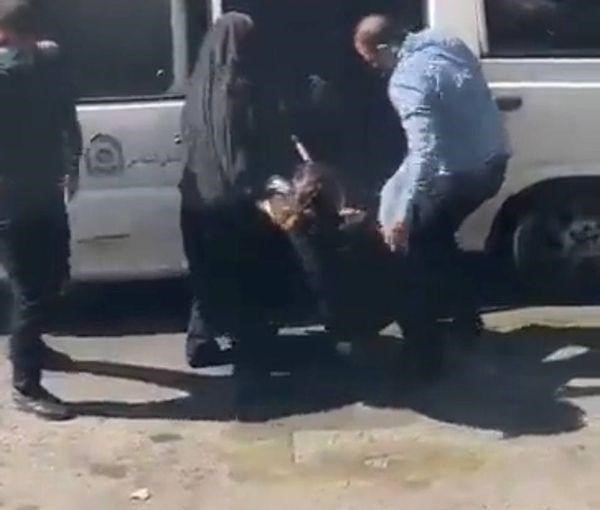
In another incident, the video of which was circulated on social media and caused widespread controversy, the hijab police officers arrested three girls and two boys in a park in Tehran on charges of splashing water on each other, and when one of the girls resisted arrest, she was violently beaten and thrown in the van.[13] In one of the most infamous cases of police mistreatment of women, young Iranian writer Sepideh Rashnu whose altercation with another woman on the bus over the issue of hijab had gone viral on social media was later arrested and forced to confess on national TV to “propaganda against the Islamic Republic” and “encouraging (moral) corruption and prostitution.”[14] In the video, there were bruises around Rashnu’s eyes, and she had reportedly been hospitalized due to internal bleeding in the stomach area shortly before her forced confession[15].
Iranian lawyer and human rights activist Abdolsamad Khorramshahi says physical or even verbal assault of people wearing improper hijab is against the law and should be investigated by the relevant organization[16]. It is also a violation of Article 10 of the International Covenant on Civil and Political Rights, to which Iran is a signatory. Article 10 stipulates that “all persons deprived of their liberty shall be treated with humanity and with respect for the inherent dignity of the human person”[17]. Yet, there has been no supervision and accountability for the misconduct of hijab police, with senior law enforcement officers and officials expressing support for and even encouraging brutality against women[18]. When the 47-year-old Minoo Hasanabadi was violently arrested for protesting the beating of a young woman by hijab police officers in 2018, the then judiciary chief Sadeq Larijani said the law enforcement should not ‘retreat even one step’ as it would undermine the authority of the police and their ability to safeguard the country’s security[19].
The establishment of the hijab police has been fraught with controversy and shrouded in ambiguity. Javad Imam, an Iranian politician, and a member of the Reformists Front claimed in an interview with Iran Labor News Agency (ILNA) in September 2022 that the hijab police force was established in accordance with the ‘Hijab and Chastity Law’ approved by the Supreme Council of the Cultural Revolution in 2005[20][21] that was later amended in 2019 under the title of Resolution 820. It is also referenced by Iran’s Headquarters for the Promotion of Virtue and Prevention of Vice (Setad-PV) in its report on the country’s future hijab policy in 2020. Among others, this law mandates the country’s Law Enforcement Command with prosecuting “people with bad hijab” on the streets.[22]
However, Article 638 of the Penal Code that codified mandatory hijab only specifies that “women, who appear in public places and roads without wearing an Islamic hijab, shall be sentenced to ten days to two months’ imprisonment or a fine…”.[23] The crime of improper (bad) hijab’ has not been defined in either the Constitution or the Islamic Penal Code, and the Iranian regime has never formally elucidated guidelines for ‘proper hijab’. Rather, the 2005 ‘Hijab and Chastity Law’ gives Law Enforcement Command and consequently individual enforcers the autonomy to define criteria of chastity and improper attire at their discretion and crack down on women at will[24][25]. This action of the Supreme Council of the Cultural Revolution is itself a direct violation of the Article 71 of the Constitution which gives the authority to establish laws on all matters to the Islamic Consultative Assembly (Iran’s Parliament or Majlis)[26], which has yet to ratify Hijab and Chastity Law or any laws on hijab.
The arbitrary approach of law enforcement to ‘safeguarding hijab and chastity’ has resulted in considerable disparities across the country, with major cities particularly Tehran, and ‘sacred cities’ such as Qom and Mashhad bearing the brunt of the crackdown. Tehran’s acting police chief Ahmadreza Radan said in an interview in 2013 that the police consider ‘tight or short manteaus, dresses with short sleeves or revealing hair’ as examples of bad hijab.[27] These comments, however, reflect the personal views of Tehran’s acting police chief, not guidelines communicated to forces even in Tehran, let alone to other cities. In Mashhad, for example, the “21st of Tir Headquarters”[28] was established in Khorasan Razavi province (Mashhad) in the summer of 2022 to promote hijab and chastity in governmental offices by introducing new guidelines including banning the use of profile pictures with uncovered hair for women in social media, not hiring secretaries of the opposite gender for executives, etc.[29]. In another instance of a local approach to enforcing hijab, Mashhad Prosecutor Esmail Rahmani said in an interview recently that their office had asked the city’s governor to ban banks and governmental offices from providing services to people with ‘bad hijab’. Bushehr Governor Salehi Rahimi also issued a decree to separate the rooms of male and female employees in government offices and required all women employees of the city council to wear the chador[30][31].
The arbitrary approach of the regime to the issue of hijab to some extent arises from the fact that hijab itself has not been explicitly defined in Quran, and there is the only verse on the issue that reads “tell the believing women to… display of their adornment only that which is apparent and to draw their veils over their bosoms, and not to reveal their adornment[32]” except to their close male relatives (Mahrams). As a result of this ambiguity, the majority Muslim countries have taken different approaches to the issue of hijab. While countries such as Turkey and Lebanon do not have mandatory hijab laws, in Iran and Afghanistan hijab is compulsory for all women across the country regardless of their religion. In Afghanistan, the Taliban reestablished the Ministry for the Propagation of Virtue and the Prevention of Vice after regaining control of the country in 2021 and passed a law in 2022 requiring all women to cover their faces with burqa or niqab. In Indonesia, only Muslim women in Aceh Province are legally required to wear hijab, where Sharia police or the Wilayatul Hisbah is responsible for enforcing hijab. Yet, many other provinces and cities have imposed strict Islamic dress codes on women by issuing local decrees[33].
It should be noted that mandatory veiling for women and their subsequent prosecution was but one of the most visible aspects of the crackdown on women’s rights following the 1979 revolution. The Islamic Regime in Iran regulates and polices other aspects of women’s lives as well, including their rights within the family, choice of university discipline, and even profession. The Civil Code of Iran (articles 1034-1194) recognizes the man as the head of the household, who has the exclusive right to divorce “whenever he wishes to do so”, the right to decide the wife’s place of residence, as well as the right to prevent her from pursuing a profession[34] if he deems it “incompatible with the family interests or the dignity of himself or his wife”. In 1992, the Supreme Council of Cultural Revolution passed a new mandate to guide Iran’s policies on women’s employment that stressed the key role of women as mothers and caregivers and emphasized certain professions such as teaching, midwifery, and nursing. Afterward, women were deprived of the right to study in as many as 70 subfields in higher education and could not pursue certain professions such as firefighting or judgeship that were deemed unsuitable for women[35].
Women are banned from traveling abroad without the permission of their guardians (father, paternal grandfather, or husband). For years, women traveling alone inside the country had to obtain a letter from the local police office to justify their presence in another town to be able to find a hotel room. Although this law was reportedly abolished in 2008, many hotels and motels still refuse to serve lone women customers without a letter from the police based on an unwritten law. In 2019, two young women who wanted to stay at a hotel in Isfahan were referred to the police office, where the officer called the father of one of the women – who was married – to check if her father was aware of her whereabouts. “They treated us like runaway girls,” one of the women said in an interview.[36]
In this context of deep-rooted discrimination and inequality, women activists in Iran focused their campaigns on other forms of injustice against women despite the violent prosecution of women under the pretext of chastity and adhering to the Islamic dress code. The most notable among these activities was the One Million Signatures campaign in 2006 — inspired by the One Million Signature campaign by the Women’s Action Union for women’s rights in 1992 in Morocco — that called for equal social and economic rights for women such as the equal right to inheritance, child custody, banning death by stoning, etc.[37][38]. In what has been described as one of the most widespread grassroots movements of Iranian women after the 1979 Revolution, the campaign sought to educate people, especially women, on the importance of collective action, deliberation among citizens, bottom-up reforms, strengthening the public sphere, empowering women, and the necessity of grassroots movements for achieving long-lasting social changes.[39]
Although the campaign failed to collect one million signatures, the efforts of its founders increased awareness about the challenges and discrimination faced by Iranian women inside the country and abroad. It brought together and empowered Iranian women and human rights activists such as Nasrin Sotoudeh, Shirin Ebadi, Simin Behbahani, Shirin Ardalan, Narges Mohammadi, Babak Ahmadi, etc., who went on to play critical roles in advocating and defending human rights and women’s rights in the country. The campaign also received prestigious awards such as Simone de Beauvoir Prize in 2009[40], Anna Politkovskaya Award, and Global Women’s Rights award by the Feminist Majority Foundation[41]. The campaign’s objective did not specifically include the issue of compulsory hijab but made references to ‘the choice of hijab’. Commenting on this issue in an interview with Keyhan London, Shirin Ardalan said in 2018 that social circumstances at the time and the adherence of many women to the Islamic dress code prevent the campaign from focusing on compulsory hijab.[42]
However, opposition to mandatory hijab soon took a serious turn and entered the civil society discourse more vigorously with campaigns such as the “No to Mandatory Hijab” by the Iranian Liberal Students and Graduates in 2012[43] and later My Stealthy Freedom by Iranian activist Masih Alinejad in 2014. The Iranian Liberal Students and Graduates created a page for the campaign on Facebook in July 2012, inviting people to express their support for freedom of choice in hijab by sending pictures to the group. The online movement of My Stealthy Freedom which also started as a Facebook page by Alinejad also called on Iranian women to send pictures of themselves without hijab as a protest against the mandatory hijab. Soon the #MyStealthyFreedom hashtag went viral on Facebook and Twitter, with tens of thousands of women participating by posting photos of themselves. For her role and efforts, Alinejad was awarded by the Geneva Summit for Human Rights and Democracy in 2015 for “giving a voice to the voiceless and stirring the conscience of humanity to support the struggle of Iranian women for basic human rights, freedom, and equality”.
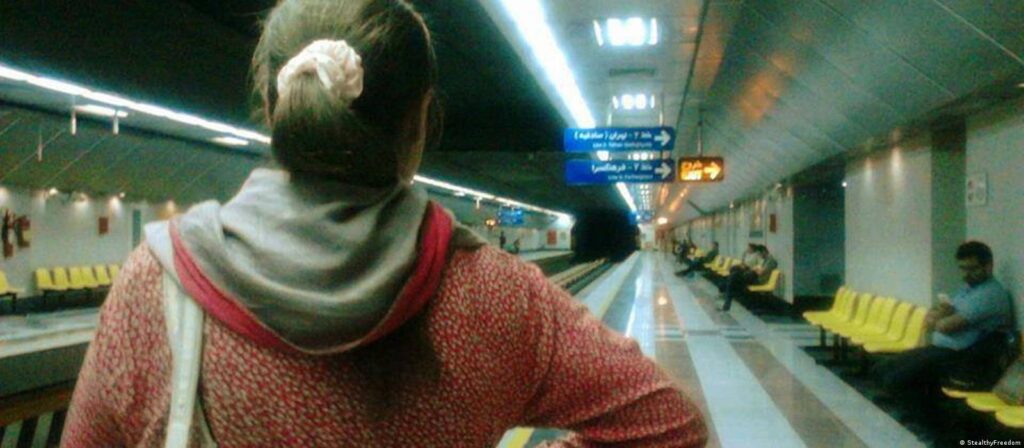
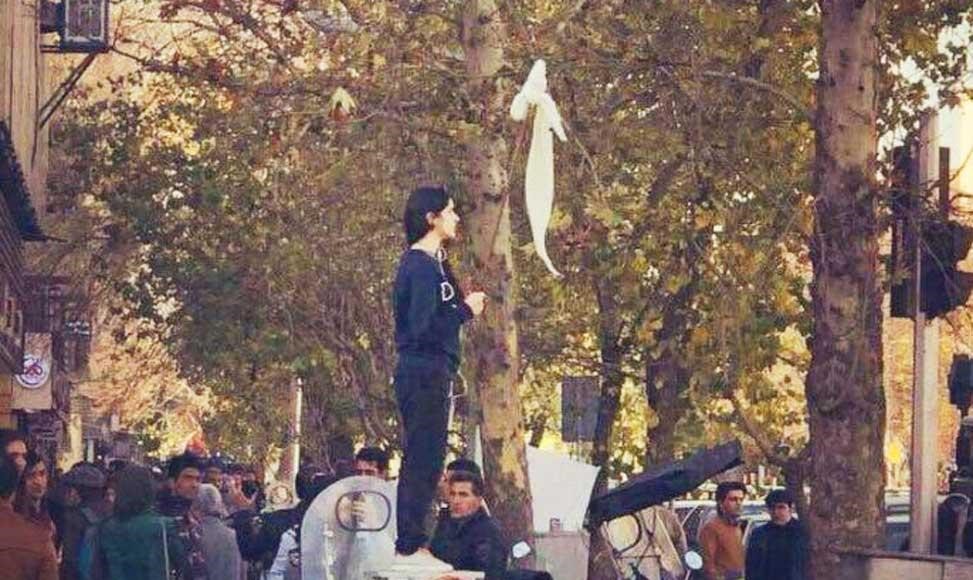
In 2017, Alinejad took the fight against mandatory hijab to the streets by launching the White Wednesday campaign, calling on women to share pictures or videos of themselves removing their hijab in public spaces or wearing white scarves as a sign of protest. The civil disobedience campaign sought to be inclusive by encouraging women who wear hijab willingly but oppose the compulsory dress code to show their opposition by wearing white on Wednesdays. This movement garnered international attention, particularly after a women right’s activist called Vida Movahed removed her white scarf on December 27, 2017, in the crowded Enghelab (Revolution) Street in downtown Tehran[44], tied it around a stick and silently stood on top of a utility box. She was subsequently arrested and spent a month in prison. Her symbolic action was repeated by other women across the country, who collectively came to be known as the “Girls of Enghelab Street”.[45
Increased agitation of the civil society against mandatory hijab was faced with a more violent crackdown on women and women’s rights activists. The election of Ebrahim Raisi especially opened a new chapter in the Islamic regime’s repression of women’s freedoms and rights. The government doubled down on the status of women in Islamic society by stressing Muslim women’s important duties and responsibilities in the home and to their families[46]. Raisi’s government has also been aggressively pursuing policies to increase the country’s population by implementing policies such as “Rejuvenation of the Population and Support of the Family” which was approved by Majlis in 2021. This law includes punitive measures such as “Further criminalization and bans on abortions, bans on sterilization procedures such as tubectomies and vasectomies, bans on the purchase of over-the-counter contraceptives, and elimination of health insurance payments for cesarean sections”[47]. The law has been criticized as violating Iranian women’s bodily autonomy and human dignity as well as endangering their lives.
It was within this volatile context of gender inequality and discrimination and burgeoning civil society movements that the killing of Mahsa Amini sparked the most widespread and intensive protests across the country after the victory of the 1979 Revolution, with women leading the demonstrations and demanding their fundamental rights, which has been lauded as the “women’s revolution”. Over the past four decades, women’s demands had largely been constrained within the framework of Islamic values, and activists had been trying to play according to the regime’s rules. However, the demands are more fundamental and reminiscent of the One Million Signature Campaign in their universality. It should be noted that the depth and breadth of the protesters’ demands cannot be understood without reliable and extensive public opinion surveys or ideally a referendum. As such a feat is not feasible under the current circumstances, we can only rely on the slogans of protesters to understand popular demands.
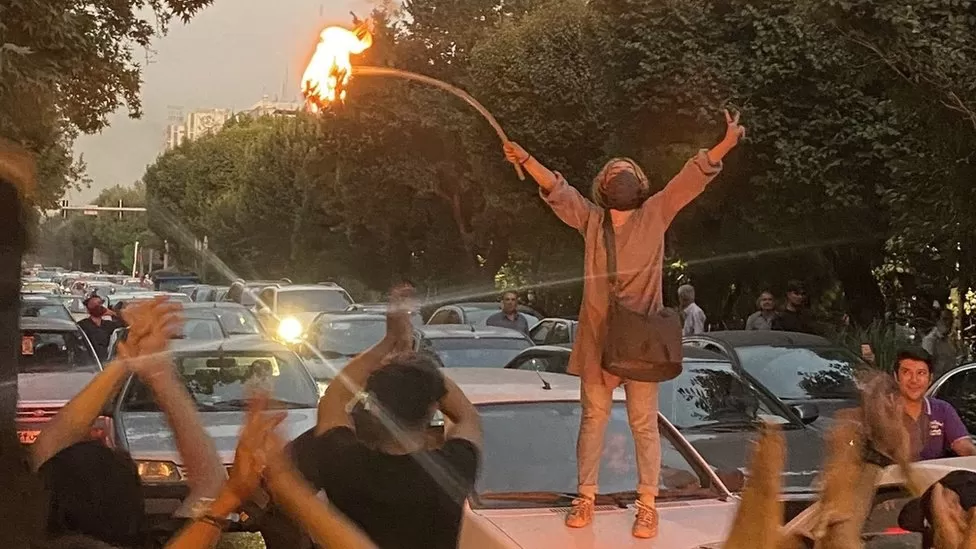
Protesters, with women at the forefront, are demanding bodily autonomy and freedom of expression as manifested in the right to choose their attire and abolishing the compulsory dress code which is considered a way of controlling and subjugating women. Women are expressing their demands not only through slogans but also by cutting their hair and burning their veils which are seen as a symbol of patriarchal dominance and repression of women’s rights. However, the demands go beyond women’s rights, linking women’s rights to human rights and principles of democracy. Slogans of “freedom, freedom, freedom”, “Our Incompetent Leader, Our Disgrace”, “We Don’t Want the Islamic Republic” and “Independence, Freedom, Optional Hijab”, “Khamenei is a Murderer, an Illegitimate Ruler” and “Death to Khamenei”[48] target the very foundations of the regime in Iran: mandatory hijab, the institution of the supreme leader and the Islamic government itself. It seems protesters have realized that as long as the Islamic regime is in power, their demands for freedom and fundamental human rights will not be realized.
In yet another unprecedented move that played a critical role in spreading awareness about the ongoing protests and the demands of the Iranian civil society, the Iranian diaspora united and rallied behind their countrymates by actively and aggressively posting news about the protests and the regime’s brutality on social media, organizing events and rallies across the world. The Association of Families of Flight PS752 Victims, in particular, has been regularly organizing rallies in North America, Europe, Australia, and New Zealand. Their spokesperson, Hamed Esmaeilion – whose wife and daughter were killed when Iran’s Revolutionary Guard shot down Flight PS752 in 2020 – has emerged as a major opposition figure. The group also launched a petition to urge the leaders of the G7 Group of Nations to expel the Islamic regime’s ambassadors from their countries and pressure Tehran to release all prisoners of conscience. The petition, with nearly 1 million signatures[49], was submitted to the G7 leaders in December 2022.
Other women’s and human rights advocates in the diaspora, including Nazanin Boniadi, Masih Alinejad, and Crown Prince Reza Pahlavi, have drawn global attention to the protests through speeches, seminars, and meetings with international leaders, such as U.S. Vice President at the time, Kamala Harris, among others, to rally international support for Iranian civil society. These opposition figures have achieved notable victories, perhaps the most significant being Iran’s removal from the Commission on the Status of Women (CSW). Many prominent women politicians and activists worldwide—including Melanne Verveer, Julia Gillard, Hillary Rodham Clinton, Peggy Clark, and Hina Jilani—signed an open letter urging the UN to oust Iran from the CSW.[50] Another major win for the Iranian opposition was the snubbing of Islamic regime officials at the annual Munich Security Conference for two consecutive years. In 2023, the event organizers invited several prominent critics of the Islamic Republic, including Masih Alinejad, Nazanin Boniadi, and Crown Prince Reza Pahlavi. For the 2024 conference, the organizers further extended invitations to individuals injured during the 2022 uprising.
The killing of Mahsa Amini marked a pivotal moment in Iran, sparking widespread change. The popular protests, led prominently by women, were not only a call for equal rights but also a demand for fundamental freedoms. They amplified Iranians’ voices and their demands to the world on an unprecedented scale.
[1] مرگ مغزی مهسا ۲۲ ساله بر اثر ضربات مأموران گشت ارشاد اسلامی، کیهان لندن، ۲۴ شهریور ۱۴۰۱.
[2]. «مهسا امینی در کما»؛ پلیس میگوید «ناگهانی دچارعارضه قلبی شد»، بیبیسی فارسی، ۲۴ شهریور ۱۴۰۱.
[3]. در اندیشه امام خمینی: حجاب مخالف آزادی نیست، پرتال روحالله خمینی.
[4]. آیتالله طالقانی: در مورد حجاب اجبار در کار نیست، تاریخ ایرانی، ۸ اسفند ۱۳۹۶.
[5]. چگونه در اوایل انقلاب حجاب اجباری شد، میترا شجاعی، دویچهوله فارسی، ۱۴/۱۰/۱۳۹۲.
[6]. از ثارالله و جندالله تا گشت ارشاد؛ ابزار۴۰ سال اعمال حجاب اجباری در ایران، احسان مهرابی، بیبیسی فارسی، ۲۶ شهریور ۱۴۰۱.
[7]. جرم بدحجابی در قانون مجازات اسلامی چیست؟، بنیاد وکلا، تیر ۱۴۰۱.
[8]. Universal Declaration of Human Rights, United Nations.
[9]. از ثارالله و جندالله تا گشت ارشاد؛ ابزار۴۰ سال اعمال حجاب اجباری در ایران، احسان مهرابی، بیبیسی فارسی، ۲۶ شهریور ۱۴۰۱.
[10]. قتل به معروف، نهی از زندگی؛ گاهشمار فجایع گشت ارشاد در ایران، احسان مهرابی، العربیه فارسی، ۱۷ سپتامبر ۲۰۲۲.
[11]. رای دادگاه: زهرا بنی یعقوب در زندان خودکشی کرده است، رادیو فردا، ۲۰ تیر ۱۳۸۷.
[12]. پدر زهرا بنی یعقوب: با رشوه و تهدید ساکت نمیشویم، وبلاگ «ما زنان»، ۳۱ شهریور ۱۳۹۰.
[13]. پلیس تهران بازداشت دو مامور به دلیل «برخورد خشن» با یک دختر را متوقف کرد، صدای آمریکا فارسی، ۵ تیر ۱۳۹۸.
[14]. Sepideh Rashnu, United States Commission on International Religious Freedom.
[15]. سپیده رشنو به علت خونریزی داخلی به بیمارستان منتقل شده بود، ایرانوایر، ۱۳ مرداد ۱۴۰۱.
[16]. “گشت ارشاد” یا “ارشاد گشت؟!” | واکنشها به ویدئوی درگیری مامور پلیس با دختر جوان، پایگاه خبری آفتاب، ۴ تیر ۱۳۹۸.
[17]. International Covenant on Civil and Political Rights, United Nations.
[18]. قتل به معروف، نهی از زندگی؛ گاهشمار فجایع گشت ارشاد در ایران، احسان مهرابی، العربیه فارسی، ۱۷ سپتامبر ۲۰۲۲.
[19]. یک زن به دلیل اعتراض به کتک زدن دختر جوانی توسط «گشت ارشاد» بازداشت شد، رادیو فردا، ۳ اردیبهشت ۱۳۹۷.
[20]. جواد امام: تاریخ مصوبه گشت ارشاد مشخص است به کدام دولت میرسد/ موضوع فقط محدود به گشت ارشاد نیست، پایگاه خبری تیک، ۳۰ شهریور ۱۴۰۱.
[21]. Keyhan International, June 16, 2014.
[22]. همه چیز درباره مصوبه حجاب و عفاف سال ۸۴ که رئیسی ابلاغ کرد + متن کامل، رویداد ۲۴، ۱۷ تیر ۱۴۰۱.
[23]. Islamic Penal Code of the Islamic Republic of Iran – Book Five, Iran Human Rights Documentation Center, July 15, 2013.
[24]. نیروی انتظامی چگونه در دام “گشت ارشاد” گرفتار شد؟، عصر ایران، ۱۷/۸/۱۴۰۱.
[25]. همه چیز درباره مصوبه حجاب و عفاف سال ۸۴ که رئیسی ابلاغ کرد + متن کامل، رویداد ۲۴، ۱۷ تیر ۱۴۰۱.
[26]. نیروی انتظامی چگونه در دام “گشت ارشاد” گرفتار شد؟، عصر ایران، ۱۷/۸/۱۴۰۱.
[27]. رادان مصادیق بدحجابی را اعلام کرد، فرارو، ۵ تیر ۱۳۹۱.
[28]. The 21st of Tir is the National Day of Hijab and Chastity in the Islamic Republic calendar.
[29]. گشت ارشاد جدید در مشهد / برای آقایان؛ کروات، پاپیون، تیشرت، زیورآلات و شلوارهای زاپدار ممنوع / گشت نامحسوس در تمام ادارت، شرکتها، مطب، داروخانه و مکانهای عمومی / عکس پروفایل ها باید اسلامی باشد، عصر ایران، ۱۱ تیر ۱۴۰۱.
[30] Also called a tchador, worn by some Iranian women when outside the house, is a full-body cloak. It is often accompanied by a smaller headscarf underneath. it is a cloak that falls to a woman’s feet and includes the head covering. Beneath the chador is usually a dress, blouse and skirt, or blouse and pants. Source: What’s the difference between a hijab, chador, niqab, burka and burkini?, Modest Path.
[31]. رئیسی دستور اجرای کامل مصوبه عفاف و حجاب را صادر کرد، ایران اینترنشنال، ۱۵ تیر ۱۴۰۱.
[32]. Quran, Nur, Verses 30-31.
[33]. Indonesian Women Speak Out on Dress Codes, Human Rights Watch, July 21, 2022.
[34]. Civil Code of the Islamic Republic of Iran, UNHCR.
[35]. اشتغال زنان و نگاه قانون کشور ما به اشتغال آن ها چگونه است، یاسا، ۲۲ آذر ۱۳۹۸.
[36]. اما و اگرهای پذیرش خانم های تنها در هتل، باشگاه خبرنگاران جوان، ۵ خرداد ۱۳۹۵.
[37]. کمپین یک میلیون امضا: تغییر برای برابری در ایران، آموزشکده توانا.
[38]. تجربه کمپین یکمیلیون امضا: رهایی از مذهب و سرمایه، حاتم سمیع، رادیو زمانه، ۲ فروردین ۱۳۹۵.
[39]. كليات طرح ”يك ميليون امضاء براي تغيير قوانين تبعيضآميز“، تغییر برای برابری، ۲۸ مرداد ۱۳۸۵.
[40]. The Simone de Beauvoir prize for Women’s freedom 2009 is awarded to the Iranian campaign “One Million Signatures”, Prix Simone de Beauvoir pour la liberté des femmes, 9 January 2009.
[41]. Iranian activists’ One Million Signatures campaign for gender justice, 2006-2008, Global Nonviolent Action Database.
[42]. گفتگو با شیرین اردلان در مورد کمپین یک میلیون امضا؛ جوانه میزنم به روی زخم بر تنم، کیهان لندن، ۸ تیر ۱۳۹۷.
[43]. صفحه کمپین «نه به حجاب اجباری» در فیسبوک.
[44]. More precisely, this action by Vida Movahed took place at the intersection of Enqelab Street and Vessal Street.
[45]. ۲۲ روایت از ‘دختران خیابان انقلاب’؛ ادامه یک کشمکش چهل ساله، بی.بی.سی فارسی، ۱۷ بهمن ۱۳۹۶.
[46]. معاون رئیسی: «تساوی زن و مرد» به ضرر زن است، صدای آمریکا فارسی، ۲۶ دی ۱۴۰۱.
[47]. Rejuvenating the Iranian Population: Endangering Women’s Rights and Health, Femena, June 1, 2022.
[48]. “Bi-Sharaf!”: A Guide to the Slogans Heard at Protests in Iran, Iranwire, September 22, 2022.
[49]. G7 Leaders: Expel Iran’s Diplomats / Demand that Political Prisoners Be Freed.
[50]. Global action in solidarity with Iranian women & girls who are courageously demonstrating peacefully for their fundamental human rights.