Introduction
This case study focuses on the human rights violations and experiences of political prisoners in Venezuela, within the context of the country’s historical trajectory from colonization to authoritarianism. The study explores how Venezuela, once a prosperous nation, has become one of the poorest countries in Latin America, with 96% of the population living in poverty. It traces the history of colonization, independence struggles, and the exploitation of oil reserves, which led to the rise of authoritarian leaders like Hugo Chávez and his successor, Nicolas Maduro.
The study then delves into the transformation of Venezuela’s judicial system, highlighting how it shifted from democracy to corruption and repression. Under Chávez and Maduro, the judiciary became subservient to the executive branch, compromising its independence and impartiality. The regime’s control over the judiciary has resulted in violations of freedom of expression, press freedom, and due process rights. The case study then examines the plight of political prisoners in Venezuela, discussing the arbitrary arrests, false charges, and the inhumane treatment they endure within the prison system.
By shedding light on the violations perpetrated by the Venezuelan government, the case study aims to expose the systematic erosion of human rights and the manipulation of the judiciary for political purposes. It connects this issue to the broader context of human rights violations and the experiences of political prisoners, drawing parallels to the situation in other authoritarian regimes such as Iran. The study highlights the urgent need to address these violations and emphasizes the importance of upholding human rights and promoting democratic principles.
Venezuela’s Historical Trajectory: From Colonization to Authoritarianism
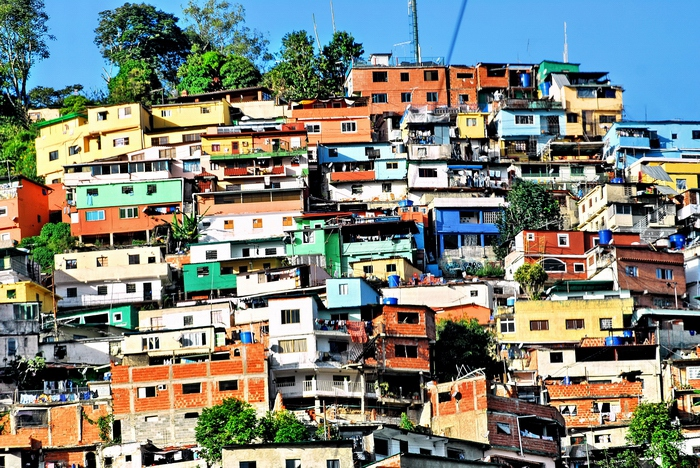
Venezuela, once one of South America’s wealthiest nations, has been plagued by a history of colonization, authoritarianism, and exploitation, which has resulted in its current status as one of the poorest countries in Latin America[1]. In 2019, a staggering 96% of the population lived in poverty.[2] Geographically, Venezuela is situated in the northern part of South America, with its borders touching the Caribbean Sea and the Atlantic Ocean, and neighboring countries including Guyana, Brazil, and Colombia.
While Venezuela boasts a rich history and a native South American population, its story took a brutal turn when the Spaniards subjected it to colonization and oppressive rule from the early 1500s until the early 1800s.[3] It was not until Simon Bolivar fought for independence that various South American countries, including Venezuela, formed a united nation called “Gran Colombia,” including Ecuador and Panama. However, by 1830, Venezuela had established itself as an independent country and entered into a tumultuous period marked by violent civil wars throughout the 19th century.[4]
The early part of the 20th century was dedicated to breaking free from colonial powers and establishing a national government. Sadly, Venezuela’s path mirrored the extractive and exploitative practices of its colonizers, particularly in the realm of agriculture. Juan Vicente Gomez played a significant role in this transformation by developing the country’s petroleum industry. The exploitation of abundant oil reserves turned Venezuela from a relatively impoverished agricultural society into a rapidly urbanizing petrostate.[5]
In more recent times, between 1999 and 2013, President Hugo Chávez and his executive branch gradually consolidated authoritarian control over other government branches, echoing the practices of the colonial powers and those witnessed in the early 20th century.[6] Chávez promised to utilize Venezuela’s extensive oil reserves to combat poverty and inequality upon assuming power. However, despite implementing social programs known as “Bolivarian missions” that initially reduced poverty by 20%, his policies led to a decline in oil production, diminished strategic reserves, and a significant increase in government debt.[7] Chávez leveraged his popularity among the working class to strengthen the authority of the presidency, propelling the country further towards authoritarianism. While authoritarian practices had plagued Venezuela even before Chávez’s ascent, he and his successor, Nicolas Maduro, continued and expanded upon these policies, exacerbating the issue of poverty and attracting economic sanctions from the United States and other Western democracies.[8]
The trajectory towards anti-democratic rule reached a critical juncture in 2018 when Maduro secured a second term as President despite widespread opposition party boycotts of the elections. Under his leadership, Venezuela continues to grapple with severe political and economic challenges, as the government infringes upon civil liberties. The country has experienced a significant surge in citizen protests prompted by numerous economic and sociopolitical issues. However, the totalitarian regime has responded with heightened government retaliation against expressions of criticism, mirroring the Iranian regime’s reaction to protests sparked by the murder of Mahsa Amini in September 2022. It is crucial to comprehend how these abusive leaders have violated human rights, mainly through their manipulation of the judicial system, before examining the specific case of political prisoners in Venezuela.
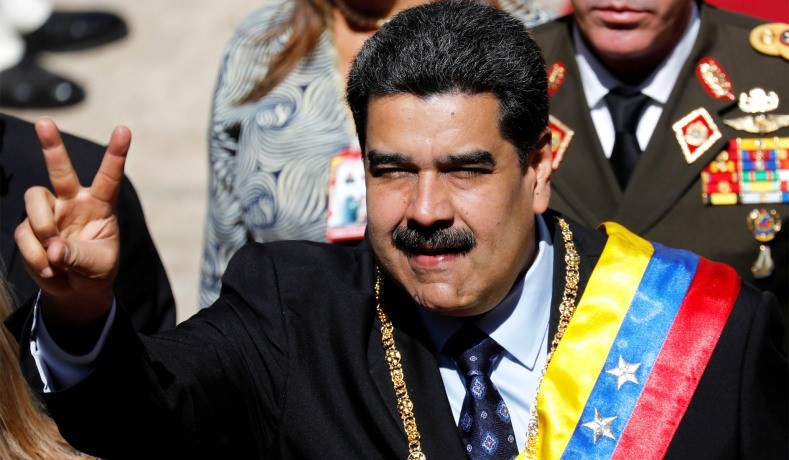
Venezuela’s Judicial System: From Democracy to Corruption and Repression
Venezuela’s democratic constitution of 1999 envisioned a government structure with a directly elected president, a bicameral legislature, and a multitiered judiciary led by the Supreme Court.[9] However, during Hugo Chávez’s leadership, the judicial system underwent radical reforms that contradicted his promises to expand personal freedoms. Instead, Chávez monopolized power and established a subservient legislative and judicial structure, allowing him complete control over the government. To further consolidate his totalitarian power, he silenced the press and terrorized civil society through the Bolivarian National Intelligence Service (SEBIN), leaving Chavez’s power and perspective completely unchallenged. Arbitrary arrests, exiles, and long imprisonments were employed to eliminate critics and set an example for potential challengers. The regime’s police and army forces were used to maintain control through brutal force against the population.
Under Nicolas Maduro’s leadership as Chávez’s successor, Venezuela’s judicial system sank further into corruption and dependence on the president. The Maduro regime has significantly weakened the independence of the Venezuelan justice system, such that it has become complicit in state repression and is allowing state impunity for human rights violations. Transparency International, a global anti-corruption organization, designates Venezuela’s judicial system as one of the most corrupt in the world.[10] The decline of the Venezuelan judiciary can be attributed to several factors, including the politicization of the judiciary under both Chávez and Maduro. Judges were appointed based on loyalty to the regime rather than qualifications, compromising the independence and impartiality of the judiciary.
Consequently, the government often exploits the judiciary as a tool to suppress opposition, undermining citizens’ access to a fair and just legal system that upholds their constitutional rights.[11] This abuse of the judicial branch to perpetrate human rights violations mirrors the situation in Iran, where the regime’s actions go unchecked and are even supported by the courts. The charges used to imprison individuals in Venezuela are as contradictory as the behavior of the judicial system itself.
The Maduro government has imposed severe restrictions on freedom of expression and the press, resulting in limited access to information. In 2023, Venezuela ranked 159th out of 180 countries in the World Press Freedom Index published by Reporters Sans Frontieres[12], indicating a “challenging situation” for freedom of information. Censorship in Venezuela is enforced through judicial power, which confirms unfounded charges of unconstitutional and violent behaviors, such as terrorism, against journalists and individuals expressing dissent or criticism of the regime. According to PROVEA, a prominent Venezuelan human rights organization, 66 journalists and media staff members were detained in the first eight months after the declaration of a state of emergency during the pandemic.[13] This political move further expanded Maduro’s power, as a state of emergency allows for expanded government presence.[14] An example recently provided by PROVEA involves Olga Lucila Mata de Gil, a 72-year-old woman, and her son Florencio, who were detained four years after being charged by the Prosecutor General for instigating hatred through a satirical TikTok post in which they humorously named Arepas[15] after different political actors, including Maduro.[16] Since Maduro assumed power, 115 communication media outlets have disappeared, leading to a severe setback in civic spaces in Venezuela.
The disregard for due process and the rule of law by the government has contributed to the erosion of the Venezuelan judicial system. The Supreme Court, dominated by Maduro supporters, frequently invalidates laws adopted by the National Assembly when not in the president’s favor, further marginalizing the legislative body (Independence of the Venezuelan judiciary). Individuals are often arbitrarily detained, denied legal representation, and denied fair trials. Additionally, the security forces responsible for human rights violations such as torture and extrajudicial killings operate with impunity, exacerbating the deterioration of human rights in the country, particularly with regard to violation of freedom of expression and the press.[17]
The corruption of the judicial system orchestrated by the executive branches of Venezuela’s government has transformed a once peaceful system into one riddled with human rights abuses and a lack of security for its citizens and press, who do not know what might get them charged and thrown into jail. Under Nicolas Maduro’s leadership, an authoritarian regime has taken hold, where loyalty to his requests reigns supreme, often fueled by fear of the consequences of going against him. This manipulation of the judicial and legislative systems to serve as mere puppets or extensions of the regime is not a surprising or recent development, as it mirrors the tactics employed by the Iranian regime.
Those who dare to criticize government policies or refuse to comply with them are most likely to find themselves incarcerated as political prisoners. In one notable case, the Prosecutor’s Office informally accused several individuals through social media, compromising their rights to a fair trial and presumption of innocence.[18] Shockingly, even children and adolescents have been among those wrongfully accused. Political opponents, both real and perceived, face an ongoing threat of arbitrary human rights violations. Many individuals endure restrictions on their freedom as a result of ongoing or recent politically motivated judicial procedures.
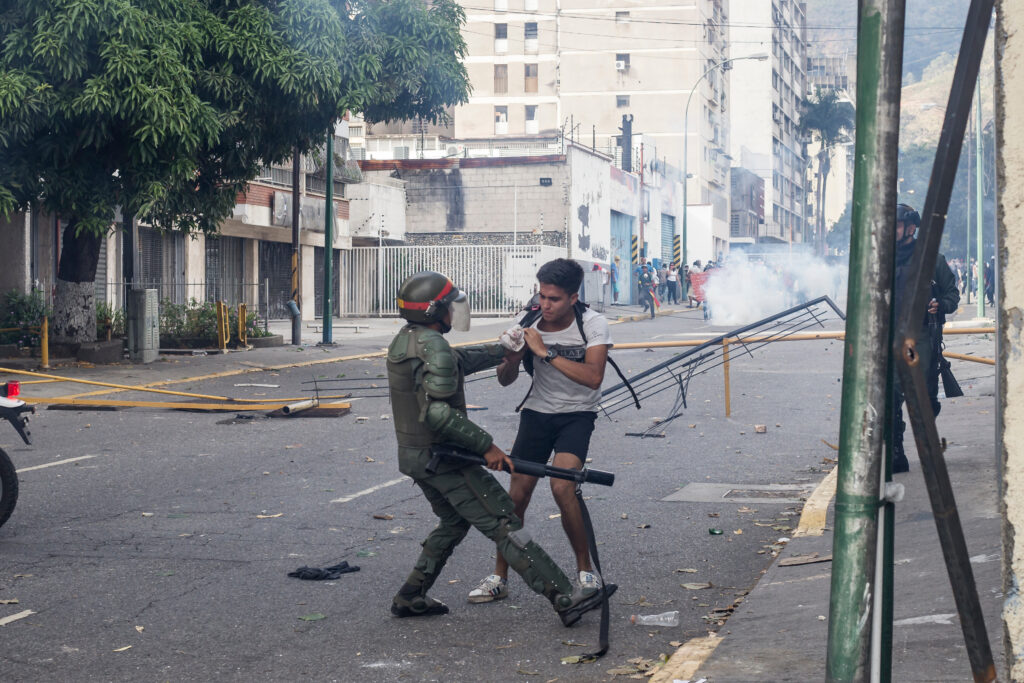
Prisons and their Political Prisoners
Due to the political policies implemented by Chávez and Maduro, numerous individuals, including citizens, activists, and officials, have been unjustly detained and imprisoned for political reasons. This trend of wrongful imprisonment based on political beliefs has steadily increased since Chávez assumed power. When we examine the cases of political prisoners in Venezuela, we find that their rights are violated in two significant ways. Firstly, charging individuals with crimes due to their political views classifies them as political prisoners, directly violating their universal human right to freedom of expression and speech, as enshrined in the United Nations’ Universal Declaration of Human Rights (UDHR).[19] Secondly, the conditions and treatment within Venezuelan prisons further violate the rights of these individuals, as they are subjected to inhumane treatment and degrading conditions, contradicting the UDHR’s prohibition against torture or cruel, inhuman, or degrading treatment or punishment.[20]
Finding accurate and transparent reports of political prisoners in Venezuela is exceptionally challenging due to the totalitarian control exercised by Venezuela’s presidents over the population and other branches of the government. Despite numerous reports and condemnations from human rights organizations such as Amnesty International[21] and Human Rights Watch[22], the Venezuelan government continues to deny the existence of political prisoners. As a means to suppress opposition, including journalists, opposition politicians, and human rights activists, Chávez accused them of various alleged crimes, such as inciting violence and terrorism, solely based on their critical political beliefs. Under Maduro’s leadership, the situation of political prisoners in Venezuela has only worsened, primarily due to the protests held throughout 2019.
In 2019, Venezuela witnessed a surge in protests and demonstrations demanding civil and political rights, as well as addressing political obstruction and harsh economic conditions. These widespread protests, which spread throughout the country, aimed to restore democracy, uphold the rule of law, improve economic conditions, and ensure free and fair elections. Following the unrest, the crackdown on critics under the Maduro regime deteriorated. In response to the protests, authorities reacted with brutal repression, resulting in casualties and an increase in arbitrary detentions. Foro Penal, a non-governmental organization dedicated to monitoring and advocating for political prisoners and detainees in Venezuela, is one of the most reliable sources of information on political prisoners in the country and is even favored by the United States Department of State.[23] In 2019, Alfredo Romero, the director of Foro Penal, acknowledged the worsening situation for victims, stating that “detainees are being held for longer, in worsening conditions and on increasingly flimsy charges.”[24] Foro Penal’s calculations revealed a significant intensification in arrests, with the number of arrests made in the first three months of 2019 accounting for nearly half of all political detentions carried out since Maduro’s rise to power.[25] In just three months, Maduro surpassed five years’ worth of detentions, all because civilians were expressing their experiences and attempting to exercise their rights.
One highly politicized political prisoner who was detained during the aftermath of the government’s crackdown on the 2019 protests was Roberto Marrero, the chief of staff of the opposition leader at the time. Given his activism and outspokenness against the government, Marrero became a likely target for arrest. On March 15th, government agents filed two reports accusing him of smuggling weapons from Colombia, despite his affiliation with an antiviolence political party advocating for peaceful democratic reform. The second charge infringed upon Marrero’s right to free speech, as he was accused of treason based on critical opinions of Maduro’s government expressed through social media.
Similar flimsy and vague charges are frequently brought against individuals in Venezuela, aiming to silence opposition members and discourage others from speaking out. Other common false justifications for wrongful imprisonment include terrorism, conspiracy, weapons smuggling, terrorism financing, and assault on the constitutional order.[26] Although Marrero was eventually released after about a year in prison, the case against him lacked evidence and contained forged reports. He had repeatedly been denied access to legal resources and his lawyer. Despite being released, he still faces numerous restrictions and challenges in exercising his rights. For instance, Maduro sent government agents to prevent Marrero from boarding a humanitarian aid trip to the Venezuelan Embassy in Spain,[27] demonstrating the ongoing interference and targeting he faces. Given the blatant and unjustified violation of human rights in Marrero’s case, it garnered international attention from governments, human rights organizations, and media outlets worldwide. The US government, in retaliation, imposed sanctions on Venezuelan banks, urging for Marrero’s release. Additionally, a report highlighting essential information from Marrero’s case further shed light on the egregious violations committed by Maduro’s government.
As mentioned earlier, unlawful imprisonment is only one aspect of the violation of human rights experienced by political prisoners in Venezuela. Harrowing experiences within the prisons follow their arrests. Political prisoners in Venezuela face specific tactics aimed at suppressing their voices and resilience against authoritarian policies. One such tactic is the prolonged use of solitary confinement, where individuals are isolated for extended periods. This deliberate measure aims to disrupt their intellectual and social well-being, hoping that they will abandon their fight for their rights.[28] Additionally, political prisoners often endure detentions that exceed the two-year maximum period stipulated by Venezuelan law for pretrial detention.[29]
Venezuelan prisons have gained notoriety within the international community due to the dire conditions they impose on inmates. These prisons are characterized by unsanitary and overcrowded environments, subjecting prisoners to degrading circumstances. In such appalling conditions, individuals are compelled to sleep and defecate while standing up, receive only meager amounts of water each day, endure heat exhaustion caused by high temperatures and poor ventilation, and face consistent denial of essential medical treatment. Furthermore, incidents of sexual assault occur, adding to the immense suffering experienced by prisoners. In an act of psychological torment, inmates are subjected to sensory overload through the use of loud noises.[30]
El Helicoide, once a shopping center and now the headquarters of the Bolivarian National Intelligence Service (SEBIN), where Marrero was taken after being arrested by “masked intelligence agents”[31] in his home in March 2019, is particularly infamous. Human rights organizations refer to it as a “torture chamber” due to multiple reports of extreme and cruel forms of torture inflicted on prisoners. Among the various torture techniques employed at El Helicoide, one of the most notorious is referred to as “white torture.” Information about this particular method comes primarily from firsthand accounts provided by former prisoners, particularly political prisoners, who bravely share their experiences. According to one report, “white torture” is a type of psychological torture that denies individuals access to natural light, fresh air, and communication with the outside world. Prisoners subjected to this form of torture are deliberately isolated from any external stimuli that could provide solace or a sense of normalcy. Moreover, their only source of water is the toilet pothole, which further dehumanizes and degrades them.[32] In 2020, the UN’s Human Rights Council (UNHRC) launched an independent international fact-finding mission on the Bolivarian Republic of Venezuela, and its subsequent report – “findings of [an] independent international fact-finding mission on the Bolivarian Republic of Venezuela” – shed light on the deplorable conditions within El Helicoide and other Venezuelan prisons.
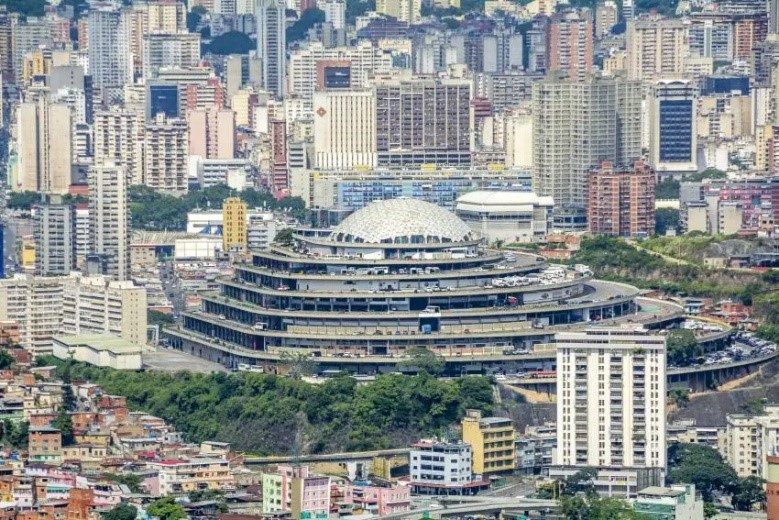
El Helicoide stands out among other prisons in Venezuela for several reasons, one of which is its status as the headquarters for SEBIN (Bolivarian National Intelligence Service). SEBIN is the nation’s intelligence agency tasked with ensuring the overall security, defense, and development of Venezuela. Its primary objective is to identify and neutralize threats that pose harm to the supreme interests of the Republic[33]. Regrettably, their response to perceived “threats” is to employ severe torture tactics, targeting individuals who are simply exercising their fundamental human rights to freedom of expression and belief. SEBIN operates as an instrument for implementing torture and intimidation tactics against Venezuelans. Consequently, El Helicoide prison, serving as SEBIN’s headquarters, has gained notoriety as one of the most brutal facilities in the country.
The UNHRC report reveals that SEBIN’s primary targets are civilians, including opposition politicians, journalists, student and protest leaders, and individuals working for non-governmental organizations.[34] Moreover, the report exposes that agents use excessive force and violence and systematically plant evidence, such as weapons or contraband, to frame their targets. The report’s findings highlight the corrupt nature of the judicial and legal process surrounding detentions, where innocent individuals are framed rather than receiving fair trials. The impact of these conditions within El Helicoide extends disproportionately to female detainees. Limited access to bathroom facilities and the experience of menstruation pose additional challenges for women. Women also face higher rates of rape and sexual assault within the prison system.[35] The UNHRC report investigated 51 cases where SEBIN agents tortured or subjected detainees to cruel, inhuman, or degrading treatment or punishment. Some of these torture sessions lasted for days or even weeks.[36] This report effectively exposes the terrible conditions and experiences endured by those detained in El Helicoide, illustrating the violation of rights at different stages of their imprisonment.
The information and analysis provided throughout this study shed light on the two main ways in which the human rights of political prisoners in Venezuela are violated: the unjust grounds for their detention and the inhumane conditions they face once imprisoned. The diverse sources and international attention directed towards these issues demonstrate the growing global movement advocating for the protection of Venezuelans’ right to freedom of expression and belief. It is crucial to address these violations and ensure the respect of human rights in Venezuela.
International Advocacy for Venezuela’s Political Prisoners
The Venezuelan government’s long-standing record of human rights violations over the past 30 years has drawn significant attention from global human rights defenders and advocates. This attention has been amplified due to the spillover effects of Venezuela’s dire economic, political, and social conditions on neighboring countries. The severity of the crisis has forced millions of Venezuelans to become migrants and refugees, with over 6.1 million individuals leaving their country as of July 2022. The majority, 80%, have sought refuge in 17 Latin American countries.[37] Consequently, the crisis and the human rights violations associated with it have mobilized civil society actors worldwide.
However, the denial of political prisoners and the government’s refusal to acknowledge human rights violations within prisons and detention centers present significant challenges for the international community in providing aid and support. This lack of acknowledgment hampers efforts to address the problem effectively. Despite these challenges, there have been occasional successes that offer glimmers of hope. In 2019, for instance, the Red Cross gained increased access to provide aid to Venezuelan political prisoners. They were granted the ability to visit and offer resources to individuals held at the Ramo Verde military prison near Caracas.[38] This development was celebrated as a success by human rights advocates worldwide. After being banned from Venezuela in 2012, the renewed access allows Red Cross representatives to conduct visits, provide humanitarian assistance, and offer technical support, including previously denied resources such as communication devices and medical supplies, enhancing the well-being of the prisoners.
While the overall situation in Venezuela remains disheartening, these occasional successes underscore the importance of recognizing and supporting positive developments in the face of the ongoing challenges.
Lessons from Political Prisoners in Venezuela
In conclusion, this case study sheds light on the alarming status of political prisoners in Venezuela and the multitude of challenges they face within the country’s legal, political, and judicial systems. The analysis has provided a comprehensive understanding of the tools used to violate or protect individuals’ rights by the Venezuelan government and the involvement of the international community in addressing this critical issue.
Throughout the study, it becomes evident that political prisoners in Venezuela are subjected to various forms of abuse, including arbitrary arrests, unfair trials, and inhumane treatment. The government has employed legal mechanisms, such as the misuse of anti-terrorism and sedition laws, to stifle dissent and suppress political opposition. The politicization of the judiciary has undermined the rule of law, eroding the rights and freedoms of individuals.
Despite these challenges, the case study also highlights the resilience and determination of activists, human rights organizations, and international actors in advocating for the rights of political prisoners in Venezuela. Civil society organizations have played a crucial role in documenting human rights abuses, providing legal support, and raising awareness of the situation. International organizations and governments have put pressure on the Venezuelan government, imposing sanctions and calling for the release of political prisoners.
The case of political prisoners in Venezuela also provides valuable lessons for the international community in understanding and addressing human rights abuses in authoritarian regimes. By examining the situation, several common characteristics and tactics such regimes employ become apparent.
Firstly, authoritarian regimes often control major economic institutions, disguising it as nationalization. This control enables them to suppress economic and political freedoms, as seen in Venezuela and Iran.
Secondly, paramilitary forces are frequently used by these regimes to enforce control over citizens with impunity. The presence of these forces creates an atmosphere of fear and oppression.
Thirdly, manipulating the judicial system is a common strategy to silence dissent and punish political opponents. By corrupting the legal process, authoritarian regimes can stifle opposition and maintain their grip on power.
Fourthly, independent media and civil activists face constant pressure, with tactics such as terrorism and torture being employed against them. These tactics aim to silence critical voices and maintain a climate of fear.
Fifthly, extrajudicial punishments and hidden detention centers are frequently utilized to punish and control perceived threats. These clandestine facilities allow regimes to operate outside the bounds of the law and maintain control over individuals.
Finally, activists and officials who challenge the government are often branded as traitors or terrorists, discrediting their efforts and undermining their credibility.
Recognizing these similarities helps the international community identify and address human rights abuses in authoritarian regimes. It allows for a more informed approach to protecting the rights of political prisoners and promoting democratic values. Democratic states, for instance, can implement policies regarding international trade and financial interactions to prevent petrostate governments from adopting militaristic and authoritarian attitudes toward their citizens. By imposing economic and diplomatic pressure, these states can discourage the consolidation of power and promote respect for human rights.
Moreover, educating citizens and officials about the dangers of concentrating power in the hands of a single leader, even if their intentions may seem benevolent, is crucial. Understanding the risks inherent in authoritarianism can help societies safeguard their democratic principles and prevent the erosion of human rights.
In summary, the case of political prisoners in Venezuela serves as a reminder of the common characteristics and tactics employed by authoritarian regimes. By acknowledging these patterns and taking proactive measures, the international community can work towards protecting the rights of political prisoners and promoting democratic values globally.
[1] Heritage. “2023 Index of Economic Freedom: Venezuela” Heritage.
[2] Noelani Kirschner. “Under Maduro, Nearly All Venezuelans Live in Poverty.” US Mission to the UN Agencies in Rome, Aug. 3, 2020.
[3] IDEA. “Constitutional History of Venezuela.” International Institution for Democracy and Electoral Assistance, last viewed May 20223.
[4] Ibid.
[5] Ibid.
[6] Central Intelligence Agency. “Venezuela.” The World Factbook, Central Intelligence Agency, 25 April 2022.
[7] CFR. “Venezuela in Crisis.” Council on Foreign Relations, 14 Apr. 2021.
[8] Central Intelligence Agency. “Venezuela”.
[9] Edwin Lieuwen and Jennifer McCoy. “Venezuela.” Encyclopædia Britannica, Encyclopædia Britannica, inc. Accessed 2 Sept. 2024.
[10] TI. “Venezuela.” Transparency International.
[11] Luc Cohen. “U.N. Condemns Venezuela Rights Abuses; Maduro’s Envoys Refute Charges.” Reuters, Ed. by Matthew Lewis, 5 Mar. 2021.
[12] RSF. “World Press Freedom Index 2023.” Reporters Without Borders, 2023.
[13] PROVEA. “Crisis in Venezuela Bulletin Number 228: ‘Normality’ Isn’t Possible Without Democracy.” Venezuela Program Education Action on Human Rights, May 3, 2022.
[14] HRW. “Venezuela: Attacks Against Freedom of Expression Must Cease Immediately.” Human Rights Watch, January 14, 2023.
[15] A type of venezuela food.
[16] PROVEA. “Venezuela Bulletin Number 228: ‘Normality’ Isn’t Possible Without Democracy”.
[17] “Venezuela 2023.” Amnesty International. Accessed 2 Sept. 2024.
[18] PROVEA. “Venezuela Bulletin Number 228: ‘Normality’ Isn’t Possible Without Democracy”.
[19] UN General Assembly. “Universal Declaration of Human Rights.” United Nations General Assembly, Dec. 10 1948, 217 A (III).
[20] UN General Assembly. Universal Declaration of Human Rights.
[21] AI. “Venezuela: Amnesty International Names Five Members of Humanitarian NGO Azul Positivo Prisoners of Conscience.” Amnesty International, Jan. 19, 2021.
[22] OHCHR. “Venezuela: UN Experts Warn of Persisting Attacks on Civil Society, Media, and Trade Union Leaders.” Office of the High Commissioner for Human Rights, March 22, 2023.
[23] US Department Of State. “2021 Country Reports on Human Rights Practices: Venezuela”.
[24] Arelis R. Hernandez; Mariana Zuniga. “Political Detentions Climbing Amid Worsening Venezuela Crisis.” The Washington Post, 12 Apr. 2019.
[25] Ibid.
[26] US Department Of State. “Venezuela 2021 Human Rights Report.” Bureau of Democracy, Human Rights, and Labor, 2021.
[27] Infobae. “Roberto Marrero, Mano Derecha de Guaido, Miajo a Mexico Tras Cinco Dias de Espera Para Salir del Pais.” Infobae, Oct. 8, 2020.
[28] US Department Of State. “Venezuela 2021 Human Rights Report.” Bureau of Democracy, Human Rights, and Labor, 2021.
[29] Luc Cohen. “U.N. Condemns Venezuela Rights Abuses; Maduro’s Envoys Refute Charges.” Reuters, Ed. by Matthew Lewis, 5 Mar. 2021.
[30] US Department Of State. “Venezuela 2021 Human Rights Report”.
[31] Joe Parkin Daniels. “Guaido’s CHief of Staff Arrested by Venezuelan Agents.” The Guardian, Mar. 21, 2019.
[32] Mie Hoejris Dahl. “Torture in the Heart of Venezuela.” The Nation, 29 Nov. 2022.
[34] UNHRC. “Report of the Independent International Fact-Finding Mission on the Bolivarian Republic of Venezuela.” A/HRC/51/43, United Nations Human Rights Council, 20 Sept. 2022.
[35] Nancy Wolff et al. “Sexual Violence Inside Prisons: Rates of Victimization.” J Urban Health 83, no. 5 (2006): 835-848.
[36] UNHRC. “Report of the Independent International Fact-Finding Mission on the Bolivarian Republic of Venezuela”.
[37] IOM. “Venezuela Refugee and Migrant Crisis.” International Organization for Migration, July 2022.
[38] NBC. “Red Cross Regains Access to Venezuela Jails, Military Prisons.” NBC News, 10 Apr. 2019.