
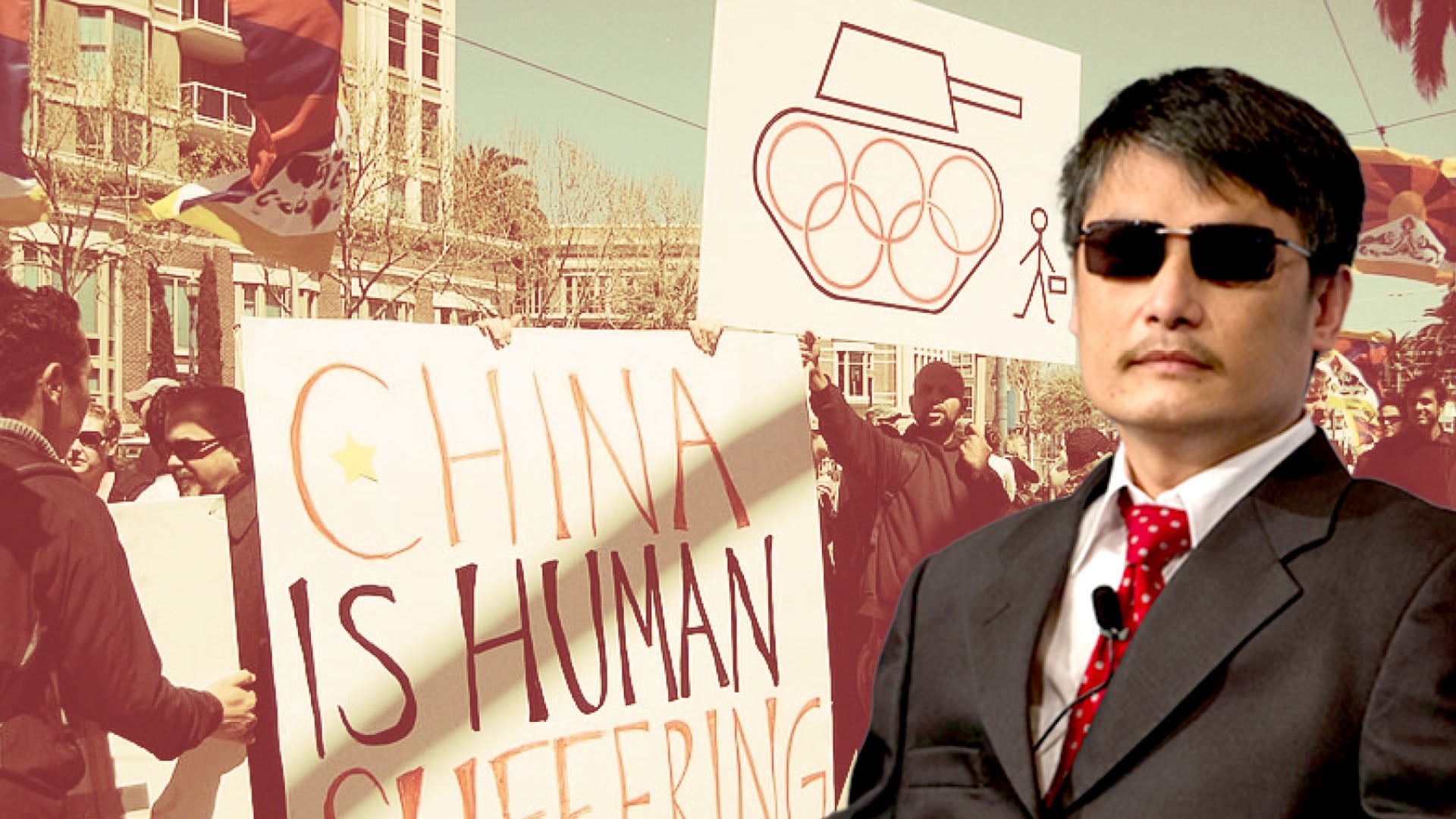
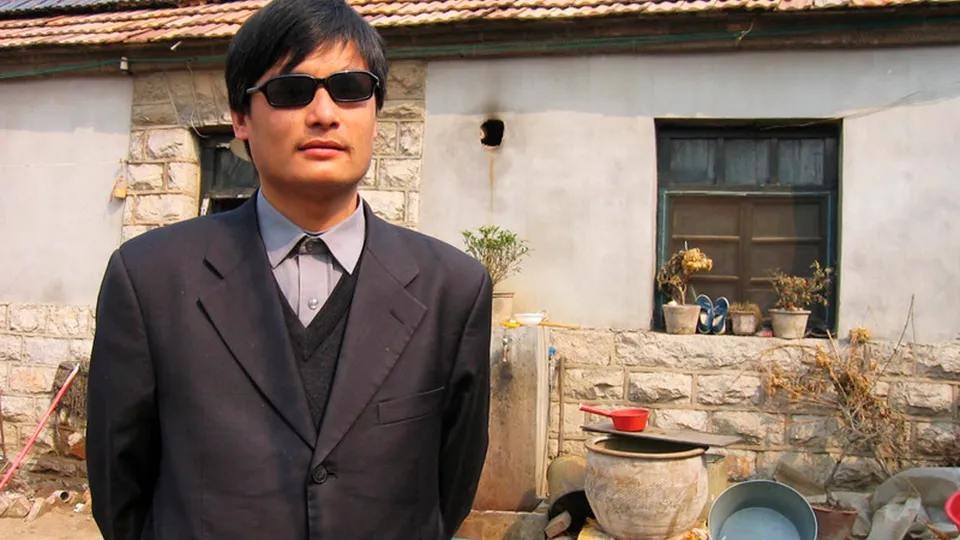
In a country with a complicated of the rule of law in its modern history, barefoot lawyer Chen Guangcheng was able to make significant achievements before taving no other choice but to dramatically escape his house arrest and seek help from the US embassy in Beijing to end his and his family’s unlawful harassment. Among other activities, he courageously defended marginalized individuals in Shandong who faced mistreatment from officials enforcing the one-child policy. However, his advocacy brought harassment not only upon himself but also his family, friends, supporters, and lawyers. Despite facing blindness since childhood, Guangcheng, a self-taught lawyer from northeastern China, dedicated himself to assisting those without access to legal representation. Operating in a single-party regime, Guangcheng and other barefoot lawyers associated with the Weiquan movement navigated an environment perceived to be increasingly distant from principles of justice and rule of law. This case study delves into their journey, extracting valuable lessons from their determined actions.
Barefoot lawyers: Thrive for justice.
In resource-scarce environments, societies can adopt innovative approaches to addressing needs, including those related to social issues. Under Mao Zedong’s rule in China from 1949-1976, China saw the emergence of barefoot doctors[1], who were mostly farmers with minimal training providing vital medical services, as a response to the deficit in medical services. A similar concept applies to barefoot lawyers. They are self-taught legal activists who file civil complaints, engage in litigation, and educate citizens about their rights. They offer free legal aid and often take on controversial cases, such as exposing local authority corruption.
The barefoot lawyers are commonly associated with a wider legal change in China, namely Weiquan movement. Weiquan lawyers, also known as rights protection lawyers in China, form a small but influential movement comprising legal practitioners, scholars, and activists. They aid Chinese citizens in asserting their constitutional, civil, and public interest rights through litigation and legal activism. Weiquan lawyers handle cases related to labour rights, land rights, official corruption, torture victims, and migrants’ rights. Their numbers are limited compared to the overall legal professionals in China, estimated to be only a few dozen.[2] These lawyers may not always hold a law practice license.[3]
China legal environment
China’s post-Mao government claimed to re-establish “rule of law,” promoting legal protection. Although the legal profession grew significantly, rural areas still suffer from a shortage of legal professionals.[4] Despite changes, the legacy of the Mao era, where law served party authority, remains resilient. Chinese lawyers encounter systematic challenges under One-Party Rule, limiting their independence and representation in cases against the government’s interests. Human rights lawyers defending activists often face harassment, disbarment, and imprisonment, with surveillance and government control over legal organizations.[5]
Scarcity of skilled personnel and financial means hinder justice. Chinese people face obstacles in accessing legal assistance due to limited resources and the authoritarian nature of the ruling regime. The government’s approach to civil and human rights often clashes with liberal values, causing tension with legal activists and defenders such as Weiquan and barefoot lawyers, who strive to protect citizens from an increasingly controlling political system. International human rights organizations criticize China for suppressing human rights lawyers advocating for civil liberties and the rule of law. The government tightens restrictions on legal advocacy groups, hindering their independent operation. China’s legal system remains heavily influenced by the Communist Party, impacting lawyer independence and the judiciary. The emergence of the Weiquan movement in China was facilitated by the 1996 “Lawyers Law,”[6] granting lawyers greater autonomy within the profession. However, the Chinese government’s recent amendments have sought to limit the profession, align it with the Party’s interests, and suppress “rights-defending” lawyers.[7]
The current legal landscape in China is complex. While Barefoot Lawyers originally aimed to empower rural communities and promote party ideology, human rights and the role of independent lawyers in advocating for justice and civil liberties emerged as critical issues. Many lawyers and activists have been detained or questioned by Chinese police and denounced in state media as a “criminal gang” in recent days, raising fears of an unprecedented crackdown by the Chinese authorities.[8] On the other hand, some lawyers are against free legal assistance offered by civil activists, as it goes against their interests and weaken their ties with the ruling party.
Similar challenges exist in Iran, where legal representation and advocacy face obstacles under the ruling regime. In Iran, lawyers face similar constraints, with the Islamic Republic controlling the judiciary and limiting their independence and inadequacy of the lawyers reach to all nation[9]. Defending political dissidents or challenging sensitive cases may lead to harassment, intimidation, and arrest. Criticizing authorities or representing unpopular clients can result in reprisals. Lawyers working on cases involving political prisoners[10] or human rights issues[11] encounter intimidation, harassment, disbarment, and imprisonment.[12]
Goals and Objectives
Weiquan lawyers are primarily focused on providing legal assistance and representation to people who do not have access to legal representation. Weiquan activities have expanded to defend vulnerable groups against government abuses as individuals and social organizations frequently assert their rights against the authorities in China’s political system as legal awareness has increased. Both Weiquan and barefoot lawyers champion the vulnerable, representing workers against employers, rural residents in tax-related cases, environmental pollution disputes, land appropriation, village committee elections, journalists facing censorship, and citizens experiencing discrimination from government policies.[13]
Those activists usually began their activities to provide legal empowerment of peasants and rural communities with basic legal knowledge, dispute Resolution including mediating and resolving disputes within their communities, and promote social Justice and in some cases party ideology, as the movement was closely tied to the Communist Party’s ideology and aimed to promote party’s policies at the local level. In fact, the Barefoot Lawyers served as a bridge between the rural population and the legal system, providing some form of access to justice for those who might not have had any otherwise.[14]
Many lawyers and activists have faced years of state brutality, chiefly for spotlighting the growing gap between government promises and reality.[15] Their efforts contribute to a growing awareness of legal rights and give marginalized communities a voice in seeking justice for their grievances. The Weiquan movement remains an innovative force in China’s legal environment, inspiring hope for greater protection of civil rights and equitable access to justice.
Chen Guangcheng
The rise of barefoot lawyers can be exemplified by Chen Guangcheng. Chen was born in 1971 amidst the turmoil of the Cultural Revolution in the 1970s, and his life has been marked by challenges from the outset. Despite being born with full sight, Chen fell seriously ill at the age of five months. The lack of medical services resulted in him losing his vision within a few days. An earlier tragedy struck the family when Chen’s older sister passed away after a brief illness. A difficult childhood was endured by Chen and his four surviving brothers as they grew up in poverty and hunger. Despite being illiterate until the age of 23, his determination led him to enrol at Qingdao High School for the Blind. In 1998, he graduated from the school, however due to discriminatory policies, blind individuals were not permitted to pursue higher education, leaving him without a law degree.[16]
The legal activist Chen gained international attention in 2005 when he filed a class-action lawsuit accusing a Shandong city of enforcing the one-child policy through coerced abortions and sterilizations. Earlier, he successfully gathered 79 villages in Shandong in 2000 to petition against a polluting paper mill, which ultimately led to its suspension. His quest for justice continued when he filed a class-action lawsuit against a family planning clinic, alleging that they had forced thousands of women to undergo sterilization or abortion as a result of compulsion. Chen Guangcheng gained international recognition for these landmark cases and empowered other barefoot lawyers.[17]
Activities
The importance of barefoot lawyers in China is attributed to the fact that their services and counsel cannot be replaced by other professionals. They play a crucial role in providing free legal representation in rural areas and in taking on administrative and politically sensitive cases that licensed lawyers often avoid due to the potential repercussions. These grassroots legal advocates contribute significantly to promoting social justice and safeguarding citizen rights by courageously tackling controversial issues, such as illegal land grabs, corruption, abuse of power, and environmental disputes. In addition to court litigation, barefoot lawyers also assist citizens in petitioning governmental authorities. According to a survey conducted in rural Henan province between 2001 and 2004, more cases were handled by barefoot lawyers than by licensed lawyers, highlighting their impact on the legal system.
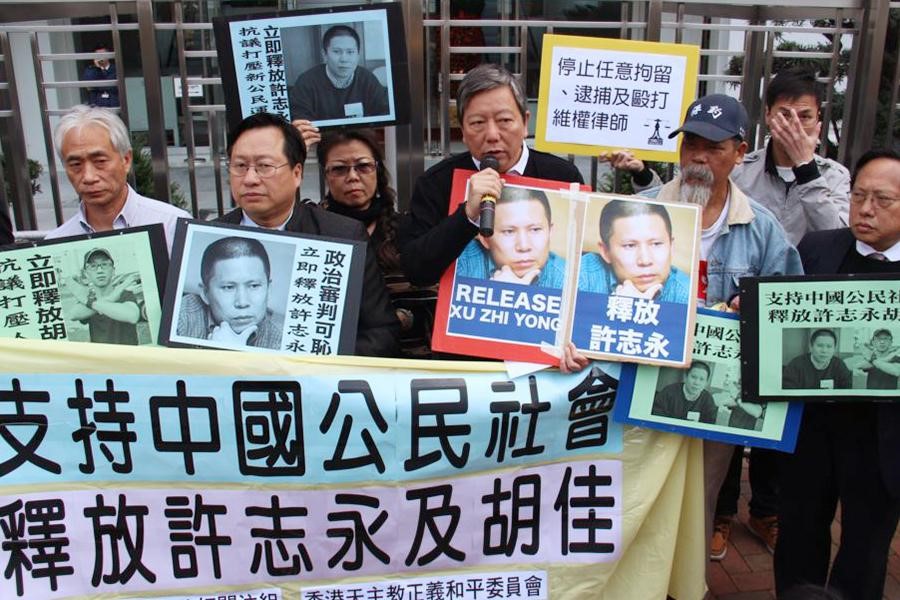
Lawyers from Weiquan and the movement play a significant role in defending various human rights issues in China. Among their areas of focus is freedom of expression, where they have been engaged in litigation and advocacy to protect individuals charged with subversion crimes. There are several notable cases, including the case of Liu Xiaobo, an intellectual from Beijing who was imprisoned for 11 years for inciting subversion. Weiquan lawyers also campaign for judicial independence, challenging the Ministry of Justice’s control over lawyers’ licenses, and promoting reforms to strengthen the rule of law. Moreover, they advocate for citizens facing evictions and land requisitions, as demonstrated by Shanghai lawyer Zheng Enchong’s efforts.[19] In addition, Weiquan lawyers provide legal assistance to ethnic minorities, including Tibetans, following the March 2008 Tibetan protests. These lawyers also advocate for the rights of Falun Gong practitioners in litigation and public advocacy. Weiquan lawyers also vigorously advocate for HIV/AIDS victims, women’s rights, underground Christians, and various other marginalized groups throughout China, demonstrating their commitment to advancing human rights and justice[20].
By examining Chen Guangcheng’s actions in China, we can gain a greater understanding of the work of barefoot lawyers. In 2000, Chen returned to his hometown of Dongshigu to address severe environmental pollution caused by a polluting paper mill. In the past decade, the mill had been releasing toxic wastewater into the Meng River, causing havoc on crops, wildlife, and the health of downstream villagers. As a result, Chen rallied his fellow villagers and 78 neighboring communities to organize a petition against the polluting mill. The determined efforts of these individuals resulted in the suspension of the harmful operation and the relief of the affected communities.
Chen’s activism extended beyond environmental concerns. In March 2004, over 300 residents of Dongshigu demanded the release of village accounts and the resolution of unresolved land requisitions. Chen stepped forward to represent them and filed a lawsuit against the Public Security Bureau in the Qi’nan County Court, citing negligence as the reason for the incident. In early 2005, legal proceedings were commenced in connection with the case.
Chen’s assistance was sought in the same year by Chinese villagers in Linyi, Shandong, who had launched a brutal campaign punishing families who attempted to evade the restrictive “one-child” population control policies. Chen spent several months documenting cases of forced late-term abortions and sterilizations inflicted on women who refused to comply with the policy[21]. The results of his survey in Linyi and the surrounding rural areas revealed the grim consequences of the policy’s implementation. Chen filed an unprecedented class-action lawsuit on behalf of the affected women against the city’s family planning staff based on compelling evidence. The groundbreaking legal challenge drew international attention, shedding light on the abuses perpetuated by the one-child policy.
Visions and Leadership
Weiquan activists are motivated by their values and vision, which focus on making services accessible and free without being constrained by political constraints, while also contributing to the development and improvement of China. As with other members of this movement, Chen Guangcheng faced formidable challenges, demonstrating remarkable resilience and steadfastness. During Chen’s early career as a self-taught lawyer, a cynical acquaintance expressed scepticism, claiming that China lacked a proper legal system under the control of the administrative branch. Chen remained undeterred despite the obstacles and continued his legal fight against the abuses of the one-child policy. [22] The importance of addressing the bigger picture of political structure to reach a better lawful society is one of Chen’s viewpoints, as he asserts that the violation of people’s rights is caused by the party’s unchecked and imbalanced authority, which lacks a true rule of law.[23]
According to Chen, his mission has been to provide ordinary people with nonviolent means of resolving their grievances, in order to establish the rule of law in a country that claims to embrace it feignedly under its ruling party. He believes that citizens should be educated about their rights and encouraged to advocate for themselves. In Chen’s opinion, the Cultural Revolution in China persisted in various forms, intimidating the population into submission to the party’s rule.
The Weiquan lawyers are aware of the importance of media coverage in thwarting government actions that are detrimental to human rights. Chen utilized the media in various ways to advance his cause, including seeking help to protect his family from harassment. Taking to the Chinese-language website Boxun, he posted a video calling for the Prime Minister’s personal intervention in the investigation of unlawful actions committed by county-level police officers and officials who violated his rights and caused him harm without any legal justification or uniformed officers[25]. Using the media to raise public awareness is an unconventional approach in China, where the media is controlled by the party. Although Chen’s daring escape from house arrest and brutal persecution by plainclothes police in Shandong province was widely reported, the Chinese state media remained silent[26], emphasizing the difficulty of obtaining unbiased and comprehensive information under China’s tightly controlled media environment.
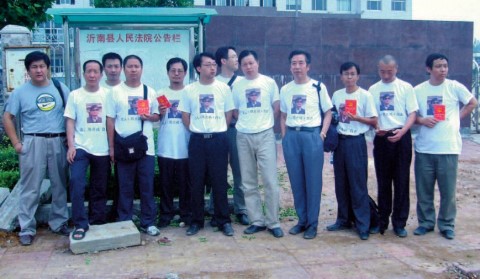
Often, effective leadership requires the formation of a team of activists and supporters. The courage and actions of Chen garnered widespread support for him and his cause. In 2011, Chinese citizens demonstrated their support for Chen by printing T-shirts with his face and posting pictures of themselves wearing sunglasses similar to his trademark glasses. The officials, however, have harassed both Chinese and foreign journalists, lawyers, and others who have attempted to express solidarity with Chen on a number of occasions.[27]
Lawyers from Weiquan also embrace the idea of seeking international assistance and support, which Chen emphasized even after he arrived in the United States. In his advocacy of China’s legal system and its citizens’ rights, he urged the US to leverage its principles of freedom, democracy, and the rule of law to unite with other democracies in opposing the aggression of the Chinese Communist Party[28].
Reactions and Achievements
While barefoot lawyers and the Weiquan movement are relatively new movements, they have already made significant progress in enhancing legal awareness within rural Chinese communities and gaining their support. Chen’s efforts have not only yielded positive results for his clients, but have also inspired others to strive for a more just society.[29]
It is not uncommon for lawyers such as Chen to encounter numerous obstacles, including government harassment and restrictions, as well as criticism from licensed attorneys concerned about competition. Even though they were initially encouraged in order to address rural demand, alternative legal providers such as barefoot lawyers and legal workers are now subject to greater scrutiny and control by authorities. Since barefoot lawyers often challenge corruption, abuses of power, or defend victims of forced evictions, they are frequently exposed to punitive reprisals. Chen’s impactful activism resulted in severe consequences, including house arrest, harassment, intimidation, and imprisonment. According to a party official, he had even been labeled a “counterrevolutionary,” an ominous designation during the Maoist era, which normally resulted in death. The incidents outlined above illustrate the enormous challenges and risks associated with pursuing justice and defending human rights in China.[30]
Even in the face of relentless harassment, Chen’s persistent actions gained increasing momentum. A number of prominent media outlets, such as The New York Times and The Globe and Mail, have extensively covered the trial, questioning the fairness of the verdict. In its human rights report, the British government highlighted his case, while Amnesty International recognized him as a prisoner of conscience. Also, the Weiquan cases brought global attention to China’s treatment of civil and human rights, revealing a stark contrast between the promised “harmonious society” and the harsh treatment of peaceful dissenters. Especially when Chen continued to be under constant house arrest, surveillance, and mistreatment after release in 2010.
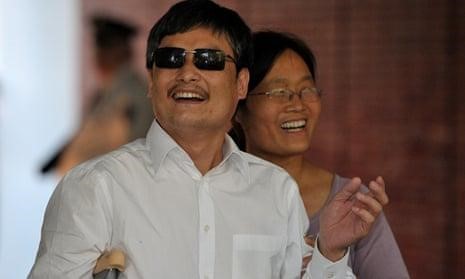
Chen’s inspirational narrative and legal advocacy have turned him into a folk hero in Shandong, attracting a growing number of admirers and supporters[31]. Some supporters bravely attempted to assist him despite the risks and opposition of Chinese authorities. The actor Christian Bale, deeply affected by Chen’s message[32], attempted to visit him, but Chinese security guards prevented him from doing so[33]. Chen’s remarkable escape from house arrest in April 2012, despite breaking his foot in the process, led him to seek refuge at the United States Embassy in Beijing[34]. Human rights activists played a crucial role in assisting his journey to the embassy, where the United States granted citizenship to him and his family on humanitarian grounds. Subsequently, Chen took on research positions at the Witherspoon Institute and the Catholic University of America.
The fates of Chen’s supporters and fellow activists have been troubling, with some individuals going missing and others being placed under house arrest. Yuan Weijing, Chen’s wife, was threatened and abused in order to pressure her into conveying a message to Chen to leave the U.S. embassy[35]. Clearly, this situation illustrates the difficulties and dangers that activists for human rights and justice in China face on a daily basis.
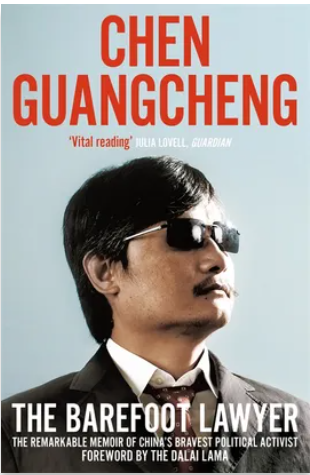
Chen published his memoir, “The Barefoot Lawyer,” in March 2015, and has since published several articles. It was claimed by him in 2013 that NYU forced him to leave because of pressure from the Chinese government, an assertion the university disputes. Some of his previous supporters have expressed concern regarding his association with conservative Christian and anti-abortion figures. While underscoring the importance of small actions in defending human rights. Over the years, he received several prestigious awards, including the Ramon Magsaysay Award in 2007[36], the Democracy Award from the National Endowment for Democracy in 2008, and the Human Rights Award from Human Rights First in 2012.
Conclusion
The Weiquan movement and Barefoot lawyers have made significant contributions to raising legal awareness and gaining support in rural China. The government harasses and restricts them, as well as licensed lawyers who fear competition. Despite facing challenges, these legal activists persist in their mission to empower ordinary people and promote the rule of law, even in a system that claims to embrace it disingenuously. As a folk hero, Chen Guangcheng exposed abuses under China’s one-child policy and faced persecution, leading him to seek refuge in the US Embassy and eventually attaining US citizenship. Although he has been able to escape, supporters and activists who have assisted him have been subjected to repression. As a symbol of resilience in the face of an oppressive system, Chen’s bravery and dedication made him a symbol of courage and dedication.
There are similarities between the pursuit of concentrated power by China and Iran’s regimes. Weiquan, barefoot lawyers, and specifically Chen Guangcheng provide valuable lessons. They demonstrate that while legal expertise is beneficial, basic legal awareness can empower citizens to defend their rights and challenge oppressive policies effectively. Throughout Chen’s experience, the importance of developing supportive networks is underscored, as he mobilized his community with the help of such a network and later used it to escape house arrest. It is important to note that international support, particularly from the media and prominent figures such as Christian Bale in Chen’s case, plays a critical role in amplifying the impact of human rights advocates. Nonetheless, in order to reach a peaceful and just resolution to a sensitive issue such as abortion, resilience, hard work, and careful navigation are required. The complexity of legal activities and advocacy emphasizes the challenges civil activists face, but also highlights the importance of their dedication and determination in promoting human rights and justice for all.
[1]. China’s barefoot doctor: past, present, and future, The Lancet.
[2]. Chinese Human Rights Lawyers Under Assault, Teng Biao Saturday, Washington Post, July 25, 2009.
[3]. Hualing Fu and Richard Cullen. “Weiquan (rights protection) lawyering in an authoritarian state: Building a culture of public-interest lawyering.” The China Journal 59 (2008): 111-127.
[4]. Glenn Tiffert. “Socialist Rule of Law with Chinese Characteristics (Chapter 4) – Socialist Law in Socialist East Asia.” Cambridge Core, 28 July 2018.
[5]. Andrew Jacobs and Chris Buckley. “China Targeting Rights Lawyers in a Crackdown.” The New York Times, 22 July 2015.
[6]. Julia Lovel. “The Barefoot Lawyer by Chen Guangcheng Review – a Story of Imprisonment, Escape and Tenacity.” The Guardian, 23 Apr. 2015.
[7]. Teng Biao. “Chinese Human Rights Lawyers Under Assault.” The Washington Post, 25 July 2009.
[8]. Jennifer Dugan. “China Targets Lawyers in New Human Rights Crackdown.” The Guardian, 13 July 2015.
[9] “Parliament Report: Iran in among the Weakest in Terms of Lawyer Availability.” Radio Farda, 10 Oct.
[10] “Iran: Detainees Denied Fair Legal Representation.” Human Rights Watch, 28 Mar. 2016.
[11]. “Human Rights Violations against Lawyers in Iran.” The Law Society, 21 May 2018.
[12]. Golnaz Esfandiari. “The Farda Briefing: Iran Intensifies Pressure on Independent Lawyers.” RadioFreeEurope/RadioLiberty, 17 May 2023.
[13]. Hualing Fu and Richard Cullen. “Weiquan (rights protection) lawyering in an authoritarian state: Building a culture of public-interest lawyering.” The China Journal 59 (2008): 111-127.
[14]. China’s barefoot doctor: past, present, and future, The Lancet.
[15]. Minky Worden. “Who Is Chen Guangcheng?” Human Rights Watch, 28 Oct. 2020.
[16]. Weinger, Mackenzie. “10 Things about Chen Guangcheng.” POLITICO, 5 Mar. 2012.
[17]. Worden, Minky. “Who Is Chen Guangcheng?” Human Rights Watch, 28 Oct. 2020.
[18]. Ian Johnson. “When the Law Meets the Party.” ChinaFile, August 17, 2017.
[19]. Human Rights Watch. “China: Tenant Rights Advocate Arbitrarily Jailed.” Human Rights Watch, 19 Dec. 2003.
[20]. Hualing Fu and Richard Cullen. “Weiquan (rights protection) lawyering in an authoritarian state: Building a culture of public-interest lawyering.” The China Journal 59 (2008): 111-127.
[21]. Minky Worden. “Who Is Chen Guangcheng?” Human Rights Watch, 28 Oct. 2020.
[22]. Julia Lovel. “The Barefoot Lawyer by Chen Guangcheng Review – a Story of Imprisonment, Escape and Tenacity.” The Guardian, 23 Apr. 2015.
[23]. Chen Guangcheng. “The Law under the CCP Is a ShamC.” Public Discourse, 31 Mar. 2023.
[24]. Julia Lovel. “The Barefoot Lawyer by Chen Guangcheng Review – a Story of Imprisonment, Escape and Tenacity.” The Guardian, 23 Apr. 2015.
[25]. Minky Worden. “Who Is Chen Guangcheng?” Human Rights Watch, 28 Oct. 2020.
[26] Ibid.
[27]. Julia Lovel. “The Barefoot Lawyer by Chen Guangcheng Review – a Story of Imprisonment, Escape and Tenacity.” The Guardian, 23 Apr. 2015.
[28]. Lily Kuo. “Chen Guangcheng: Escaped Dissident Says Vote Trump to Stop Chinese ‘Aggression.’” The Guardian, 27 Aug. 2020.
[29]. Minky Worden. “Who Is Chen Guangcheng?” Human Rights Watch, 28 Oct. 2020.
[30]. Julia Lovel. “The Barefoot Lawyer by Chen Guangcheng Review – a Story of Imprisonment, Escape and Tenacity.” The Guardian, 23 Apr. 2015.
[31]. Minky Worden. “Who Is Chen Guangcheng?” Human Rights Watch, 28 Oct. 2020.
[32]. Steven Jiang. “‘Batman’ Star Bale Punched, Stopped from Visiting Blind Chinese Activist.” CNN, 17 Dec. 2011.
[33]. Amnesty International. “Chen Guangcheng and Christian Bale.” Amnesty International, 18 May 2020.
[34]. Julia Lovel. “The Barefoot Lawyer by Chen Guangcheng Review – a Story of Imprisonment, Escape and Tenacity.” The Guardian, 23 Apr. 2015.
[35]. Minky Worden. “Who Is Chen Guangcheng?” Human Rights Watch, 28 Oct. 2020.
[36]. Mackenzie Weinger. “10 Things about Chen Guangcheng.” POLITICO, 5 Mar. 2012.
[37]. Chen Guangcheng. “The Barefoot Lawyer.” Chen Guangcheng. Pan Macmillan. Accessed 1 Aug. 2023.