Following the collapse of the Berlin Wall and the declaration of independence by the Soviet Union republics, there was a sense of optimism regarding the establishment of democratic and liberal states by the newly independent nations.[1] It was widely believed that the principles of the rule of law, equality, and human rights would usher in a new era of prosperity and freedom for those who had lived under an authoritarian regime. Many of those countries have made significant progress in achieving more democratic and transparent governance, however there are a few countries that have departed from that trend.[2]
Belarus, which is often referred to as Europe’s last dictatorship,[3] is an exception to the optimistic projections for a democratic transition. The country has experienced significant political inequality, suppression of political and civil activists, and gross violations of human rights under the leadership of Alexander Lukashenko, a self-proclaimed authoritarian leader[4]. There are important lessons to be learned from the Belarus case that can be applied to other countries that are experiencing authoritarian regimes and political imprisonment, in particular Iran. Iran’s Islamic revolution occurred after its leaders promised its citizens that after the overthrow of the monarchy the country would be governed on the basis of freedom, justice, and equality. However, as in Belarus, the newly imposed rulers in Iran pushed the nation into a state of tyranny, with thousands of citizens arrested for political reasons.
Throughout this case study, numerous reports and real-life examples of these practices are examined, focusing on the situation of political prisoners in Belarus, in order to gain valuable insights into possible approaches to mitigate political imprisonment and to contribute to the discourse regarding human rights and advocate for change in Belarus and elsewhere.
Belarus Government and the Judicial System
Belarus, a former member of the Soviet Union, has been significantly shaped by Sovietization policies and the legacy of World War II. These policies, implemented by leaders like Joseph Stalin and Nikita Khrushchev, involved the appointment of Russian officials and the imposition of Soviet cultural dominance. The war witnessed the emergence of various partisan movements, including Jewish, Polish, and Soviet partisans, who played a vital role in resisting German occupation and influenced the formation of Belarusian national identity.[5] Following the war, many former partisans held positions in the Belarusian government.[6]
In the early 1990s, Belarus embarked on a path toward autonomy, issuing the Declaration of State Sovereignty. However, the country implemented policies reminiscent of the Soviet era, with extensive government control over the economy, as industries and agriculture largely remain under state ownership.[7]
Belarus was originally intended to be a presidential republic with a separation of powers, as outlined in its western-influenced 1994 constitution. However, the constitution has undergone several amendments, concentrating power in the hands of the president. [8] The constitutional amendments faced international scrutiny due to concerns about the lack of independent oversight and transparency. [9] The judiciary system in Belarus includes a Supreme Court, lower courts, the Supreme Economic Court, lower economic courts, and the Constitutional Court. The government’s autocratic nature and concentration of power have resulted in a disregard for principles like separation of powers and an independent judiciary. The government also monitors internet users and uses facial recognition technologies to gather evidence.[10],[11]
Pro-democracy movements and protests face severe penalties and repression from the regime. Government forces, including plainclothes agents, have suppressed protests, resulting in violence, arrests, and lengthy prison terms for participants. in 2011 protests, plainclothes agents violently attacked peaceful student protests. Several students were expelled, arrested, and sentenced to lengthy prison terms, forcing some to flee to neighboring countries.[12] The judicial system in Belarus exhibits an exceptionally high conviction rate, with trumped-up charges and absurd pretexts used to prosecute individuals engaged in journalism, civil activism, or even sharing jokes and emojis on social media. [13]
Government harassment extends beyond detentions and unfair trials. The Ministry of Justice has disbarred lawyers defending civil activists, and the government plans to prosecute political activists living in exile. Oppositions and activists who criticize or oppose the state’s policies and decisions face intimidation through various means.[14] The Ministry of Justice disbarred several lawyers and advocates who defended civil activists in 2020.[15] The judicial system has an exceptionally high conviction rate[16] and has been described as a Stalinist system.[17] People may be prosecuted for trumped up charges or activities or unusual criminal charges, such as wearing white socks with a red stripe or dancing.[18]
Alexander Lukashenko assumed the presidency of Belarus on July 10, 1994. Initially, his tenure was limited by the constitution, but an amendment in November 1996 removed these limitations, allowing him to run for the presidency without any time restrictions. This amendment also granted the president significant authority over the National Assembly. Subsequent legislative elections were dominated by pro-Lukashenko candidates, but international observers criticized these elections for failing to meet democratic standards . Belarus, under Lukashenko’s centralized control over politics and the economy, became known as the last dictatorship in Europe.
Freedom and Human Rights in Belarus
Belarus consistently ranks poorly in terms of freedom, democracy, and human rights. International organizations such as Freedom House,[19] Amnesty International, Human Rights Watch,[20] and Reporters Without Borders[21] categorize the country as “not free.” The government severely restricts press freedom and freedom of expression, targeting journalists, critics, and citizens who express dissenting political beliefs. Media activists and independent news sites are particularly vulnerable to government attacks. In May 2021, for example, a popular news site called tut.by was blocked,[22] and its journalists were detained. The 2020 protests against President Lukashenko’s re-election resulted in a coercive crackdown,[23] with extensive human rights violations, including fatalities caused by the abusive use of force. The freedom of association has also been attacked, with arbitrary arrests and detentions of various groups, including non-governmental organizations, media outlets, and ethnic and religious groups,[24] especially after Russia’s conflict in Ukraine.[25] Belarusian authorities have labeled citizens as terrorists and extremists, leading to the closure of civil society organizations and media outlets. There have been reports of disappearances of opposition leaders and journalists, as well as plans to assassinate dissidents abroad. The country has a history of arbitrary arrests, torture and ill-treatment of political prisoners,[26] with instances of harsh conditions, denial of rights, and mental torture. The Belarusian government rarely accepts responsibility for these actions and often denies ill-treatment, accusing victims of lying and conspiracy.
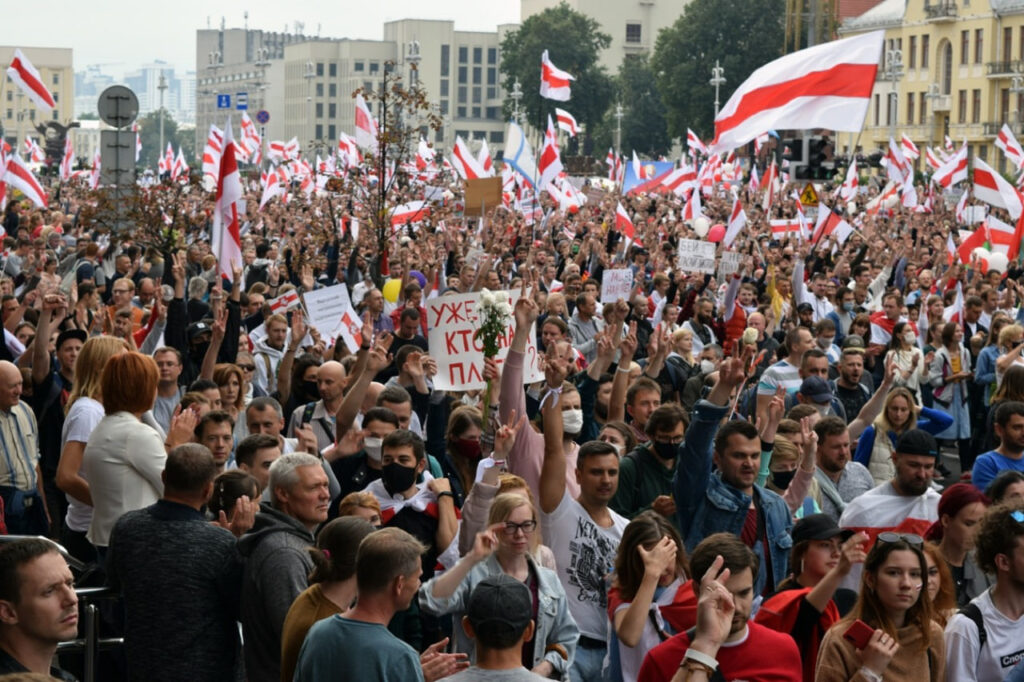
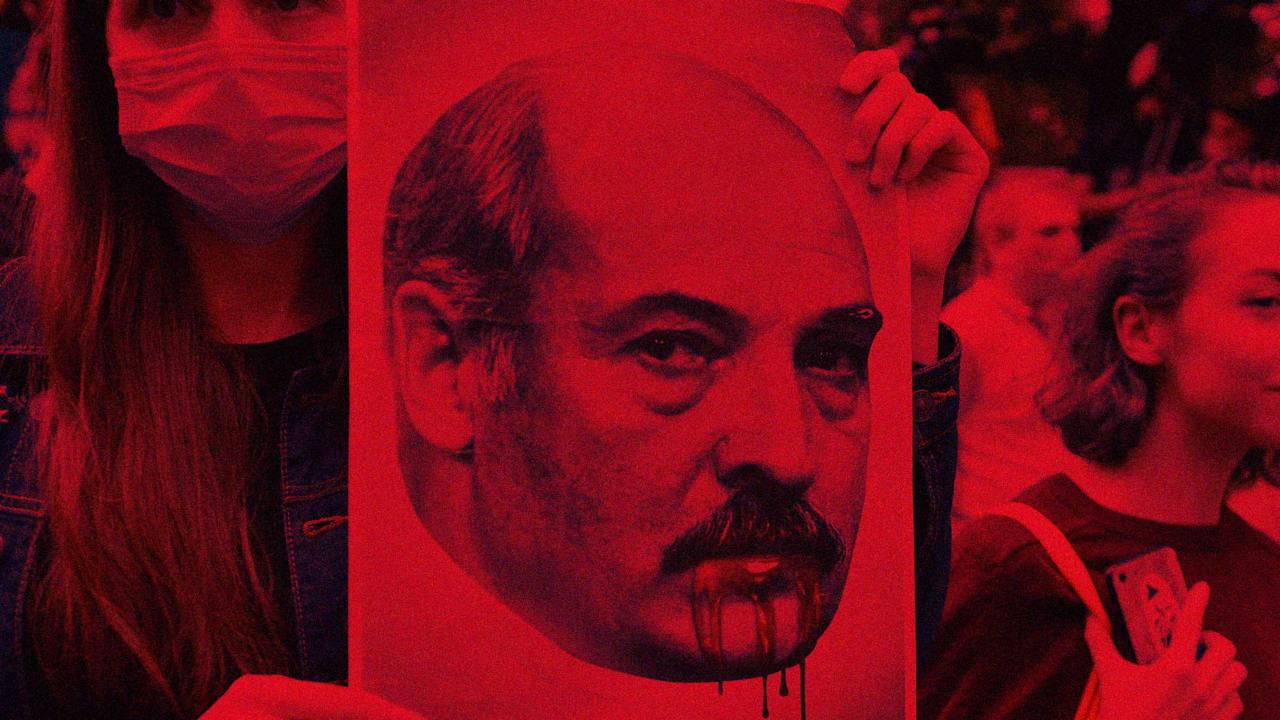
In recent years thousands of citizens, especially critics of Belarusian involvement in the Ukraine conflict, have faced prosecution,[27] including bloggers, members of presidential campaigns, and protesters.[28] According to Amnesty International, at least 250 civil society organizations and media outlets have been labelled as extremist by the regime have been shut down.[29] As an individual, the country president Lukashenko and other officials have displayed oppressive and inhumane rhetoric towards political activists and opposition figures, referring to them as “opposition scum”.[30]
There have also been reported cases of disappearances[31] and abductions[32] including kidnapping dissidents abroad[33] by the Belarusian government. Experts from the UN High Commissioner for Human Rights have documented hundreds of instances of torture and sexual abuse against incarcerated protesters. Mental torture, such as threats of rape, has also been reported.[34],[35] Belarusian government officials rarely accept responsibility for these actions and accuse victims of lying and conspiracy, often in an effort to justify the violence they have endured.
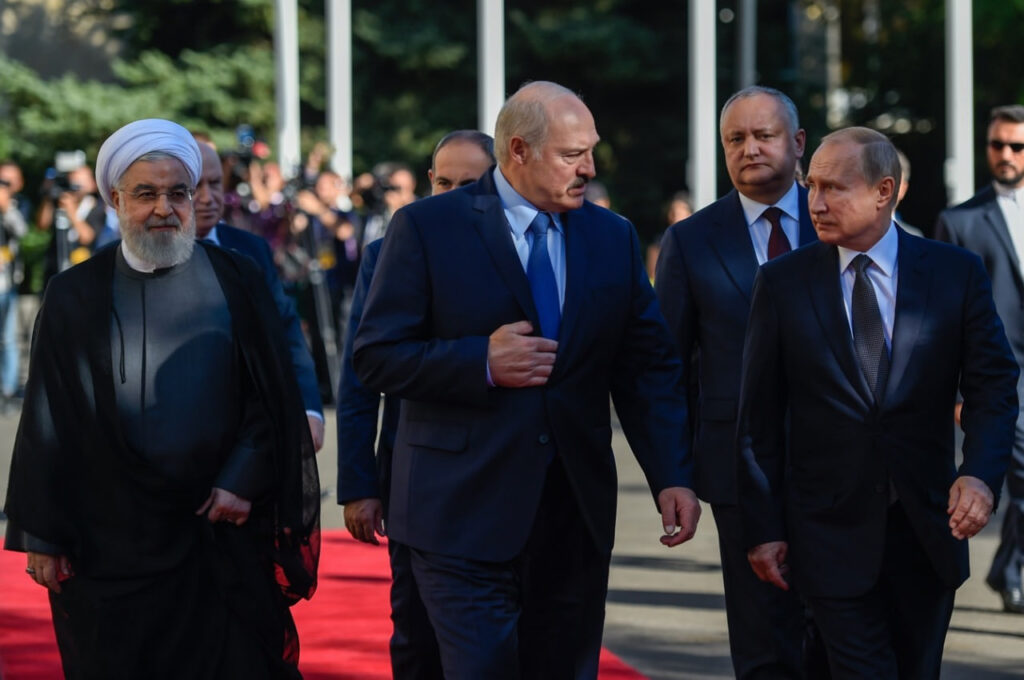
Belarus shares significant similarities with other undemocratic regimes, such as the Islamic Republic in Iran, in terms of violating citizens’ rights. Both regimes exhibit an unbalanced power distribution within their structures, granting the ruling group considerable authority to manipulate and intimidate political and civil activists. The methods and techniques employed by these regimes also bear striking resemblance. Consequently, examining the experiences of political prisoners and human rights advocates in Belarus can provide valuable insights and lessons for advocates and activists in Iran.
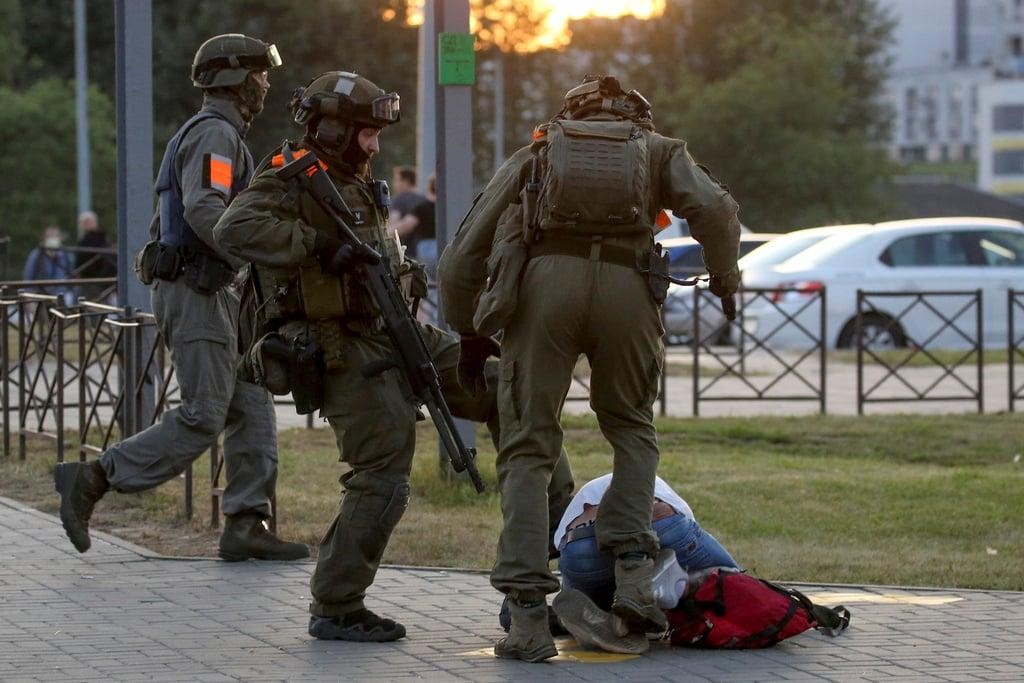
Political Prisoners
During the 2020 Belarusian presidential election and the subsequent protests, the number of political prisoners recognized by Human Rights Centre Viasna increased dramatically and reached to more than 1,000 citizens.[36] In recent years, Belarus has seen a significant number of its citizens detained on politically motivated charges, resulting in at least 1446 prisoners arrested for political reasons in 2022, including more than 160 women. While in detention, these individuals are subjected to various forms of ill-treatment and abuse. Belarusian government officials have effectively banned the operation of all legal human rights organizations within the country, by means such as judicial prosecution, and intimidation tactics such as constant monitoring of their activities, further exacerbating the lack of oversight and accountability for these prisoners.
These individuals were arrested and incarcerated on charges such as extremism, terrorism, insulting officials,[37] discrediting state institutions and symbols, and violating public order, which are commonly used by states with political prisoner issues, such as Iran.[38] Several notable cases shed light on the situation faced by political prisoners in Belarus under President Lukashenko’s regime.
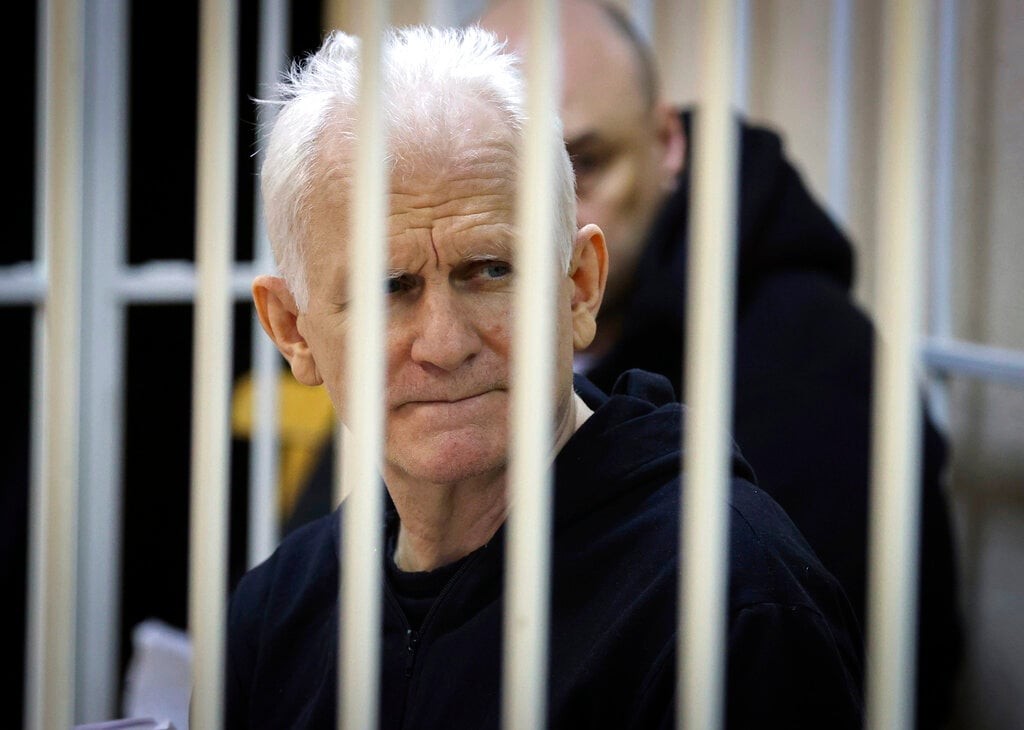
- Ales Bialiatski is a prominent example of a Belarusian political prisoner. A Nobel Peace Prize laureate and pro-democracy activist, he co-founded the Viasna human rights center.[39] In response to his activism, Bialiatski, along with his fellow human rights defenders, was subjected to a retaliatory trial, resulting in his ten-year imprisonment.[40] Valiantsin Stefanovich, deputy chair of Viasna and vice president of the International Federation of Human Rights, received a nine-year sentence, while Viasna’s lawyer Uladzimir Labkovich received a seven-year sentence.[41] Bialiatski’s resilience and his ability to stay informed about the events in the country as well as international attention helped his endurance during his time in prison, made it possible to continue his activities while incarcerated. Human rights defenders Marfa Rabkova and Andrei Chapyuk, along with eight co-defendants, were sentenced to lengthy prison terms in 2022 for fabricated criminal offences[42]. Following the disputed presidential election in August 2020, they were arbitrarily detained for documenting human rights violations.[43]
- Nasta Loika, a human rights activist and educator, was charged with organizing unlawful activities and incarcerated pending trial in 2021.[44] There have been concerns raised regarding her well-being, with reports suggesting that she may have been tortured.[45],[46] She was again arrested in 2022.[47] Nasta Loika is a partner of Amnesty International in Belarus and human rights educator.
- Well-known blogger Syarhei Tsikhanouski, husband of opposition leader Sviatlana Tsikhanouskaya, well-known blogger Syarhei Tsikhanouski, was arbitrarily detained in 2020 and sentenced to 18 years in prison on trumped-up charges. He was accused of new charges in 2023.[48]
- Professor Yury Bandazhevsky was imprisoned on charges of bribery, though Amnesty International believes his conviction was the result of his criticism about the government policies regarding the Chernobyl contamination problem.[49]
- In 2010, journalists Iryna Khalip, Natalya Radina, and Pavel Sheremet were arrested for their journalistic work during the post-election crackdown. Khalip, a journalist and editor at Novaya Gazeta, was sentenced to two years in prison.[50]
- Journalists Katsyaryna Andreeva and Darya Chultsova were sentenced to eight years in prison in 2021 on bogus “state treason” charges, with their trials widely believed to be politically motivated.[51] Further arrests of journalists and media activists happened in 2022 including Kanstantsin Zalatykh,[52] Yuliya Mudreuskaya,[53] and Yuryi Hladchuk,[54] who faced charges ranging from inciting hatred to violating public order.
- Member of the Coordination Council, Maryia Kalesnikava, was kidnapped and imprisoned in 2020. She faces a 11-year prison sentence.[55] Founding member of the Coordination Council, Maxim Znak, was sentenced to ten years in prison, while exiled members, including Sviatlana Tsikhanouskaya, face numerous charges in absentia.
- In September 2020, Ksenia Lutskina, who was arrested after pro-democracy protests in 2020, was sentenced to eight years in prison. She was charged with “conspiracy to seize state power”.[56]
- On May 23, 2021, President Lukashenko personally ordered the forced landing of Ryanair Flight 4978, which was carrying opposition journalist Roman Protasevich.[57] The Belarusian authorities arrested Protasevich due to his involvement in anti-government protests.[58]
- Danuta Peradnya was imprisoned for six and a half years in July 2022. The offense she committed was reposting a message critical of President Lukashenko’s role in the war in Ukraine.[59]
- Andrzej Poczobut, a respected Belarusian-Polish journalist, was sentenced to eight years in prison on false charges on February 8. Poczobut was targeted for covering election-related protests, advocating for peaceful dissent, and advocating for the rights of the Polish minority in Belarus as part of his journalistic duties.[60]
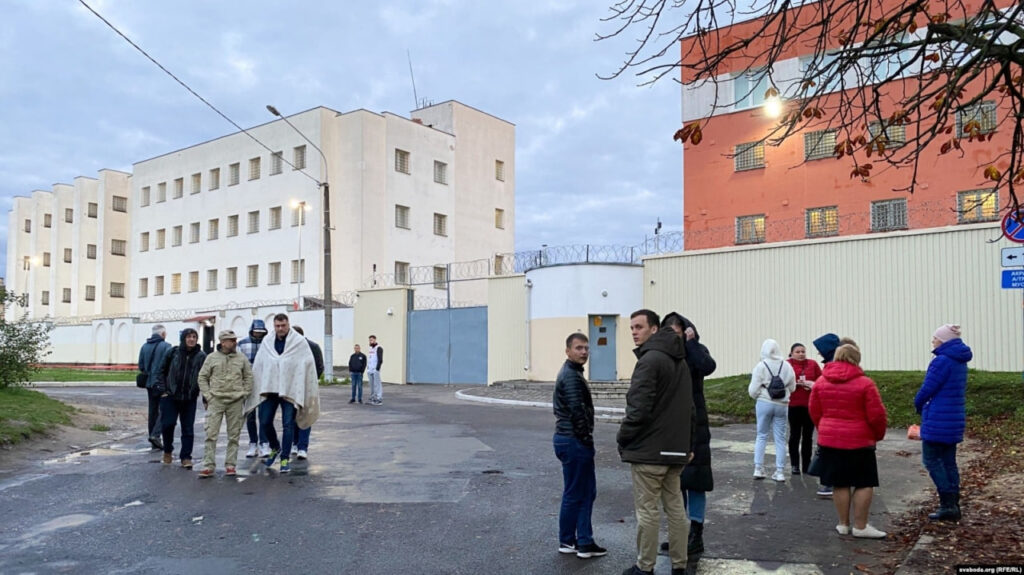
Prisons and detention centers in Belarus provide severe and deplorable conditions for political prisoners. The Okrestino pre-trial detention center in Minsk has a long history of housing civil rights and political activists. There have been numerous instances of prisoners being physically beaten, injured, and even sexually abused at Okrestino. During the post-protest period in August 2020, many individuals were arrested and imprisoned in that notorious facility.[61]

According to Viasna, over 40 prisons and detention centers throughout Belarus are holding hundreds of political prisoners, including in Minsk, Brest, Zodzina, and Homiel. Reports indicate that Belarusian prisoners are exposed to various forms of harassment and danger, including the risk of sexual violence, which start upon entering the facility. Prisoners are subjected to various forms of humiliation and dehumanization. Yan Auseyushkin, for example, described entering a Belarusian prison while squatting before being placed in a cramped cell with 16 other prisoners through a long tunnel.[62]
As demonstrated by these examples, political prisoners in Belarus face grave hardships, including imprisonment, mistreatment, and unjust legal proceedings. A climate of fear and suppression of dissent is fostered by the lack of accountability, the denial of human rights organizations, and the arbitrary use of charges. As many human rights advocates and organizations have frequently pointed out, in order to address these violations and ensure the release and protection of political prisoners in Belarus, urgent international attention and efforts are required.
The activities of Belarusian political prisoners and the resilience techniques they employ can serve as clear examples for other advocates of freedom and democracy around the world. One of their strategies is to inform international pro-democracy and human rights defenders of the situation and use their assistance. In recent years, international organizations, states, and individuals have been concerned about the issue of political prisoners in Belarus and the overall state of human rights in the country. Reports by Amnesty International, Human Rights Watch, the Office of the United Nations High Commissioner for Human Rights (OHCHR), and Reporters Without Borders have highlighted violations of human rights, including torture, ill-treatment, and repression of political activists in Belarus. For its violent crackdown on peaceful protesters and allegations of electoral fraud, the United States, Canada, the United Kingdom, the European Union, Norway, and Japan have all condemned Belarus and imposed sanctions. Belarus has also been removed from the Council of Europe’s list of observers.
Through organized activities, Belarusian activists have also employed a major strategy that can serve as an example. This is the act of uniting and supporting one another and other citizens against the regime’s unjust practices. Founded in 1996, Viasna is a prominent human rights advocacy organization that works to protect and promote human rights in Belarus. The organization meticulously documents human rights abuses, provides legal assistance to victims, and raises public awareness about human rights issues on a national and international level. Viasna focuses on a number of issues, including freedom of expression, assembly, association, and the prevention of torture and ill-treatment. Viasna remains committed to shedding light on the situation in Belarus and striving for a more just and inclusive society despite facing challenges and pressure from the Belarusian authorities.[63]
In response to supports, condemnation, requests, and protests, the Belarusian government has generally denied or counter-accused. A few sporadic releases of political prisoners before presidential elections may give the impression that things are changing, but such actions have remained rare and inconsistent, indicating that the regime’s overall attitude towards human rights and civil activities has not changed.[64]
Former political prisoners have also reported that they were denied medical care and subjected to constant exposure to bright lights and propaganda speeches by Lukashenko[65]. Tragically, there have also been cases of unexplained deaths in these facilities. One such example is the case of political and ecological activist Vitold Ashurak, who died under mysterious circumstances.[66] in May 2021 while serving in a penal colony in the town of Shklou. Typical of its behavior, Lukashenko’s government denies all accusations of abuse and wrongdoing.[67]
Lessons the experiences of political imprisonment in Belarus
The examination of political prisoners in Belarus reveals a multifaceted set of factors that contribute to the curtailment of freedom and civil activities. Similar to other authoritarian regimes, Belarus has experienced manipulation and deviation from its once ostensibly democratic constitution. This pattern of centralized control is not exclusive to Belarus, as evident in the Iranian regime, which was initially framed as a democratic state with independent government branches and rotational leadership. However, through the cultivation of a ruling cult, both state institutions and public sentiment have been manipulated to maintain a firm grip on power, effectively stifling any alternative voices. Consequently, the emergence of political prisoners in such regimes is an unsurprising consequence when individuals begin to demand substantive changes in leadership but are met with non-democratic measures.
A significant lesson derived from the Belarusian case is the importance of an empowered international community and human rights advocates in free nations. However, these efforts must evolve and become more effective in order to counter the expanding reach of unlawful activities by authoritarian regimes, by which, for example, they feel safe to force an international flight to land so they can apprehend an opposition leader. Supporting independent and unrestricted media is also imperative, given the gradual suppression of media activities and journalism in these regimes. Multiple examples provided by this case study prove that a secure way of international and national communication is one of the most important tools for civil activists. Furthermore, international observers must remain vigilant and not be deceived by superficial displays of freedom under such regimes. Both Iran and Belarus, for instance, occasionally release some incarcerated citizens or activists under the guise of issuing pardons. However, it becomes apparent that these actions serve to deceive observers or feign changes in regime behavior, particularly before elections.
[1]. “Thirty years since Soviet collapse, why didn’t all republics become like Baltics? – interview.” Ieva Žvinakytė, LRT, 2021.
[2]. “Democratic Changes in Central and Eastern Europe“, 1989-90, European Parliament Research Service, European Parliament, 2015.
[3]. “Why Belarus is called Europe’s last dictatorship.” The Economist, 2021.
[4]. “Belarus.” Amnesty International, 2022.
[5]. “Understanding Belarus: Belarusian Identity.” Europe-Asia studies 55.8 (2003): 1241–1272. Grigory Loffe, Web.
[6]. Ibid.
[7]. “People of Belarus.” Britannica.
[8]. “Belarus referendum approves proposal to renounce non-nuclear status – agencies.” Reuters, 2022.
[9]. “Lukashenka Rams Through Changes To Belarusian Constitution, Extending Power, Allowing Russian Nukes.” Radio Liberty, 2022.
[10]. “Belarus Government and society.” Britannica.
[11]. “Belarus – Judicial system.” Nations Encyclopedia.
[12]. “Belarus Jails, Fines Scores After Antigovernment Protests.” Radio Liberty, 2011.
[13]. “Belarus: ‘Unprecedented level of repression’ must end, say UN rights experts.” United Nations, 2023.
[14]. “Belarus Government and society.” Britannica.
[15]. “Rights Watchdog Slams Belarus’s Politically Motivated Crackdown On Lawyers.” Radio Liberty, 2021.
[16]. “The crime rate in Belarus increases for the second year running.” Belarus Security Blog, 2021.
[17]. “Belarus.” Amnesty International, 2022.
[18]. “Woman is fined £650 for wearing red and white socks: Pedestrian punished in Belarus because her footwear matched colours of banned opposition flag.” Chris Jewers, Mail Online, 2021.
[19]. “Belarus.” Freedom House, 2023.
[20]. “Belarus.” Human Rights Watch, Last Updated 15 December 2022.
[21]. “Belarus.” Reporters Without Borders (RSF).
[22]. “Belarus accused of ‘hijacking’ Ryanair flight diverted to arrest blogger.” The Guardian, 2021.
[23]. “Belarus: Unprecedented Crackdown.” Human Rights Watch, 2021.
[24]. “Belarus.” Amnesty International, 2022.
[25]. “Belarus.” Human Rights Watch, Last Updated 15 December 2022.
[26]. “Belarus.” Freedom House, 2023.
[27]. “Belarus.” Amnesty International, 2022.
[28]. “As of June 8, 1490 persons in Belarus are considered as political prisoners.” Viasna.
[29] . “Belarus.” Amnesty International, 2022.
[30]. “Belarus brings new charges against opposition leader’s jailed husband.” Reuters, 2023.
[31]. “Belarus opposition leader: Dozens disappeared after protests.” Jacob Barigazzi, Politico, 2020.
[32]. “Former Belarusian Police Officer Says He Was Involved in Killing of Lukashenko Critics.” VOA, Last updated 17 December 2019.
[33]. “Lukashenko plotted to murder dissidents, exiles in Lithuania feel safe.” Andrew Rettman, LRT, 2021.
[34]. “Belarus.” Amnesty International, 2022.
[35]. “Belarus must end systematic repression, release detainees, UN Human Rights Chief says.” UNHROHC.
[36]. “Belarus: Growing crackdown on human rights ahead of presidential election.” Amnesty International.
[37]. “MORE THAN 1,000 PRISONERS IN BELARUS ARE NOT ENOUGH FOR REGIME MEDIA.” EU vs Disinfo, Last Updated 17 February 2022.
[38]. Ibid.
[39]. “Ales Bialiatski.” Britannica.
[40]. “Belarus: Trial against Nobel Peace Prize laureate Ales Bialiatski a ‘shameful pretense’ of justice.” Amnesty International, 2023.
[41]. “Belarus: Sentencing of human rights defenders a ‘blatant retaliation’ for their work.” Amnesty International, 2023.
[42]. Ibid.
[43]. “Tell Belarusian authorities to free Marfa Rabkova.” Amnesty International.
[44]. “Belarus: Human rights defender Nasta Loika sentenced for the fourth consecutive time.” OMCT, World Organization Against Torture.
[45]. “Belarus.” Amnesty International, 2022.
[46]. “Belarus: Further information: Human rights defender faces criminal charges: Nasta Loika.” Amnesty International, 2023.
[47]. “BELARUS: HUMAN RIGHTS DEFENDER ARBITRARILY DETAINED.” Amnesty International, 2022.
[48]. “Belarus brings new charges against opposition leader’s jailed husband.” Reuters, 2023.
[49]. “Professor Yury Bandazhevsky – Prisoner of Conscience.” Amnesty International, 2021.
[50]. “Iryna Khalip.” Freedom Now.
[51]. “Belarus.” Tatsiana Ziniakova and Artyom Shraibman, Freedom House, 2023.
[52]. “KANSTANTSIN ZALATYKH.” Viasna.
[53]. “YULIYA MUDREUSKAYA.” Viasna.
[54]. “YURYI HLADCHUK.” Viasna.
[55]. “MARYIA KALESNIKAVA.” Viasna.
[56]. “KSENIYA LUTSKINA.” Viasna.
[57]. “Belarus accused of ‘hijacking’ Ryanair flight diverted to arrest blogger.” The Guardian, 2021.
[58]. “Belarus pardons dissident blogger Roman Protasevich, state media says.” Euronews, 2023
[59]. “Belarus Sentences Young Woman to Prison for Opposing Ukraine Invasion.” Joseph Golder, Newsweek, 2022.
[60]. “Belarus: Journalist Andrzej Poczobut sentenced to 8 years in prison.” International Federation of Journalists.
[61]. “Belarus jails: Stories of fear and violence.” BBC , Last updated 27 May 2021.
[62]. Ibid.
[63]. “Human Rights Center Viasna.” OMCT, World Organization Against Torture.
[64]. “Belarus in the 21st century.” Britannica.
[65]. “Glaring Lights, Lukashenka Speeches: Former Belarusian Political Prisoners Describe Jail Conditions.” Stuart Greer and Raman Vasyukovich, Radio Liberty, 2022.
[66]. “On the Sentencing of Political Prisoners in Belarus.” US Embassy in Belarus.
[67]. “Belarus jails: Stories of fear and violence.” BBC , Last updated 27 May 2021.
