When the Kenyan police force attacked a group of seemingly defenseless elderly rural mothers gathered in Uhuru Park, they may have probably assumed nothing could be easier than throwing them out. They had never been involved in social or political activities before. Their sons were in prison for attempting to bring a substantial change to Kenya: a multi-party democracy. The mothers had tried to convince Attorney General Amos Wako by providing a petition, but it had failed. Therefore, they went on a hunger strike across from the Parliament buildings in Nairobi, the capital. In spite of all the difficulties, not only did they free their sons, but they also left behind a significant legacy for activists. This article narrates and analyses how their victory unfolded.
Democracy in single-party Kenya under Daniel arap Moi presidency
Kenya’s civil and political environment has undergone significant changes and crises over the past six decades. Jomo Kenyatta was Kenya’s first president following its independence from the British Empire in 1964. Under his administration, Kenya suffered from widespread political and financial corruption. Daniel Arap Moi succeeded Kenyatta as president following Kenyatta’s death, and he held that position in unopposed elections in 1979, 1983, and 1988. Like some other African countries (Kilson), Moi governed under a one-party system. In spite of Moi’s promises, Kenya continued to struggle with corruption during his term as president. In the 1970s and 1980s, Kenya suffered from brutal government repression and restrictions on free political activity. A wave of arrests of suspected opposition figures took place in the mid-1980s. A wide range of individuals were detained, including university lecturers, students, journalists, civil servants, teachers, and farmers (Amnesty International), a situation that continued for decades (Freedom House).
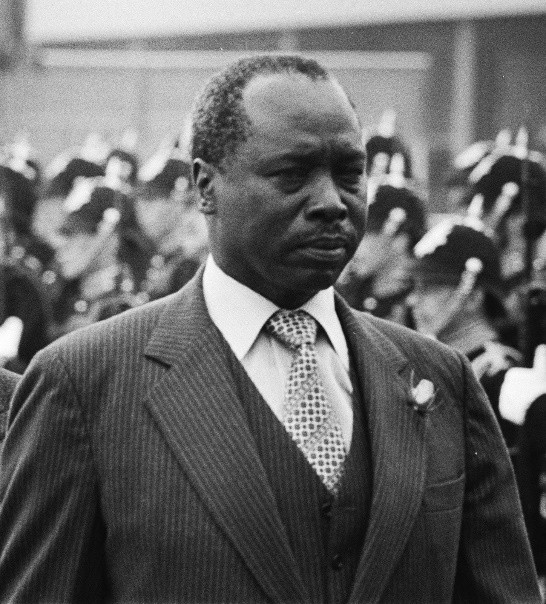
In regard to democracy and civil rights, Moi’s administration received a great deal of criticism and condemnation. Detention, abuse, and torture were repeatedly used by Kenyan security forces to harass and target opposition leaders. International reactions were sparked by the severity of the government’s actions. At one point, the United States, Germany, the United Kingdom, and Norway broke diplomatic relations with the Kenyan government and condition their assistance on an improvement in human rights conditions. In addition, the situation of women in Kenya was not favorable. There was severe harassment of women by the government forces, and their political contributions were marginalized into the youth and women’s wings of the ruling party (Tibbets). Nevertheless, the Moi government sought to portray Kenya as a country with a stable government capable of managing and preventing ethnic conflicts (Amnesty International).From 1989 to 1991, campaigns for multi-party democracy pushed the regime towards a more democratic multi-party constitution, but activists were suppressed and arrested Amnesty International). In 1991, President Daniel Arap Moi agreed to end the single-party policy after years of fierce opposition and international pressure (Amnesty International). There were several parties that could challenge Moi and his party, KANU, in the 1992 elections, including FORD Kenya and FORD Asili.
The freedom corner: The power of mothers
Daniel Arap Moi repealed section 2a of the Constitution due to domestic as well as international pressure in December 1991, and as a result, multiple opposition parties were allowed to participate in the election (Tibbets). However, many political prisoners remained imprisoned despite the freedom of political expression and activity.
A group of Kenyan mothers of political prisoners met with Attorney General Amos Wako in 1992. They requested his release of their sons who had been arrested for advocating for a multi-party system (Amnesty International) among them students, journalists, lawyers, and human rights advocates (Gowi).
After their request for assistance went unanswered, the mothers camped at the ‘Freedom Corner’ of Uhuru Park in Nairobi on February 28th, 1992 (The Standard, a). A group of elderly mothers, aged over 60, comprised the group of mothers. As a result of the mothers’ hunger strike, Kenyans began to pay attention to the issue. The mothers began to receive support from a large number of citizens and a number of civic organizations. Several attempts were made by the authorities to persuade the mothers to leave “Freedom Corner,” but they did not comply.
A paramilitary police unit, the General Services Unit (GSU), surrounded “Freedom Corner” on 3 March, five days after it began, and prevented anyone from entering. The police attacked the camp and fired tear gas at the women and beat protesters with batons (Gowi). In one of the attacks, Prof. Wangari Maathai, an advocate for mothers, was knocked unconscious as she led the singing. After that, the police began to hit the mothers and others in the camp with batons and rifle stocks.
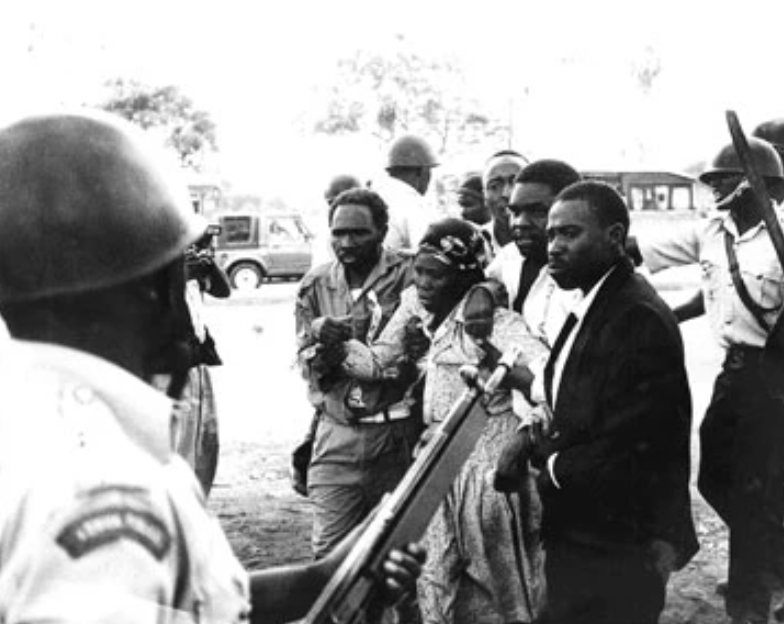
As a means of warding off the police, three of the protesting mothers stripped off their clothing, shook their breasts, and shouted, “What kind of government is this that beats women? Kill us! Kill us now! We shall die with our children!” The response of the police was to turn away and leave the location (Amnesty International). When a mother or old woman strips in anger, it is considered a curse in Kenyan culture.
Following the incident Professor Wangari Maathai, Nancy Njeri Muchima, and Margaret Wanjiru Kariuki were taken to the hospital. Over fifty women police officers removed all of the remaining mothers and some of their supporters. After being detained overnight, the mothers were sent back home, while some of their supporters were detained in Nairobi for a number of days. As a result of the incident, “Freedom Corner” was guarded by the police (Amnesty International). Kenyans were enraged at the violent suppression of mothers, which sparked riots and strikes in solidarity in Nairobi (The Standard, a), and included transportation workers who refused to work in protest of the government’s harassment of the mothers (Amnesty International).
Mothers used an African curse to ward off the forces (The Standard, b).
In spite of the brutality of the regime, the women returned to Nairobi and resumed their hunger strike at the nearby All Saints Cathedral a few days later. They engaged in a “chain hunger strike” for nearly a year: each time one mother was too weak to continue the strike, the other took over. A government raid on the All-Saints Cathedral in March resulted in the mothers barricading themselves in the basement of the church (Amnesty International) for three days. Following that, it was declared by Archbishop Manasses Kuria that the cathedral was a sanctuary for mothers of political prisoners. This protection and support allowed the mothers to continue their campaign. In April, they distributed 6,000 leaflets with information about their sons and the circumstances that led to their arrest. Additionally, the mothers regularly attended the court proceedings of their sons.
In January 1993, the mothers ended their campaign and hunger strikes after 51 out of 52 political prisoners, some of whom were prisoners of conscience, were released (Amnesty International, a and b).
Mothers’ activities and their audience
Prior to the mothers being involved in their campaign, the country’s political leaders had been criticized for corruption, the human rights situation, and the lack of political freedoms. Wangari Maathai, a founder of the Green Belt Movement that helped reforest much of Kenya’s environmentally depleted lands, and (later) the first African woman to win a Nobel Prize, publicly slammed the repressive policies of the Moi government. The international community condemned Moi’s regime to the extent that several major donors deferred their decisions regarding aid to Kenya at a World Bank meeting (Amnesty International).
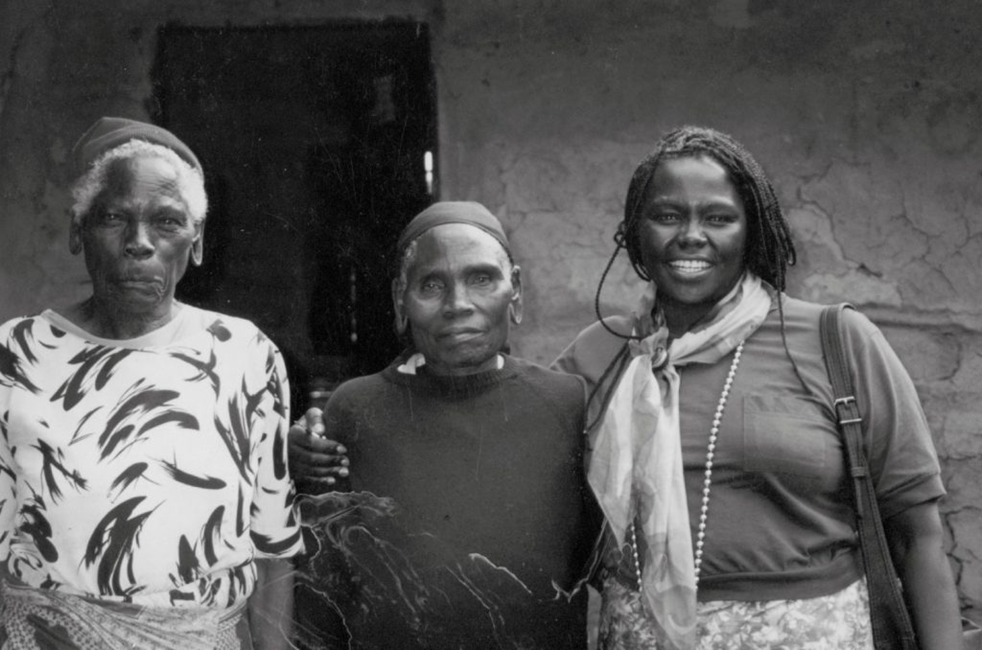
When mothers realized that the authorities may never release the prisoners, they took their activity to a public place, Uhuru Park, where they were given greater exposure. Located across from several parliament buildings and the notorious Nyayo House Torture Chambers (Gowi), Uhuru Park was the best place to commence a campaign. Consequently, sympathizing citizens began setting up tents and providing food and blankets for the mothers (The Standard, a). An increasing number of Kenyans have come forward to voice their frustrations with the regime’s torture. There were some people who sang Kenyan songs with the mothers, and they included lyrics such as “Go and take the child back…”. Over time, as the attention of the Kenyan people grew, the mothers set up banners and distributed leaflets to curious Kenyans (Amnesty International).
Women’s organizations, including Mothers in Action and the National Council of Women of Kenya, along with political opposition and pressure groups, including the Forum to Reestablish Democracy and Release Political Prisoners, began to support mothers in various ways, including calling for a national strike in April 1992.
Despite the police guarding Uhuru Park to prevent the mothers from returning to their corner, they endeavored to reach more citizens while remaining at the church. There were meetings and open forums held for hundreds of Kenyans (Tibbets), including women, church leaders, opposition figures, and human rights advocates. As a result of the mothers’ persistence, their protest developed into a widespread campaign that had a significant impact.
Civic activities and cultural context: From ‘what happened’ to ‘how it happened’
The mothers could impact Kenyan society and eventually the government with strategies such as hunger strikes and “Guturamira ng’ania” (to curse a person by stripping). They invoked traditional symbols and demonstrated the urgency of their request to Kenyans. Many people who supported the mothers were poor citizens with rural backgrounds such as mothers themselves. The bare body of an elderly woman is considered to be a significantly strong curse in Kenyan culture (Tibbets). In the African cultural context, in general, exposing a female body is taboo (Amnesty International) and when it happens as a reaction, it indicated that there was nothing else we could have done in the circumstances; (Society, 23 March 1992). Nevertheless, the act comes with great dangers and is not always effective. 70 years earlier in the case of Mary Muthoni Nyanjiru was shot dead while demanding the release of freedom fighter Harry Thuku using her naked body as a curse (Gowi).

The mothers made the matter of their sons as political prisoners a significant social problem in Kenya. Sociology theories explain that a situation becomes a social problem when significant portions of society believe the urgency of solving an unpleasant ordeal (Weinberg and Rubington, ??). Mothers indicated that there is massive power to mobilize a society even in hands of supposedly powerless strata of society. In fact, being elderly mothers, themselves contributed to the feasibility of an effective hunger strike and political change as ironically, to some nondemocratic regimes, motherhood is seen as non-political and less threatening to power (Tibbets).
The political theories suggest that when governments resist and oppress popular demand for social change, society finds ways to intensify its efforts, and eventually whether the regime accepts the changes or the situation can reach higher levels of intensity to the point of revolution. The Moi regime tried to repress the demands for multi-party elections but the brutal repression and punishments started a paradox of repression which makes the movement grow (Kurtz). The same thing happened in the case of mothers. After initially trying to suppress mothers, their cause grew, and more sympathizers helped them.
Civic rights around the globe: a comparative look
The Kenya government under Daniel Arap Moi’s administration showed significant similarities with nondemocratic regimes in other countries. A comparative approach to civil activities for democracy and human rights under the rule of nondemocratic governments can reveal key similarities and deliver insights into how some movements and actions succeeded and some did not.
Kenya in the ’90s was suffering from unjust and unlawful practices from the government. For instance, the Moi regime was notoriously accused of harassment and imprisonment by political activists and opponents and their relatives. Meanwhile, authorities constantly denied the imprisonment of activists or using excessive force to control people (Tibbets). The Moi government attempted to trivialize the mothers’ campaign. All of those approaches can be seen in other oppressive regimes, for example, the Islamic Republic in Iran. Another similarity between Moi’s administration and Iran’s ruling regime is their attempts to manipulate society by framing the possible outcomes of political reforms as disastrous catastrophes. For instance, Kenya authorities tried to stop people from demanding democratic reform, claiming that due to ethnic diversity in Kenya, it would spark uncontrollable violence (Amnesty International), a tactic that the Islamic Republic uses as well. Moreover, both regimes intimidated the political and social visits with charges such as sedition or subversion and uses paramilitary forces to terrorize the citizens.
Consequences and Lessons
The legacy of mothers’ heroic decisions and sacrifices has been of extreme value for Kenya and can deliver priceless lessons for democracy activists. This case proves that mothers’ (and in general women’s) roles are not limited to support and care even in less politically democratic societies. Instead, the powerful cultural and symbolic power women can carry in their actions can free massive transformative power to change society.
Gowi believes that the Uhuru Park incidents and their aftermaths made the Kenya government stop imprisoning political activists and led to changes including the reduction of the Presidential Term to a maximum of two terms in 1997 and the abandonment of many other oppressive policies and practices such as the Public Order Act that and the Chiefs Authority Act that limited freedoms of association (Gowi). Gowi adds that the momentum brought by these changes eventually made the way for Kenya’s 2010 new constitution.
Perhaps The most sensational lesson of the mothers is that in every society there are contextual and cultural capacities that are so meaningful and effective that can unite people to create significant changes. Mothers in Kenya applied known strategies such as hunger strikes, spreading leaflets, and simply, not remaining silent and ‘waiting’. Their actions and their bravery in using deep culturally symbolic actions provoked considerable national and international publicity and turned the political prisoners’ situation into a social problem. Diverse groups in society and many individuals showed considerable sympathy and contributed to mothers’ efforts. The mothers’ victory and the following achievements for Kenya could not happen without making justice and democracy a social problem.
In addition, we can learn from this case that modern liberal values such as democracy and human rights should never be taken for granted as although the Kenyan government agreed to hold a multi-party election, it took a considerable amount of sacrifice from citizens for the freedom of the political prisoners.
Furthermore, the case of mothers in Kenya proves the importance of international pressure on authoritarian regimes. When activists are fighting for democracy, they usually face dangerous and intimidating regimes that rarely respect human rights in their territory. Free and democratic nations can help democratic transition significantly id act timely, and for instance, as is seen in this case, stop helping human-right violators.
Case Study Location: Kenya, Africa
Case Study Era: 20th century
Learn more:
News and Analyses
- Collins, Osanya. “Tool Wangari Maathai Used in Revolutionizing Kenyan Protests”. Kenyans, Sept. 2AD,protests. Accessed Mar. 1AD.
- “Unbowed: The Day Six Defiant Mothers Stripped Naked at Uhuru Park”. The Standard, 28 Sept. 2020, the-day-six-defiant-mothers-stripped-naked-at-uhuru-park. Accessed 1 Mar. 2023.
- Kajilwa, Graham. Major Events That Shaped Uhuru Park. 2018, Accessed 1 Mar. 2023.
Books
- Kenya the Struggle for Democracy. edited by Godwin R. Murunga and Shadrack W. Nasong’o, ZED Books, 18 July 2013.
Videos
- “Freedom Corner Mothers” YouTube, Uploaded by Citizen TV Kenya, 2015.
- “The life of Daniel Toroitich arap Moi” YouTube, Uploaded by CGTN Africa, 2020,
- “The Committee for Release of Political Prisoners in Kenya (CRPPK) archive collection at the GPI” YouTube, Uploaded by George Pedmore Institute, 2022.
Endnotes
- Kajilwa, Graham. “Major Events That Shaped Uhuru Park.” The Standard, uhuru-park. Accessed 20 Nov. 2024.
- Kenya, content/uploads/2021/06/afr320061995en.pdf. Accessed 20 Nov. 2024.
- “Bare-Breasted Crusade: When Mothers of Political Prisoners Stripped at Uhuru Park.” The Standard, 27 Nov. 2017, park.
- “Daniel Arap Moi.” Encyclopædia Britannica, Encyclopædia Britannica, inc., 27 Oct. 2024.
- Country Profile: Kenya”. Federal Research Division, Library of Congress. 2007.
- Gowi, M. “1992 Mothers of Political Prisoners Protest Retraced,” Available at: political-prisoners-protest-retraced.html (Accessed: February 28, 2023).
- Lang’at, Patrick. “Kenya: State House to Host Land Summit.” Land Portal, 14 Oct. 2016, landportal.org/node/36776. Accessed 1 Mar. 2023.
- Kenya (no date) Freedom House. Available at: (Accessed: February 28, 2023).
- Kilson, Martin L. “Authoritarian and single-party tendencies in African politics.” World Politics 15.2 (1963): 262-294.
- Kurtz, Lester, and Smithey Lee. “When repression backfires.” Accessed April 4 (2016).
- Tibbetts, Alexandra. “Mamas fighting for freedom in Kenya.” Africa Today (1994): 27-48.
- “Unbowed: The Day Six Defiant Mothers Stripped Naked at Uhuru Park.” The Standard (b), 28 Sept. 2020, bowed-the-day-six-defiant-mothers-stripped-naked-at-uhuru-park. Accessed 1 Mar. 2023.
- Wangari Maathai Foundation website, Wangari Maathai Was the First African Woman to Win a Nobel Peace Prize. wangarimaathai.org/wangaris-story/ Accessed 1 Mar. 2023.
