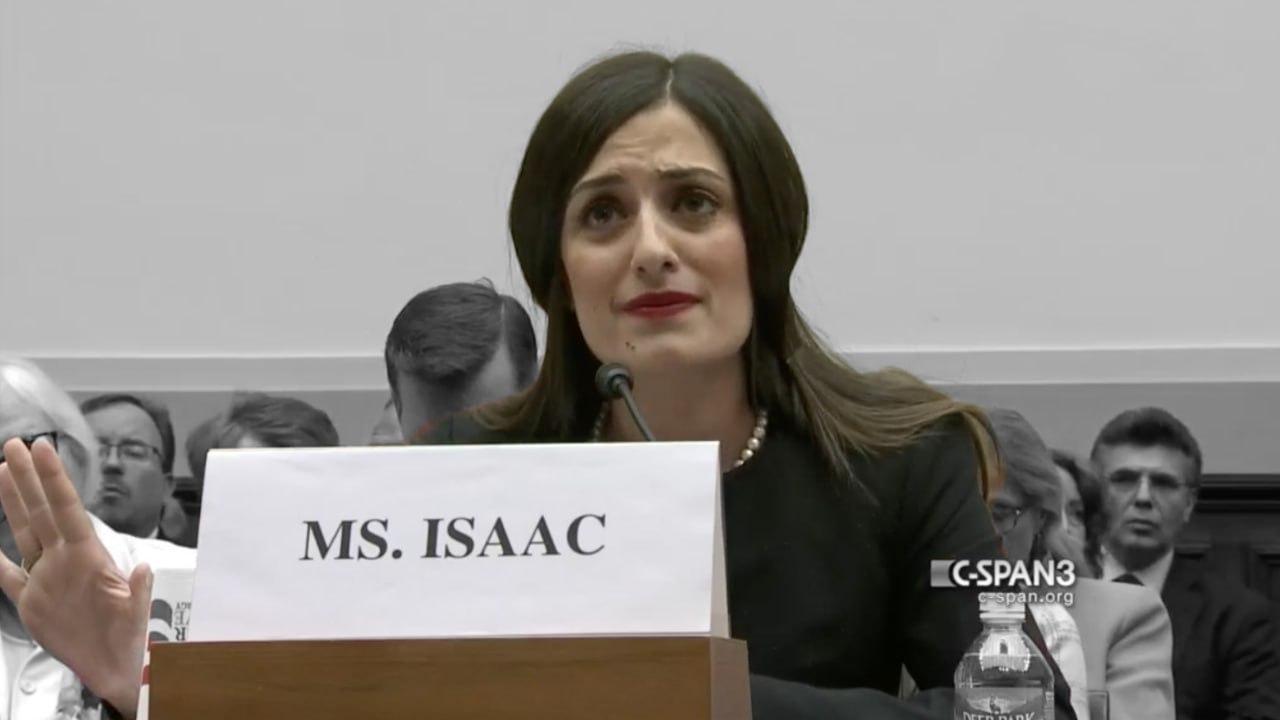
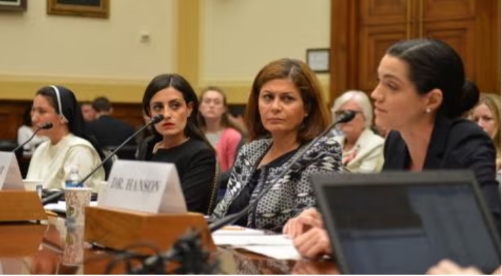
In 2015, Jacqueline Isaac appeared before the U.S. House Foreign Affairs Committee to testify about ISIS’s attacks on religious minorities in Iraq and Syria. She did not speak only as a lawyer or policy advocate. She spoke as someone who had traveled repeatedly to Northern Iraq with Roads of Success, met displaced families, visited survivors in camps, and listened directly to women and girls who had escaped captivity, sexual violence, and enslavement. Her testimony described humanitarian aid missions, trauma workshops, and the urgent needs of Yazidi, Christian, and other displaced communities facing destruction at the hands of ISIS. The House record identifies Isaac as Vice President of Roads of Success and lists her as a witness in the hearing “Ancient Communities Under Attack: ISIS’s War on Religious Minorities.”[1]
One of the most important features of Isaac’s advocacy is that it linked individual human stories to larger legal and moral questions. ISIS’s campaign against Yazidis, Christians, Shia Muslims, and other communities was not simply a matter of generalized violence. It involved targeted persecution, forced displacement, sexual enslavement, destruction of towns, and attempts to erase ancient communities from their homeland. In 2016, the U.S. Secretary of State publicly determined that ISIS was responsible for genocide against groups under its control, including Yezidis, Christians, and Shia Muslims. The UN Commission of Inquiry on Syria also concluded that ISIS was committing genocide against Yazidis and that its abuses amounted to crimes against humanity and war crimes.[3]
Isaac’s work is therefore best understood as a bridge between humanitarian response and civic advocacy. She did not limit her efforts to emergency relief, nor did she engage only in abstract human rights discourse. Instead, she helped connect survivors to platforms where their experiences could be heard by lawmakers, international institutions, media, and the public. This included work with survivors such as Ekhlas, a Yazidi survivor who later spoke in international settings, including the United Kingdom, with Isaac translating and supporting her public testimony. UK parliamentary debate records specifically mention that Ekhlas spoke in Parliament after being introduced by Jacqueline Isaac, whose remarks described the fear, categorization, murder, rape, and hostage-taking carried out by ISIS.[4]
For societies such as Iran, where religious minorities, women, dissidents, and independent civil society actors often face state pressure, Isaac’s example is highly relevant. Her work shows that advocacy can be built from several layers at once: direct service, survivor protection, documentation, public testimony, legal framing, and coalition-building across religious and political boundaries. It also shows that the defense of one community’s rights can be framed not as sectarian favoritism, but as part of a universal commitment to human dignity, freedom of belief, and protection from persecution.
Jacqueline Isaac’s work is grounded in a vision of human dignity that combines accountability, humanitarian relief, freedom, and the empowerment of women and children. Roads of Success describes Isaac as a human rights advocate, humanitarian, lawyer, motivational speaker, and Vice President of the organization, with more than a decade of work supporting people escaping crises and advocating for youth and women across the Middle East.[5]
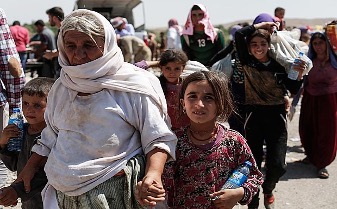
Her mission can be understood through three overlapping commitments. First, she seeks to make persecuted communities visible. This includes Yazidis, Christians, women survivors of sexual violence, refugees, internally displaced persons, and children affected by conflict. Visibility is not treated as symbolic alone. It becomes a first step toward protection, asylum, humanitarian assistance, and accountability.
Second, Isaac’s work emphasizes survivor dignity. Her congressional biography states that in 2015 she brought a team of medical and trauma experts to support girls who had been captured, sold, raped, tortured by ISIS, and later escaped. This reflects a model of advocacy that does not treat survivors merely as evidence of atrocities, but as people whose recovery, agency, and future must remain central.[7]
Third, she links humanitarian action to legal and civic structures. Isaac has testified before the U.S. Congress and in international forums, supported advocacy around genocide recognition, and participated in efforts connected to constitutional protections and minority rights in the Middle East. Roads of Success states that her focus has included the refugee crisis, sex trafficking, female genital mutilation, and HIV/AIDS.[8]
This combination gives her work a distinctive character. She is not simply a public speaker, nor only a legal advocate, nor only a humanitarian worker. Her effectiveness comes from combining all three roles into a model that is emotionally powerful, legally grounded, and publicly accessible.
The central purpose of Jacqueline Isaac’s advocacy has been to defend vulnerable communities whose suffering could otherwise remain invisible or politically inconvenient. Her work has focused especially on victims of ISIS violence, including Yazidis and Christians, but her broader framework is the protection of women, children, refugees, and religious minorities across the Middle East.
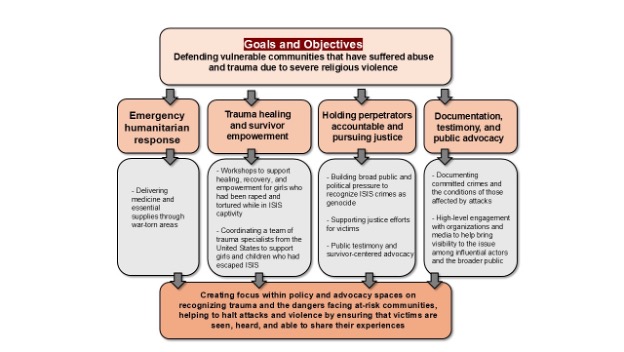
One goal has been emergency humanitarian response. In her 2015 written testimony to the U.S. House Foreign Affairs Committee, Isaac described Roads of Success missions that included transporting medical supplies and basic necessities through war-affected areas in Iraq and distributing them to internally displaced persons in camps and to Yazidis on Mount Sinjar.
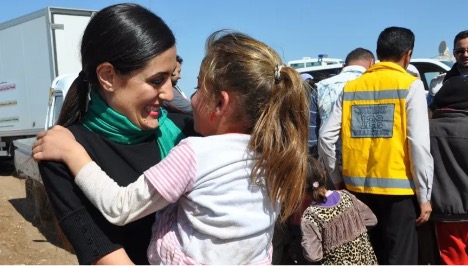
A second goal has been trauma recovery and survivor empowerment. In the same testimony, Isaac described workshops intended to help heal, restore, and empower girls who had been raped and tortured while in ISIS captivity. She later noted that Roads of Success brought U.S. trauma experts to Iraq in response to requests for aid, psychological healing, and empowerment for girls and children who escaped ISIS.
A third goal has been accountability. Isaac’s advocacy contributed to broader public and policy pressure to recognize ISIS’s crimes as genocide and to support justice for victims. While genocide recognition was the result of many actors, Isaac’s testimony and survivor-centered advocacy formed part of the civic ecosystem that helped move these crimes from private suffering into public record. The House Foreign Affairs Committee hearing, UK parliamentary debate, State Department genocide determination, and UN findings together show how documentation, testimony, and public pressure can reinforce one another.
Jacqueline Isaac’s leadership model is built on proximity, credibility, and translation between worlds. She has operated in refugee camps, conflict-affected regions, legislative hearings, media settings, and international forums. This ability to move between grassroots spaces and formal institutions is one of the strongest aspects of her work.
Her credibility comes partly from direct field experience. In her House testimony, Isaac explained that since the emergence of ISIS she had traveled to Northern Iraq several times through Roads of Success, including missions to distribute supplies, support survivors, and witness needs on the ground.[10]
Her credibility also comes from professional and legal training. Roads of Success states that Isaac obtained a Juris Doctor from the University of San Diego School of Law, studied at Oxford University, and uses her educational background in human rights work.[11]
But perhaps her most important leadership quality is her role as an amplifier rather than a substitute voice. In the UK Parliament context, Isaac did not simply speak about Yazidi survivors from a distance. She helped introduce and translate for Ekhlas, allowing a survivor to speak directly while ensuring that her testimony could be understood by policymakers.
This is an important ethical distinction. Advocacy for victims can become extractive when leaders use suffering as a platform for themselves. Isaac’s model, at its strongest, shows a different approach: build relationships, support survivor agency, translate across linguistic and institutional barriers, and use one’s access to make room for those most affected.
For Iranian activists, this model is especially relevant. In closed or semi-closed environments, not every victim can safely speak publicly. Trusted advocates may need to carry stories forward. But the ethical principle remains the same: advocacy should protect dignity, minimize risk, and preserve the agency of those whose experiences are being represented.
Jacqueline Isaac’s work emerged in an environment shaped by the aftermath of ISIS’s rise in Iraq and Syria, the displacement of ancient religious communities, and the international struggle to define and respond to mass atrocities. ISIS’s attacks against Yazidis, Christians, Shia Muslims, and other groups created urgent humanitarian, legal, and moral challenges. The UN Commission of Inquiry found that ISIS’s crimes against Yazidis amounted to genocide, crimes against humanity, and war crimes, and emphasized that its findings were based on interviews with survivors, religious leaders, activists, lawyers, medical personnel, journalists, and documentary material.
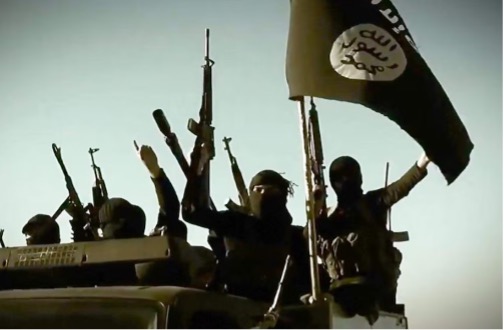
In this environment, NGOs and advocates played a crucial role. Governments often require documentation, political pressure, and public awareness before acting. Survivors often require trusted intermediaries before they can access international platforms. Media often needs personal stories to communicate the scale and meaning of atrocities. Isaac and Roads of Success worked within this space, connecting direct humanitarian engagement with international advocacy.
Roads of Success itself is a U.S.-based nonprofit organization engaged in humanitarian aid, advocacy, education, and support for women and minorities. Its public materials describe its work with refugees, internally displaced persons, women, children, and communities affected by conflict in the Middle East.[13]
The broader policy environment also mattered. The U.S. House Foreign Affairs Committee held a hearing in May 2015 specifically focused on ISIS’s war on religious minorities, with Isaac listed among the witnesses. In 2016, the U.S. State Department determined that ISIS was responsible for genocide against Yezidis, Christians, and Shia Muslims in areas under its control. In the same year, the UN Commission of Inquiry concluded that ISIS was committing genocide against Yazidis.
This sequence demonstrates how civil society testimony, survivor advocacy, government hearings, international investigations, and public pressure can interact. No single actor creates accountability alone. Instead, accountability is built through cumulative evidence, repeated testimony, credible documentation, and public insistence that atrocities be named accurately.[14]
For Iranian society, the lesson is that even when formal accountability seems distant, documentation still matters. Testimony matters. Networks matter. Trusted intermediaries matter. Advocacy often begins before institutions are ready to respond. The groundwork laid by activists, lawyers, journalists, educators, and community organizers can later become essential when political or legal openings appear.
Jacqueline Isaac’s message has consistently centered on the defense of human dignity across religious, ethnic, and gender lines. Her work has emphasized that ISIS’s violence was not only physical, but also aimed at identity, memory, belonging, and the continuity of communities. Her advocacy therefore sought not only to help individuals survive, but also to defend the right of entire communities to exist.
Her activities can be grouped into five main areas.
First, humanitarian field missions. Isaac participated in Roads of Success missions that provided medical supplies, basic necessities, and support to internally displaced persons and survivors in Iraq. Her House testimony describes distribution efforts in camps and in the field, including to Yazidis on Mount Sinjar.
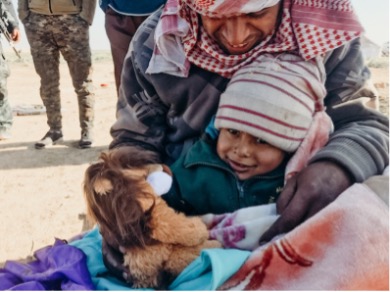
Second, trauma-informed survivor support. Isaac helped bring trauma experts to support women and girls who had escaped ISIS captivity. This work is significant because it recognized that rescue alone was not enough. Survivors needed psychological support, restoration of dignity, and pathways to rebuild their lives.
Third, legal and policy advocacy. Isaac testified before the U.S. House Foreign Affairs Committee and participated in international advocacy related to ISIS atrocities, genocide recognition, and the protection of minorities.
Fourth, media and public awareness. Roads of Success notes that Isaac and the organization’s work have been featured by major media outlets, and that the Tech Over Trauma program was highlighted in a BBC mini-documentary featuring Isaac and Ekhlas. Public awareness campaigns are critical in atrocity contexts because they help transform distant suffering into a matter of civic concern.
Fifth, survivor-centered public testimony. Isaac’s work with Ekhlas shows how advocates can help survivors enter public debate without being isolated or abandoned. In the UK Parliament record, Ekhlas’s testimony was described as harrowing and graphic, and Isaac’s introduction helped frame the crimes as comparable to historical patterns of categorization, persecution, hostage-taking, and mass violence.
These activities show that effective advocacy is rarely one-dimensional. It requires care work, legal literacy, media strategy, coalition-building, and the ability to speak to different audiences without losing the core moral message. Isaac’s case also shows the importance of language access. Translation is not a secondary technical task. It can determine whether a survivor’s words reach policymakers, whether their meaning is preserved, and whether their experience becomes part of the historical record.[16]
Conclusion: Lesson from Jacqueline Isaac activities
Jacqueline Isaac’s work offers several lessons for Iranian activists, educators, minority communities, and civil society organizations.
The first lesson is that the protection of minorities must be framed as a universal civic issue, not as a narrow communal issue. Isaac’s advocacy for Yazidis and Christians did not require diminishing the suffering of other groups. Rather, it emphasized that when any community is targeted for its identity, the foundations of human dignity and coexistence are threatened. This is especially relevant for Iran, where religious minorities, ethnic minorities, women, converts, dissidents, and secular citizens may experience different forms of exclusion. A rights-based framework can help prevent communities from being isolated from one another.
The second lesson is the power of documentation. Isaac’s congressional testimony mattered because it brought field observations, survivor accounts, and concrete recommendations into an official record. In Iran-related work, documentation can serve a similar long-term function. Even when immediate justice is impossible, careful records of discrimination, imprisonment, gender-based abuse, religious persecution, and civic repression can become essential for future accountability, public education, and international advocacy.
The third lesson is that survivors should not be treated only as symbols. Isaac’s work with trauma support and survivor testimony suggests a more ethical model. Survivors need protection, care, consent, translation, and long-term support. Their stories should not be used merely to shock audiences. They should be connected to practical goals: safety, justice, recovery, education, and prevention.
The fourth lesson is that advocacy must be multi-platform. Isaac used legislative testimony, media, humanitarian missions, international forums, and community networks. Iranian activists can adapt this model through secure digital storytelling, diaspora advocacy, Persian-language educational content, legal explainers, oral history projects, and partnerships with international human rights organizations. In restricted environments, the method must be adapted for safety, but the principle remains useful: a message is stronger when it moves through multiple trusted channels.
The fifth lesson is that moral clarity and professionalism can coexist. Isaac’s advocacy is emotionally forceful, but it is also structured around legal concepts, documented abuses, and institutional engagement. For Iranian civic actors, this balance is important. Anger at injustice is legitimate, but advocacy becomes more effective when paired with careful sourcing, disciplined language, and clear recommendations.
The sixth lesson is that women’s leadership is central to human rights work. Isaac’s work highlights women not only as victims of violence, but also as advocates, translators, lawyers, survivors, educators, and public witnesses. This is highly relevant to Iran, where women have been at the forefront of civic courage, protest, legal resistance, and social change. A sustainable rights movement must recognize women’s leadership not as symbolic, but as operationally essential.
Jacqueline Isaac’s advocacy demonstrates how one individual, working through a civil society organization and in partnership with survivors, can help move hidden suffering into public consciousness. Her work combined field engagement, humanitarian aid, legal advocacy, survivor support, translation, media outreach, and policy testimony. This combination gave her advocacy both emotional force and institutional credibility.
For Iranian society, the most important lesson is that civic influence does not begin only when formal political conditions are favorable. It can begin with documentation, education, trusted relationships, and small acts of protection. Isaac’s work shows that even in the face of overwhelming violence, advocates can preserve truth, defend dignity, and help survivors speak in ways that institutions cannot easily ignore.
A second lesson is that advocacy must be rooted in service. Communities are more likely to trust advocates who meet real needs, whether those needs involve trauma support, legal information, safe communication, translation, emergency assistance, or public education. In Iran-related contexts, where distrust and fear are often high, credibility will come not only from strong words but from practical usefulness.
A third lesson is that religious freedom and women’s rights should not be separated from broader democratic values. Isaac’s work shows that the defense of persecuted religious communities can also be a defense of women, children, refugees, and civic pluralism. For Iran, this is particularly important. A future based on coexistence must protect the believer, the nonbeliever, the dissident, the convert, the ethnic minority, the woman who resists compulsory control, and the citizen who simply wants to live without fear.
A fourth lesson is the importance of survivor-centered storytelling. Testimony can change public understanding, but only when handled responsibly. Survivors should not be pressured into exposure, reduced to trauma, or used as political props. They should be supported as whole people, with agency, dignity, and futures beyond victimhood. Finally, Isaac’s example shows that effective advocacy requires patience and persistence. Genocide recognition, public awareness, and institutional response do not happen immediately. They emerge through repeated testimony, coalition-building, documentation, and moral pressure over time. For Iranian activists, this is a realistic but hopeful lesson. Even when change feels slow, disciplined civic work can build the evidence, networks, and public imagination needed for a more pluralistic and rights-respecting future.
[1]. U.S. House of Representatives, Committee Repository. “Ancient Communities Under Attack: ISIS’s War on Religious Minorities.” May 13, 2015.
[2]. Earl Lane. “At House Hearing, AAAS Visiting Scholar Describes Targeted Damage to Minority Religious and Cultural Sites by ISIS.” AAAS News, 18 May 2015.
[3]. U.S. Department of State. “Remarks on ISIS and Genocide.” March 17, 2016.
[4]. UK Parliament. “ISIS: Genocide of Minorities.” Hansard, House of Commons Debate, April 20, 2016.
[5]. Roads of Success. “Meet Our Team.” Roads of Success. Accessed May 4, 2026.
[6]. John Bingham. “Isil Attacks on Christians and Yazidis ‘Genocide’ Say Peers.” The Telegraph, 23 Feb. 2016,.
[7]. U.S. House of Representatives. “Jacqueline Isaac, Esq. Biography.” U.S. House Committee on Foreign Affairs, May 13, 2015.
[8]. Roads of Success. “Meet Our Team.” Roads of Success. Accessed May 4, 2026.
[9]. “Someone San Diego Should Know: Local Volunteer Advocates for ISIS Victims.” The San Diego Union-Tribune, 18 Jan. 2019, updated 4 Feb. 2021.
[10]. Jacqueline Isaac. “Testimony of Jacqueline Isaac, Esq., Vice President, Roads of Success.” U.S. House Committee on Foreign Affairs, May 13, 2015.
[11]. U.S. House of Representatives. “Jacqueline Isaac, Esq. Biography.” U.S. House Committee on Foreign Affairs, May 13, 2015.
[12]. Peter Marshall and Helen Grady. “The Brutality and Bureaucracy of Islamic State.” ABC Background Briefing, BBC co-production, 7 Feb. 2015.
[13]. Human Rights Educators. “Human Rights Organizations – The Role of Nongovernmental Organizations (NGOs).” United for Human Rights. Accessed May 15, 2026.
[14]. International Commission of Jurists. “Report Launch: The Future of Accountability Mechanisms – Twenty Recommendations.” Geneva: International Commission of Jurists, May 8, 2024.
[15]. “‘Trauma Toys’ Bring Peace to Children Fleeing ISIS.” Religion News Service, RNS Press Release Distribution Service, 20 Feb. 2019.
[16]. Sally Engle Merry. “Pragmatism and Multidimensionality in Human Rights Advocacy.” International Journal of Transitional Justice 11, no. 3 (2017): 489–506.
